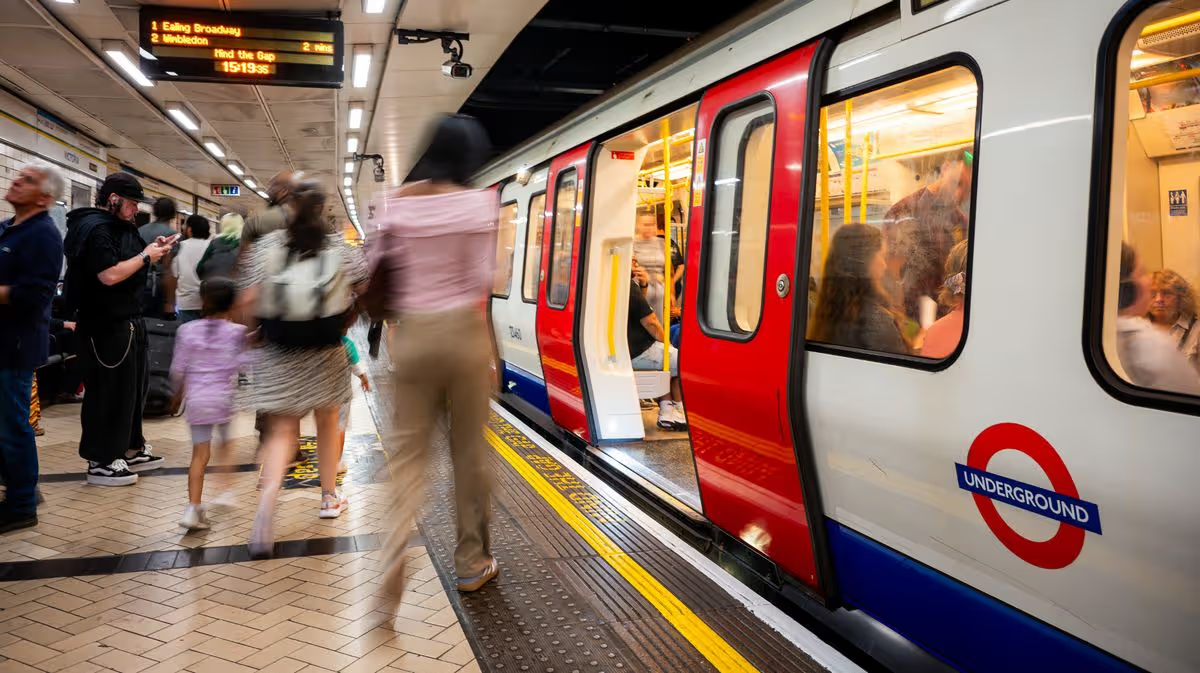


London’s Underground network, the vital circulatory system for millions of daily commuters and visitors, is experiencing significant disruption today. A cascade of issues across multiple lines is causing widespread delays, suspensions, and frustration for travelers navigating the city. While some lines are managing with only minor hiccups, others are facing severe, network-wide problems that are reshaping typical journeys and requiring considerable patience and planning from the public. This summary provides a detailed, human-centric look at the current state of the Tube, translating the stark service updates into a clearer picture of the travel landscape.
The situation is most acute on several key lines, where service has been severely degraded or stopped entirely. The Circle line has been completely suspended, a rare and major disruption that severs a crucial orbital route through central London. Similarly, the Waterloo & City line, the vital two-stop shuttle connecting the mainline rail terminus to the financial district, is offering no service at all, a significant blow to City workers. The Bakerloo line is facing a double challenge: a partial suspension between Queen’s Park and Harrow & Wealdstone, coupled with severe delays on the rest of its route. This combination effectively cripples the line’s functionality. Meanwhile, the District, Hammersmith & City, and Mildmay lines are all grappling with severe delays across their entire networks, meaning that while trains may be running, long waits and crowded platforms are the order of the day.
Further compounding the network’s woes are significant delays on other major arteries. The newly inaugurated Elizabeth line, a beacon of modern transport, is not immune. It is experiencing severe delays on its western leg between Paddington and Reading/Heathrow, impacting airport travelers and those from the Home Counties, while minor delays affect the Abbey Wood branch. The Piccadilly line, another critical route for Heathrow Airport, is facing severe delays on its northern section and is part-suspended on multiple branches west of Arnos Grove, including all routes to Uxbridge and Heathrow Terminals 4 & 5. This creates a perfect storm for air passengers, who must now seek complex alternative routes.
A broader pattern of minor delays and partial suspensions is affecting a swathe of other lines, indicating systemic pressure or multiple localized incidents. The Central line, one of London’s busiest, is under a cloud of minor delays alongside a partial suspension between Liverpool Street and White City, disrupting east-west travel through the heart of the city. The Metropolitan line mirrors this issue with minor delays and a suspension between Baker Street and Aldgate, affecting commuters from the north-west. The Northern and Victoria lines, usually two of the more reliable workhorses of the network, are also both reporting minor delays across their entire lengths, suggesting that the overall strain on the system is causing knock-on effects even where no major incident has occurred.
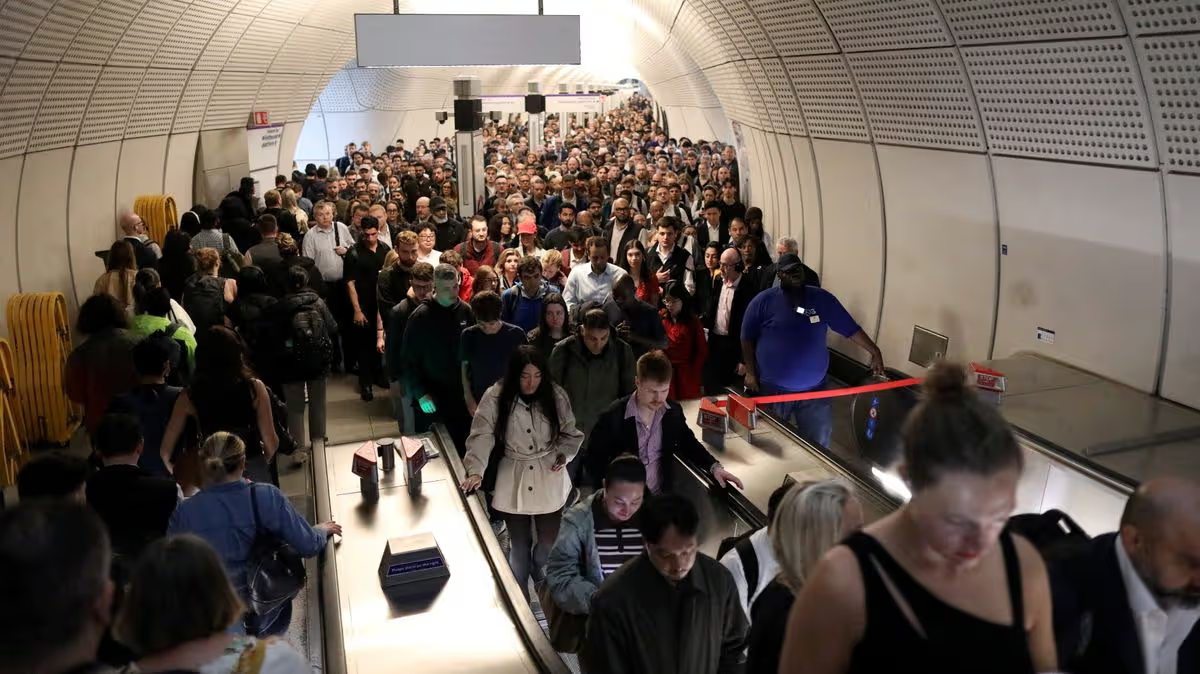
For the countless individuals relying on the Tube today, these disruptions translate into real-world inconveniences: missed appointments, strained nerves, late arrivals at work or home, and the logistical headache of finding alternative paths through London’s complex transport web. The distinction between “severe delays” and “minor delays” can feel academic when you are standing on a packed platform with no clear information on when the next train will arrive. The suspension of key lines like the Circle and Waterloo & City forces spontaneous rerouting, often onto already burdened buses or adjacent Tube lines, increasing crowding and journey times exponentially. The human impact is a collective sigh of resignation, the shared experience of Londoners adapting to yet another challenging commute.
Amidst this landscape of delays and suspensions, there is a small beacon of normalcy. Transport for London (TfL) notes that there is a good service on all other lines. This primarily refers to the Docklands Light Railway (DLR), London Overground, and Tramlink networks, which appear to be operating without major issues. For those with the flexibility to use them, these services may offer a valuable escape valve and alternative routes. Passengers are strongly advised to check the TfL website or app for live journey planning before setting out, to allow significant extra travel time, and to consider using these unaffected services where possible. As London’s transport authority works to resolve the underlying issues, the resilience of the city’s travelers is once again being tested on the platforms and in the carriages of its iconic Underground.