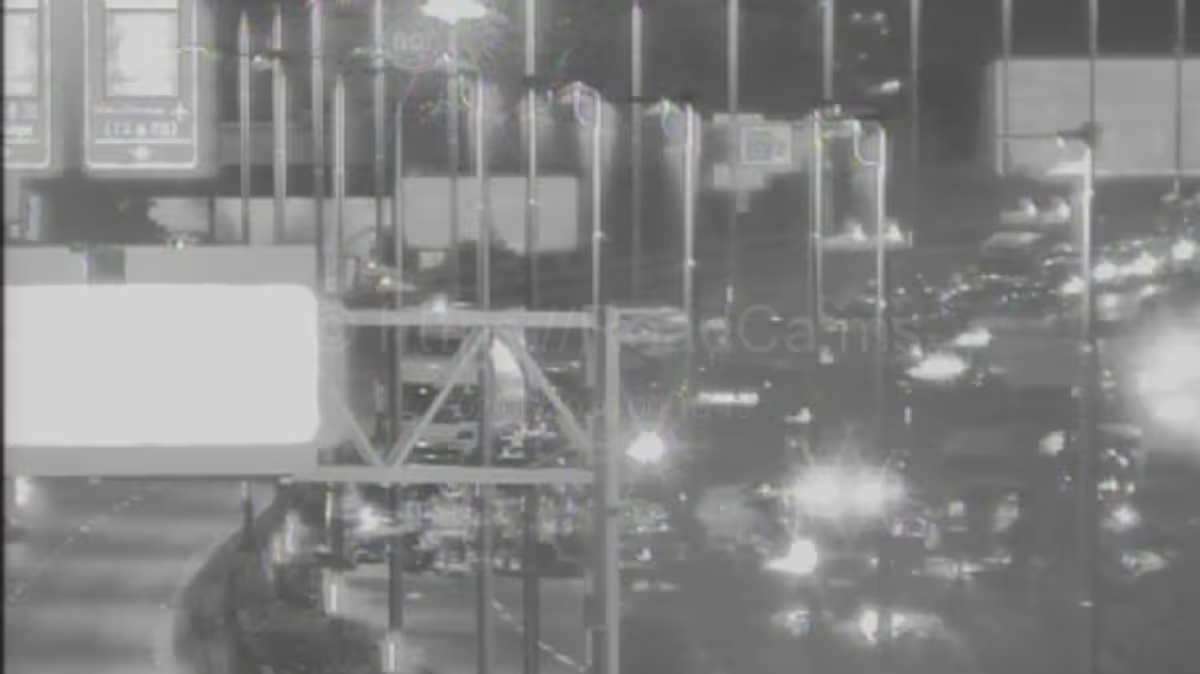



The London evening rush hour has been thrown into severe disruption following a major incident on a key artery into the capital. The westbound carriageway of the M4 motorway is now completely closed between Junction 3 for Feltham and the crucial slip road at Junction 4B leading to Heathrow Airport, after a serious collision involving multiple vehicles. This is not a minor shunt or a fender-bender; the scale of the incident, necessitating the full closure of a major motorway, indicates a significant and concerning event that will have profound consequences for thousands of people’s journeys home, travel plans, and local traffic across West London. The closure effectively severs a primary route for those heading out of the city towards the west and, critically, blocks one of the main gateways to one of the world’s busiest airports.
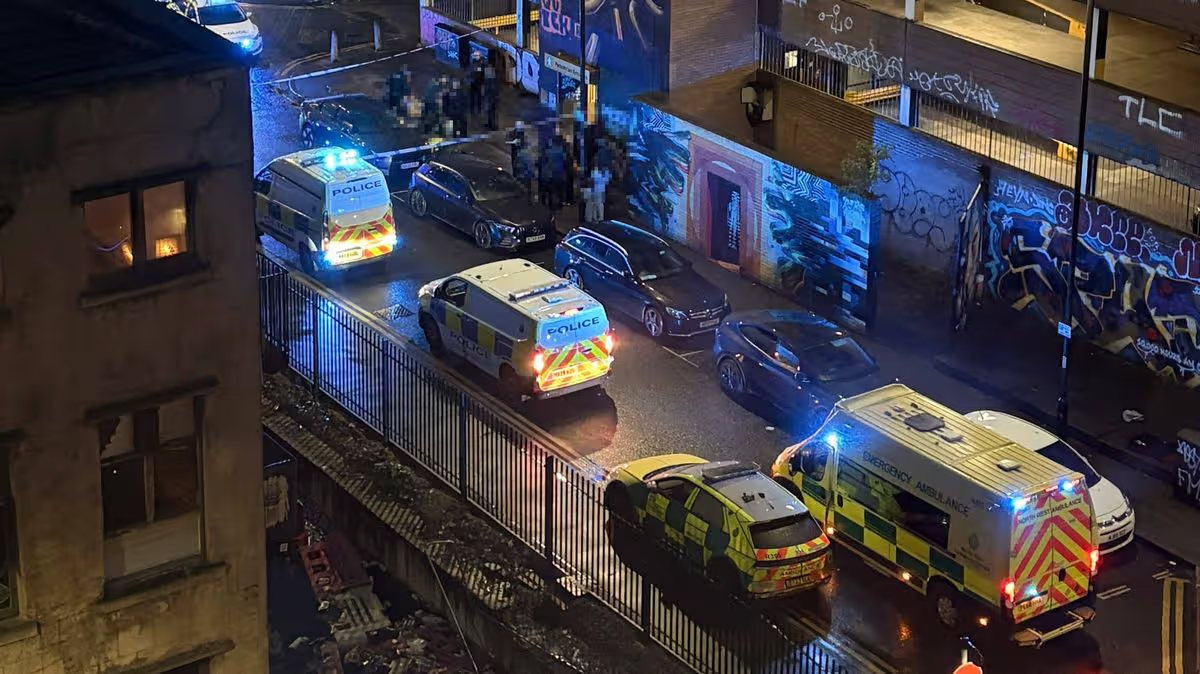
In response to the emergency, a full-scale multi-agency response was immediately mobilised, underscoring the seriousness of the situation. Metropolitan Police officers are on scene to secure the area, begin initial investigations into the cause of the collision, and manage the severe safety implications of a stopped motorway. Simultaneously, crews from the London Ambulance Service are attending to provide urgent medical care and assessment to those involved, with the potential for multiple casualties requiring careful and coordinated triage and transport to hospital. Their presence is the most human element of this crisis, a reminder that behind the traffic reports and closure notices are individuals and families suddenly facing a traumatic and life-altering event.
Adding to the coordinated effort are teams from National Highways, the government company responsible for England’s motorways and major A-roads. Their traffic officers are now on site, working alongside police to implement complex traffic management plans. This involves not just closing lanes with cones and signs, but also safely recovering damaged vehicles, assessing any needed repairs to the road surface or barriers, and beginning the arduous process of redirecting a river of stranded metal—the countless cars, vans, and lorries that were caught in the backlog when the collision occurred. Their work is critical to eventually reopening the road, but it is meticulous and cannot be rushed.
The ripple effects of this closure are instantaneous and widespread. For drivers, the immediate reality is one of stationary traffic, lengthening journey times from minutes into hours, and rising frustration as alternative routes become choked. Those heading to Heathrow Airport for flights are facing a particularly anxious and difficult situation, as the dedicated junction is now inaccessible from central London via the M4. This will lead to a surge in traffic on all surrounding A-roads, like the A30, A315, and A4, as well as through local boroughs such as Hounslow and Feltham, which are not designed to absorb such a sudden influx of motorway-level traffic. Public transport, including the Piccadilly and Elizabeth lines to Heathrow, will likely see increased pressure as travellers seek alternatives.
Beyond the logistical nightmare, an incident of this magnitude prompts sobering reflection. It is a stark reminder of the inherent vulnerability of our daily routines, which are so often threaded along high-speed roads. In an instant, a routine commute or a trip to the airport can transform into a scene of emergency lights, uncertainty, and personal crisis for those directly involved. For the wider community of road users, it forces a collective pause—a disruption that costs time, money, and stress, but also serves as an unwelcome prompt about the importance of attention, safe distances, and the shared responsibility we all bear when navigating these fast-paced environments.
As the emergency services continue their vital work at the scene—tending to the injured, gathering evidence, and clearing the carriageway—the disruption will persist for many hours. The road will remain closed until it is declared absolutely safe for traffic to flow again. For now, the advice to the public is unequivocal: avoid the area entirely if possible. Check live travel updates before setting out, expect very long delays on all alternative routes in West London, and if travelling to Heathrow, allow an extraordinary amount of additional time and strongly consider using rail services. Our thoughts are foremost with those affected by the collision itself, while the collective patience of a city is tested by the intricate and challenging cleanup that follows in its wake.