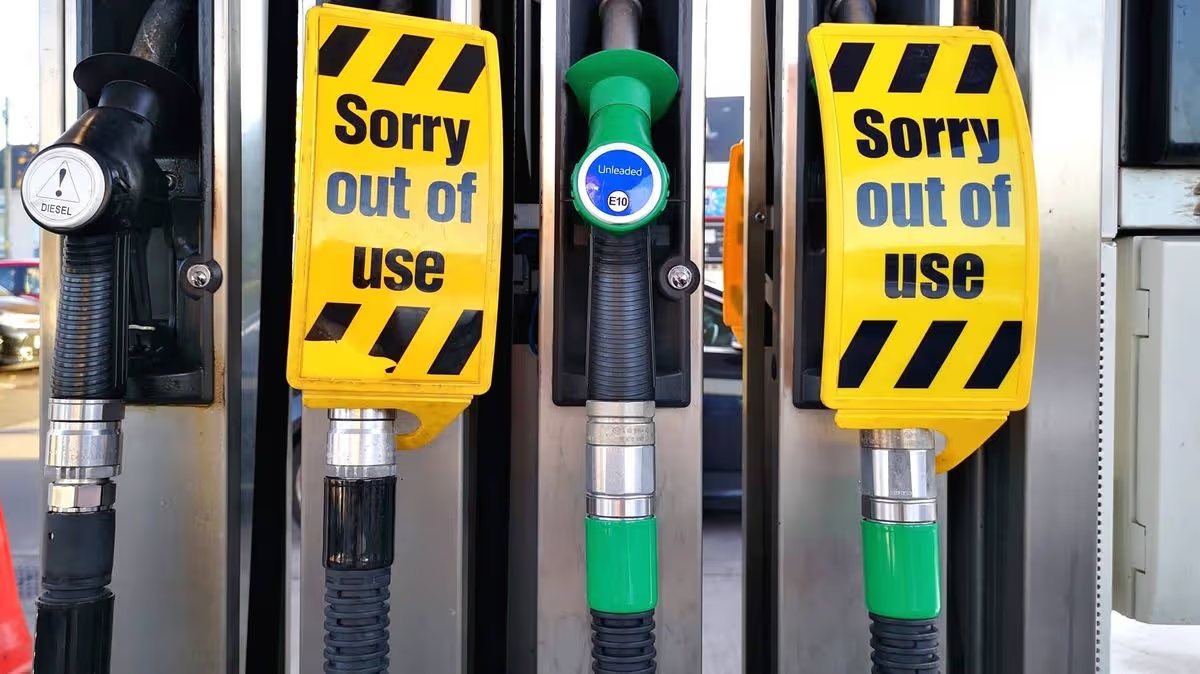




The global energy landscape is currently experiencing significant tremors, and the effects are being felt acutely at the most local level—the neighborhood petrol station. This is starkly illustrated by the recent closure of a fuel station in Firs Lane, Leigh, a historic town in Greater Manchester, England. After nine years of operation, HD Food and Fuel Ltd has entered administration, with Andrew Mark Bland of DMC Recovery Limited appointed to oversee the liquidation process. This procedure, a formal winding-up of a company, involves selling off assets to pay creditors, marking a definitive end to the business. For the local community, the shuttered forecourt represents more than just a commercial failure; it is a loss of a convenient service and a familiar local fixture, raising immediate concerns for the employees whose jobs now hang in the balance. While alternatives exist at supermarket filling stations from Sainsbury’s, Asda, and Morrisons nearby, the closure diminishes consumer choice and is a blow to the local economic fabric.
The shuttering of this particular station is not an isolated incident but rather a symptom of a far more extensive and volatile global crisis centered on fuel supply and pricing. The root cause traces back thousands of miles to the Middle East, where escalating geopolitical tensions have triggered a chain reaction in world energy markets. Following joint U.S. and Israeli strikes on Iranian sites in late February, Iran retaliated by effectively closing the Strait of Hormuz, a maritime chokepoint of unparalleled strategic importance. An astonishing 20% of all globally traded oil passes through this narrow waterway, and its disruption has sent immediate shockwaves through the international oil industry, stranding merchant vessels and constricting the flow of crude.
This severe supply disruption has had a direct and painful impact on consumers worldwide, translating into sharply higher prices at the pump. Motorists across the globe, including in the United Kingdom, are acutely feeling this financial pinch. The cost of filling a tank with petrol or diesel has surged as global oil prices reacted to the instability. Although the price of crude oil has receded slightly from its peak above $112 a barrel, there is a widespread and justified concern that these modest dips are not being fully or swiftly passed on to drivers. The lag between wholesale price changes and retail pricing, combined with ongoing market uncertainty, means the burden on household budgets remains heavy and shows little sign of lifting.
Against this backdrop of international fuel market turbulence, the challenges for smaller, independent fuel retailers in the UK become almost insurmountable. Businesses like the former HD Food and Fuel Ltd operate on thin margins and lack the vast buying power and diversified revenue streams of the large supermarket chains that also sell fuel. When wholesale prices spike unpredictably, these independent stations are caught in a vice: they must either raise their prices and risk losing customers to bigger competitors, or absorb the costs and bleed profit. It is a precarious position that has led to a worrying trend of closures, making the Leigh station part of a growing casualty list.
Indeed, the liquidation of HD Food and Fuel is merely one entry in a sobering ledger of recent UK business failures across multiple sectors, all amplified by a difficult economic climate. Just days before this closure, reports surfaced about the winding up of used car dealership Flow Motors LTD. In April, a UK metal manufacturer with a nearly 70-year history, Wragg Bros., entered liquidation. Similarly, a delivery services firm, Quiver Delivery LTD, also saw liquidators appointed following service reviews. This pattern indicates broader systemic pressures, including high interest rates, inflationary costs, and weakened consumer spending, which are crippling businesses both large and small.
In conclusion, the empty forecourt in Leigh serves as a potent microcosm of a interconnected global story. It is a local space where the ramifications of distant geopolitical conflict—the shuttered Strait of Hormuz, the soaring price of crude—manifest in a very real and community-focused way. While the immediate cause of this specific station’s failure may involve its own unique financial pressures, its demise occurred within a perfect storm of international energy insecurity and domestic economic strain. The closure underscores how global events can rapidly alter local realities, leaving behind shuttered businesses, uncertain employees, and communities with one fewer essential service, reminding us that the flow of energy is the lifeblood of modern economies, from the world stage down to the quiet streets of a historic town.