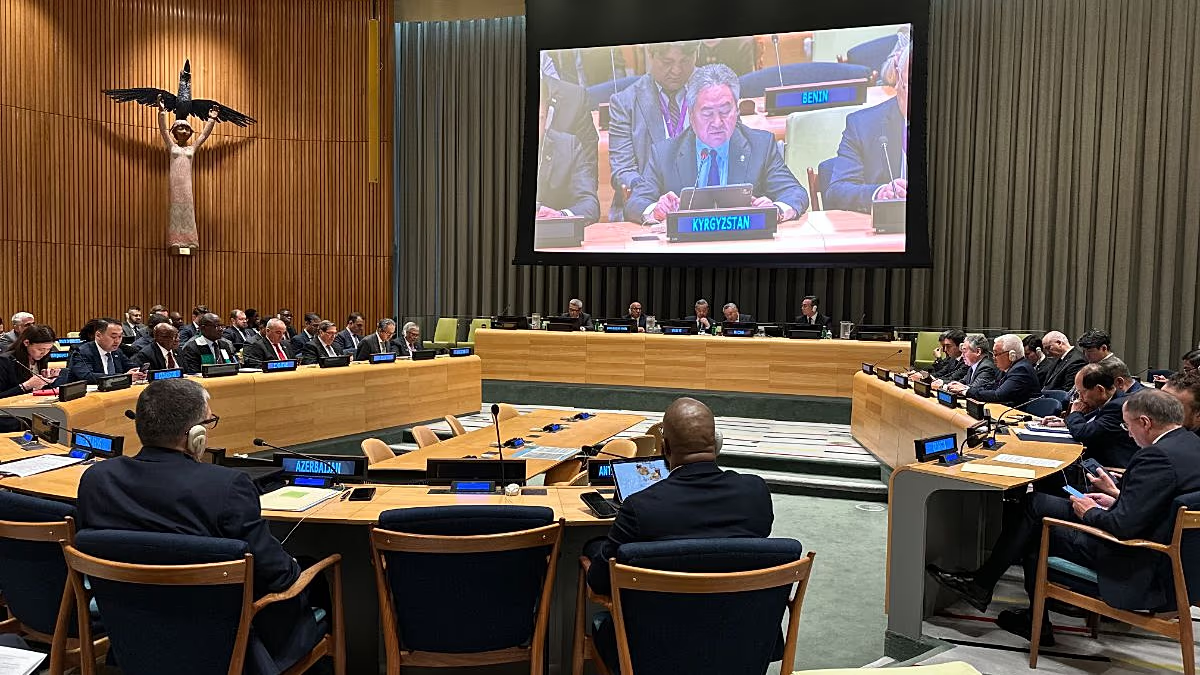
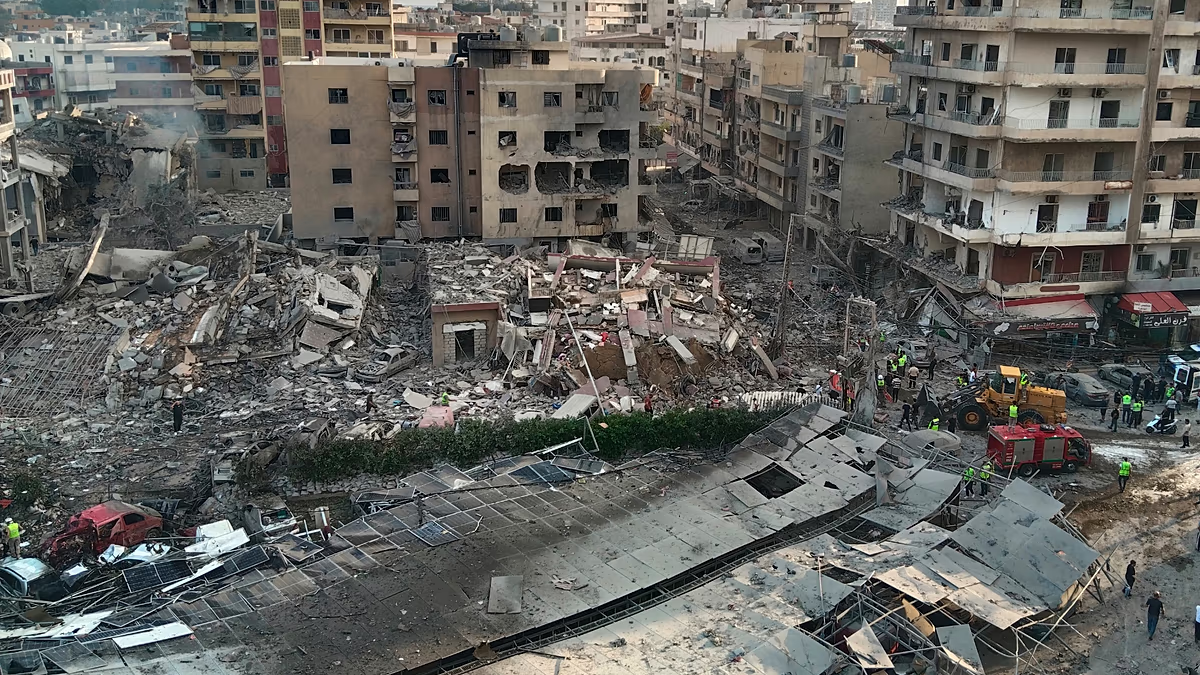


The fragile peace in the Middle East stands on a knife’s edge, threatening to unravel into a broader, more devastating regional war. This crisis was triggered by a significant escalation from Israel, which pushed its ground forces into southern Lebanon, reaching their deepest point in over a quarter-century. In tandem with this ground advance, Israeli airstrikes targeted the southern suburbs of Beirut. These aggressive moves have been met with fierce retaliation from the Iranian-backed Hezbollah militant group, which has launched a sustained barrage of rockets into northern Israel, reaching as far as the outskirts of Haifa. This dangerous tit-for-tat has prompted an urgent plea for restraint from the United Nations, which is deeply alarmed by the military activities and implores all parties to respect the previously agreed cessation of hostilities. The situation is made exponentially more precarious as it directly threatens to derail delicate, behind-the-scenes peace talks between the United States and Iran, talks that held a glimmer of hope for de-escalating tensions across the region.
The human cost of this military posturing is already being felt acutely, with civilians on both sides of the border caught in the crossfire. In Lebanon, the violence has escalated beyond border skirmishes, striking at the heart of civilian infrastructure. An Israeli airstrike heavily damaged the Jabal Amel Hospital in the port city of Tyre, shattering windows and leaving the facility strewn with debris. Footage released in the aftermath showed panicked women and children inside the wounded hospital, a stark violation of the protected status of medical facilities in conflict. This attack followed overnight bombardments that killed several people across southern Lebanon. Meanwhile, Hezbollah’s rocket fire continues to threaten communities in northern Israel, forcing residents into shelters and disrupting daily life. Each side blames the other for breaking the ceasefire, creating a circular argument that fuels further violence. Hezbollah claims its attacks are a justified response to Israeli strikes on Lebanon, while Israel characterizes its actions as necessary self-defence, vowing that if attacks on its north do not cease, neither will the pressure on Beirut.
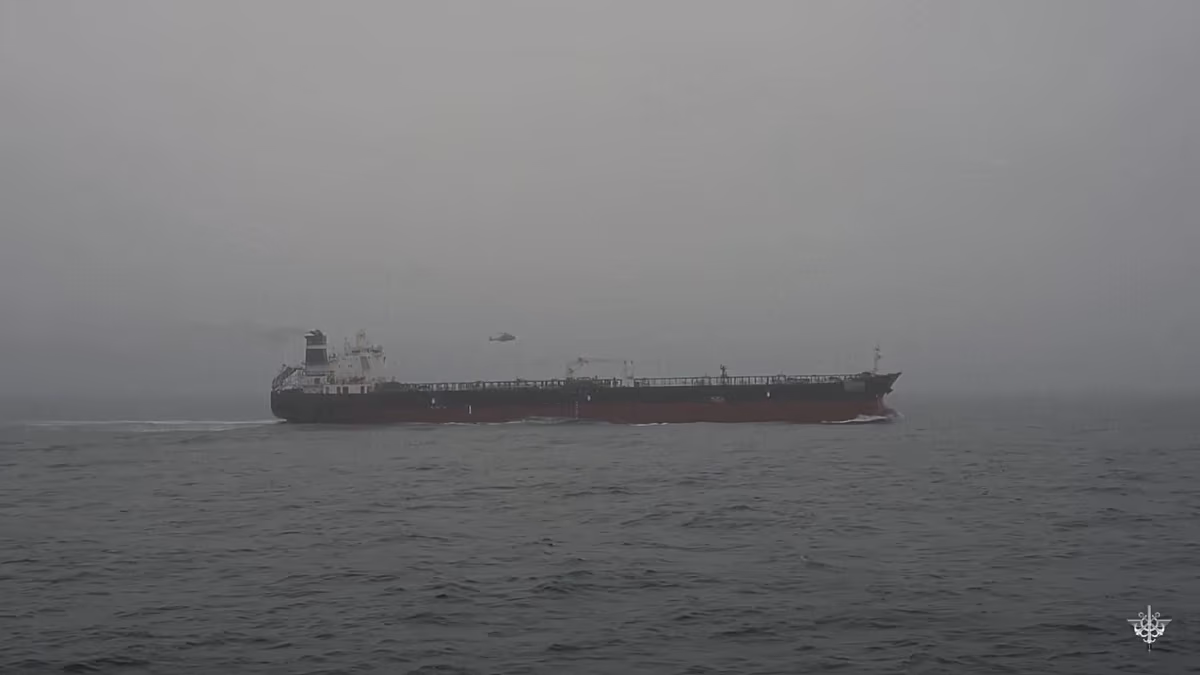
Complicating the landscape immeasurably is the looming shadow of Iran, which has issued stark warnings that it will not stand idly by. Iranian military and intelligence officials have declared that crossing “red lines” in Lebanon—and Gaza—would be considered a direct war with Iran itself. In response, they threaten to open “new fronts” against Israel and its allies. Most ominously, this includes revisiting the strategic equation of the Strait of Hormuz, a vital global chokepoint for oil shipments. Furthermore, Iranian officials and allied media have suggested activating other fronts, specifically naming the Bab al-Mandab Strait at the entrance to the Red Sea. This is not an abstract threat; Iran’s Yemeni allies, the Houthis, have already demonstrated their capability to disrupt shipping in these waters, forcing commercial vessels onto long, costly detours around Africa. The implication is clear: an all-out war in Lebanon could ignite a multi-theater conflict that strangles global maritime trade and energy supplies, with catastrophic implications for the world economy.
At the heart of this escalating crisis lies a fundamental diplomatic impasse. The recent fighting between Israel and Hezbollah has become the primary obstacle to a potential deal between the United States and Iran to extend a broader ceasefire. The United States has proposed a straightforward, if challenging, sequence: Hezbollah must stop all attacks on Israel, and in return, Israel would refrain from further escalation, including against Beirut. However, Tehran’s position makes any agreement incredibly difficult. Iran insists that any comprehensive deal must explicitly include Lebanon and guarantees for Hezbollah’s position. This creates a vicious cycle where progress in U.S.-Iran talks is hostage to the Israel-Hezbollah conflict, and calming that conflict seems impossible without a prior U.S.-Iran understanding. The negotiations are thus frozen, with each violent incident on the Israel-Lebanon border pushing a diplomatic solution further out of reach.
The statements from key figures underscore how perilously close the region is to tipping over the edge. Israeli Defence Minister Israel Katz’s blunt warning—”if there is no calm in the north, there will be no calm in Beirut”—exemplifies the policy of escalated deterrence. From the other side, advisors to Iran’s Supreme Leader warn that the “patience of the armed forces of Iran has a limit.” Hezbollah sources, speaking anonymously, capture the militant group’s defiant stance, questioning why they should cease attacks that “hurt Israel while it is bombarding Lebanon.” These are not the words of actors seeking a quiet resolution; they are the rhetoric of parties preparing for a wider confrontation. The absence of a clear off-ramp, coupled with this hardening of positions, suggests that miscalculation or a single, more devastating strike could swiftly turn a localized conflict into a regional war.
We are now witnessing a dangerous convergence of military action, humanitarian suffering, and fractured diplomacy. The strike on a Lebanese hospital is a tragic testament to the erosion of international norms protecting civilians. The threats to close vital international waterways signal an intent to globalize the conflict. And the collapse of U.S.-Iran talks would remove one of the last remaining channels for managing this rivalry. The United Nations’ call for calm is a necessary but increasingly fragile lifeline. The path forward requires immediate, simultaneous de-escalation by all parties: a halt to Israeli ground advances and strikes deep in Lebanon, a cessation of Hezbollah’s rocket fire, and a resumption of diplomacy with enough flexibility to address the core insecurities of both Israel and Iran’s allies. Without this, the people of Lebanon and northern Israel will continue to pay the highest price, and the world will inch closer to a conflict whose consequences would be felt far beyond the Middle East’s borders.