


Here is a humanized and expanded summary of the content, structured into six paragraphs.
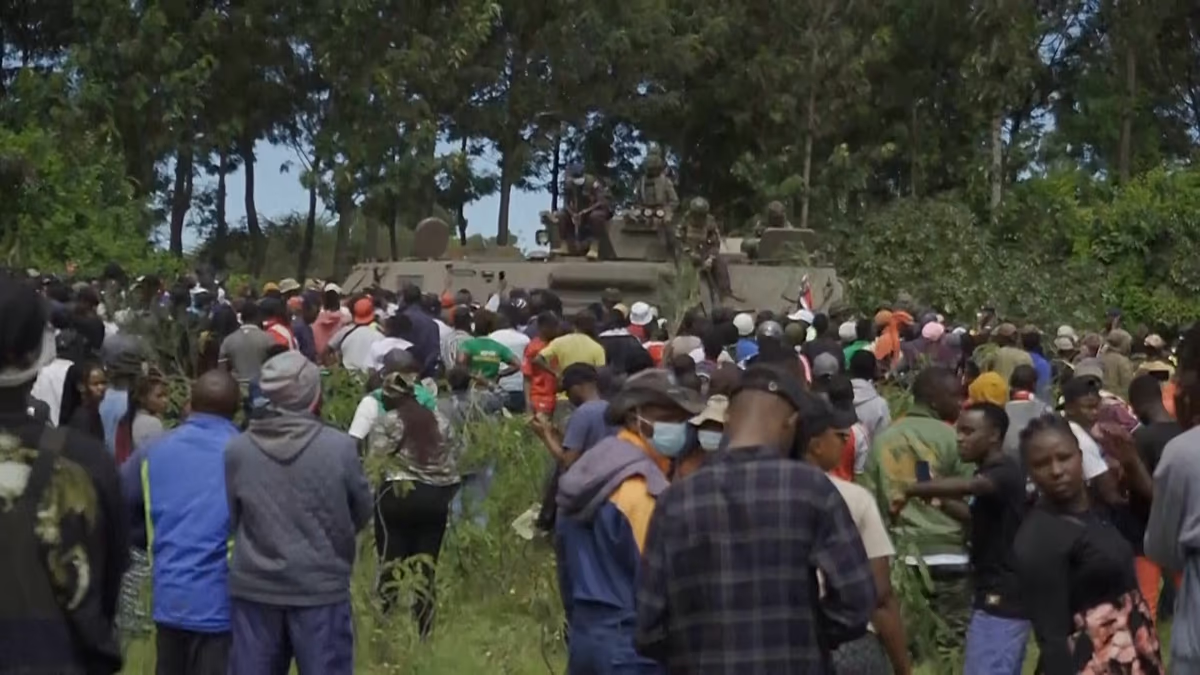
The quiet town of Nanyuki, nestled in the shadow of Mount Kenya, became the unlikely epicenter of a national debate this week. On Monday, the air near the Laikipia Air Base, typically filled with the sounds of military routine, was instead charged with the determined voices of hundreds of young protesters. They had gathered to voice a profound and visceral fear: the fear of their community being transformed into a frontline in a global health battle they feel ill-equipped to fight. Their specific target was a proposed plan to establish an Ebola quarantine center at the base, intended to host individuals, potentially from overseas, who had been exposed to the deadly virus. For these demonstrators, the abstract notion of international medical cooperation collided with the immediate, tangible dread of a pathogen known for its devastating outbreaks in West and Central Africa.
This public outcry did not emerge in a vacuum; it was a direct response to a brewing legal and political storm. Just days before the protests, Kenya’s High Court issued a significant ruling, suspending the entire project and blocking the arrival of any foreign patients. This legal pause was triggered by a challenge from the Law Society of Kenya and a constitutional watchdog group. Their argument cut to the heart of the protesters’ anxieties: that Kenya’s public health system, while resilient, remains fundamentally fragile, stretched thin by everyday demands and periodic crises. The litigants questioned whether the nation possesses the impeccable isolation protocols, waste management systems, and specialized training required to safely manage such a high-stakes facility without risking a local outbreak. The court’s intervention provided a crucial channel for these concerns, moving the debate from the streets to the chambers of justice.
Amidst this domestic turmoil, the international dimensions of the plan came into sharper focus. Reports, confirmed by US officials, indicated that the facility was envisioned to house American citizens—such as healthcare workers, diplomats, or military personnel—who might be exposed to Ebola while stationed or working abroad. Kenyan Health Minister Aden Duale sought to broaden this perception, insisting the center would be a resource for all nationalities, not solely a service for the United States. To support the initiative and address capacity concerns, Washington pledged a significant investment of $13.5 million specifically aimed at strengthening Kenya’s overall Ebola preparedness. From one perspective, this presented Kenya as a responsible regional leader stepping up for global health security, bolstered by international partnership and funding.
Yet, for the citizens marching in Nanyuki and for many Kenyans following the news, these assurances were overshadowed by a deep-seated distrust and a painful historical legacy. The promise of funding felt abstract, while the image of a quarantine center was concrete and alarming. Many recalled the devastating impact of past disease outbreaks, both locally and on the continent, where healthcare infrastructures were overwhelmed. There was a palpable sense that their community was being selected to shoulder a disproportionate risk for a problem originating far beyond its borders. The sentiment on the ground questioned the equity of the arrangement: why should Kenyan communities potentially bear the danger for exposures occurring in other regions? The chants at the gate were not just about medical logistics; they were a cry against perceived neocolonial impositions and a demand for genuine, transparent consultation.
The protest in Nanyuki, therefore, represents more than a single issue. It is a powerful manifestation of a global tension between public health necessities and community consent, between international cooperation and national sovereignty. It underscores a critical lesson that top-down health interventions, no matter how well-intentioned, will fail if they do not genuinely engage with and earn the trust of the local populations they aim to serve. The people of Nanyuki were not simply rejecting medical aid; they were demanding agency, clarity, and demonstrable proof that their safety was the paramount priority, not an afterthought.
As the legal process unfolds, Kenya stands at a crossroads. The path forward requires navigating a complex web of legitimate public fear, legal mandates, diplomatic agreements, and long-term health security interests. A sustainable resolution will demand unprecedented transparency from the government, a willingness from international partners to listen as much as to direct, and a committed, visible investment in fortifying the very public health systems that citizens fear are inadequate. The gates of Laikipia Air Base have become a symbol, and what happens next will resonate far beyond Nanyuki, serving as a case study in how the world negotiates the fragile intersection of global health, local autonomy, and human dignity.