

Of course. Here is a summary and humanization of the provided content, expanded to meet the requested length and structure.
Paragraph 1: The Stakes of the Election
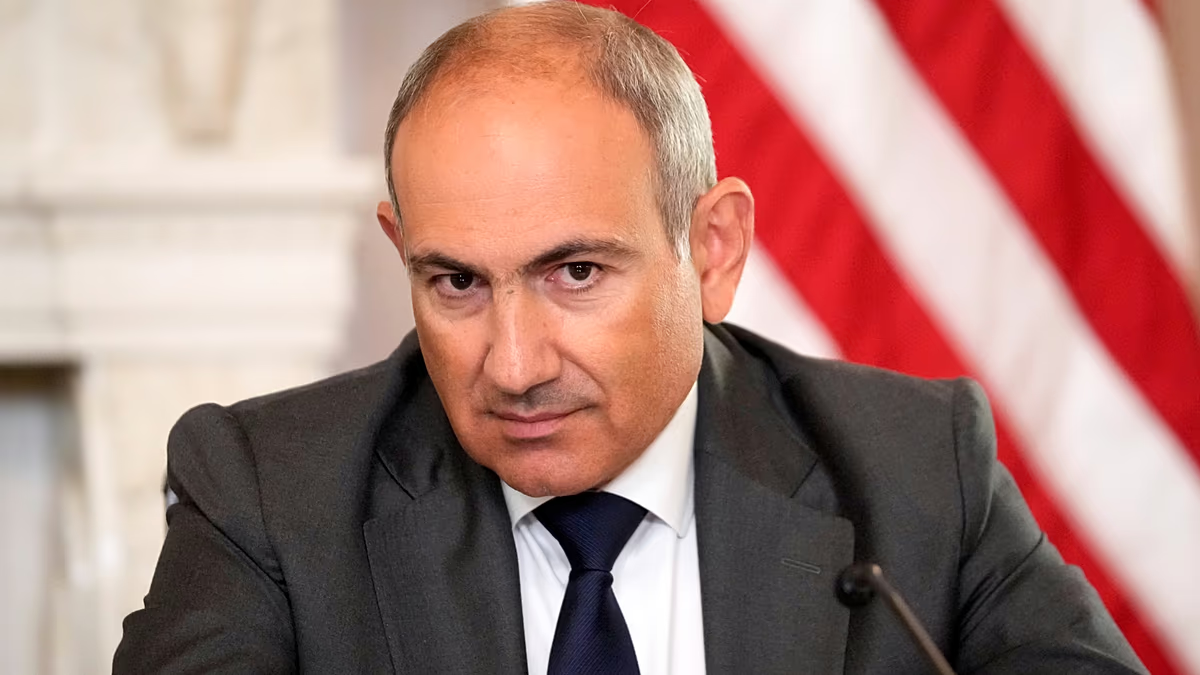
Armenia stands at a pivotal crossroads, with parliamentary elections on June 7th poised to decisively shape its future. Recent polling suggests a landslide victory for Prime Minister Nikol Pashinyan’s Civil Contract party, projecting it could secure nearly 65% of the vote. This would grant Pashinyan a formidable mandate, not merely to govern but to fundamentally redirect the nation’s geopolitical course. The election is thus more than a domestic political contest; it is a referendum on Armenia’s strategic identity. A strong victory for Pashinyan would empower him to solidify a dramatic realignment, steering Armenia away from its decades-long reliance on Russia and toward a more pro-Western path. This shift promises to reshape relationships across the South Caucasus, particularly by cementing a peace agreement with Azerbaijan and altering the balance of regional power.
Paragraph 2: The Regional and International Context
This potential realignment places Armenia directly on a collision course with Moscow. The peace agreement over Nagorno-Karabakh, brokered with Azerbaijan and notably involving the United States, is viewed by Russia as a diminishment of its traditional influence in the region. Furthermore, Pashinyan’s overtures toward the European Union represent a direct challenge to Moscow’s vision of a cohesive post-Soviet sphere under its leadership. Russia’s response has been swift and multifaceted, framing Armenia’s choices as a threat to regional stability within its economic and political alliances. The election, therefore, is being watched internationally as a test of whether a small nation can recalibrate its foreign policy against the intense pressure of a much larger, neighboring power.
Paragraph 3: Russia’s Campaign of Pressure
In recent weeks, Moscow has escalated from diplomatic warnings to overt economic and political coercion. It has imposed targeted trade bans on Armenian exports like mineral water, wine, and now certain fruits and vegetables—measures designed to cripple key sectors of Armenia’s economy. Simultaneously, Russia has threatened Armenia’s energy security by hinting at cuts to vital gas and oil supplies. Diplomatically, Russia recalled its ambassador to Yerevan “for consultations,” a stark signal of displeasure, and the Moscow-led Eurasian Economic Union (EAEU) issued a joint statement warning that Armenia’s EU aspirations pose “serious risks.” At a recent EAEU summit, Russian President Vladimir Putin drew a pointed parallel between Armenia’s situation and that of Ukraine, implicitly suggesting that seeking integration with the West could lead to similar conflict and instability.
Paragraph 4: The Information Battle and Domestic Politics
The pressure extends beyond economics into the heart of the electoral process itself. Moscow has mounted an intense disinformation campaign within Armenia, aiming to bolster pro-Russian opposition parties and undermine Pashinyan’s credibility. Reports from Western intelligence sources indicate more direct interventions, including plans to transport tens of thousands of Armenian voters from Russia to influence the election outcome. This creates a fraught domestic atmosphere where the campaign is not solely between Armenian political visions, but is also a battleground for foreign influence. The opposition, fragmented and individually polling below 12%, finds some of its factions actively supported by these Russian efforts, making the election a contest between a domestically popular agenda of change and externally backed forces favoring the status quo.
Paragraph 5: Western Endorsement and the Choice for Armenia
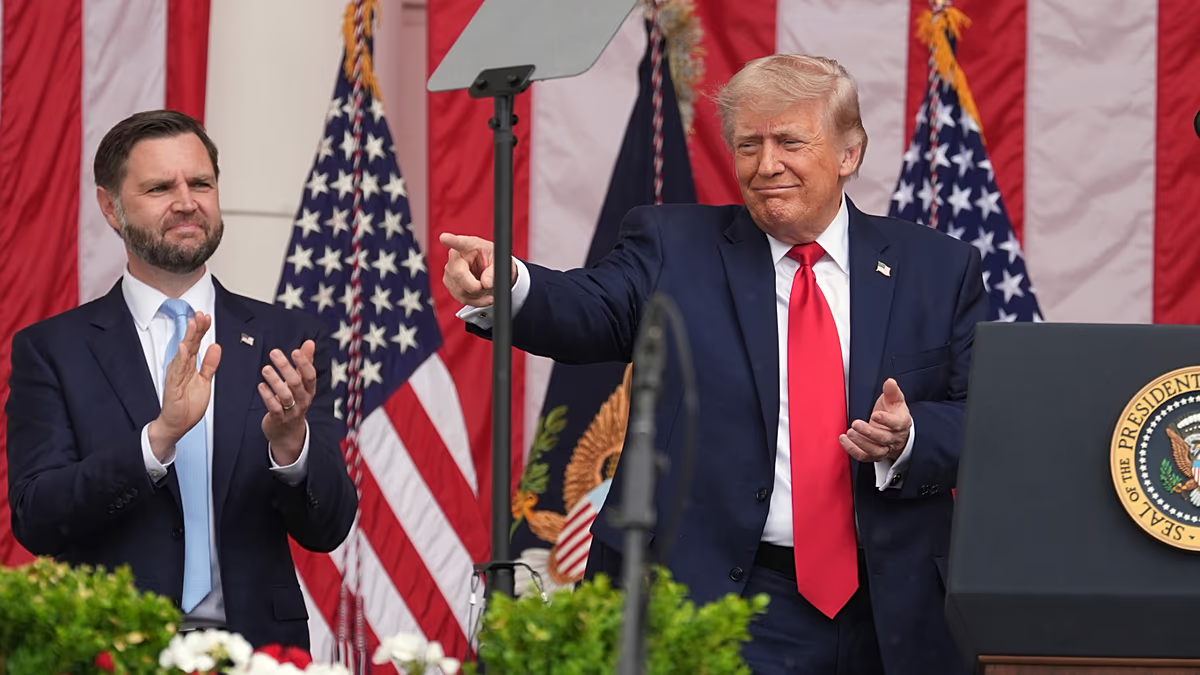
Against this backdrop of Russian pressure, Pashinyan has received significant, symbolic endorsement from the West. Former U.S. President Donald Trump offered his “complete and total endorsement,” praising Pashinyan as a leader making Armenia “strong, wealthy and very secure.” While not a current policy statement, this highlights the pro-Western narrative Pashinyan embodies. For many Armenians, the choice is framed as one between sovereign empowerment and continued subordination. Pashinyan’s platform argues that true security and prosperity come from diversifying alliances, integrating with global markets, and securing peace with neighbors, even if it requires painful concessions. His opponents warn that this path isolates Armenia from its traditional protector, Russia, and leaves it vulnerable without an alternative powerful guarantor.
Paragraph 6: The Historic Decision Ahead
The outcome on June 7th will therefore resonate far beyond Armenia’s borders. A decisive win for Pashinyan would likely lock in the country’s strategic pivot. It would validate a foreign policy born from the trauma of the Nagorno-Karabakh conflict and a desire for self-determination. It would signal a historic break from the post-Soviet orbit and an attempt to chart an independent course as a bridge between regions. Conversely, an upset victory for the pro-Russian opposition, however unlikely polls suggest, would halt this reorientation and potentially return Armenia to a more dependent relationship with Moscow. The Armenian electorate is thus voting on its immediate governance and on its century-long geopolitical posture, deciding whether to embrace a challenging but independent future or retreat to a familiar but constrained past.