


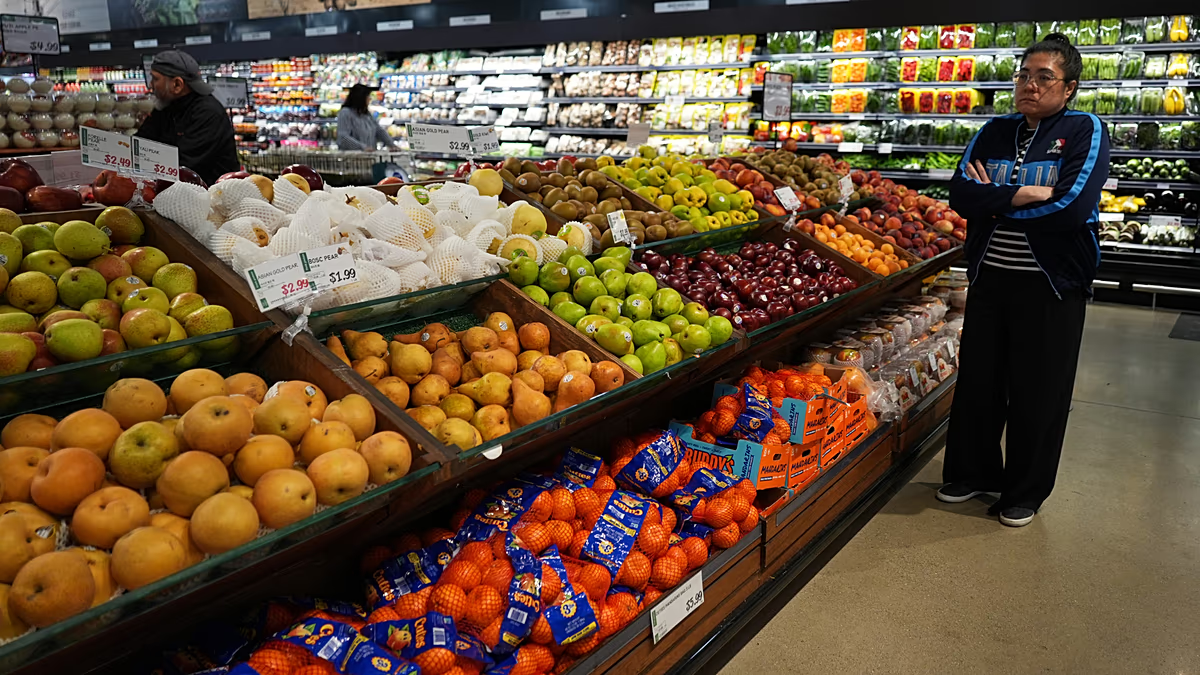
The economic headlines bring a cautious sense of relief: inflation is receding, central banks are easing their aggressive stance, and global conflicts have, so far, been contained from spiraling into broader economic chaos. Yet, this macro-level optimism evaporates the moment one pushes a shopping cart through the supermarket aisles. The dissonance between the official statistics and the reality at the checkout is stark and deeply personal. This is because lower inflation is not a panacea; it does not mean prices are falling. It signifies only that the rate of increase has slowed. The brutal food price shock of the past several years has permanently elevated our cost of living, embedding a new, higher baseline into our daily budgets. The mountain of accumulated price hikes remains, even if we are no longer sprinting up its slope at the same breakneck pace.
This statistical sleight of hand is central to the public’s frustration. When reported food inflation “falls” to 2.8%, it means your grocery bill is still growing, just slightly more slowly. The price level itself does not retreat. Data reveals the staggering scale of this accumulated climb: across the European Union, food and drink have seen the largest cumulative price jump of any consumer category since 2016, rising over 33%. Globally, food prices in mid-2025 were nearly 46% higher than at the end of 2019—a surge that took a mere six years, compared to the sixteen years it took pre-pandemic to achieve a similar increase. This relentless ascent weighs heavily on the psyche. People shop for food frequently and with little room for substitution, making it the most visceral gauge of inflation. It is no wonder that surveys now show one in three eurozone consumers worries about affording the food they want, a sobering metric in a supposedly recovering economy.
Just as the pressures from energy and snarled supply chains began to ease, a new and structurally persistent force emerged: the cost of labour. The workers who plant, harvest, process, transport, and sell our food have rightly demanded and received higher wages after years of squeezed incomes. While this is a positive social development, it introduces a fresh cost layer into the food system. Wages in critical sectors like agriculture and logistics saw significant jumps, often outpacing overall inflation. Since labour constitutes a substantial portion of food manufacturing costs, these increases inevitably ripple through to shelf prices. Analysts note that even as food inflation moderates, labour cost growth continues to outpace it in many countries, meaning retailers absorb some of the difference but cannot absorb it all. This wage pressure is projected to persist, signaling that the era of cheap food, built in part on cheap labour, is conclusively over.
Compounding this structural shift are renewed tremors from the very beginning of the supply chain. Just as global commodity prices seemed to stabilize, new shocks emerged. Agricultural input costs for items like milk, eggs, and cereals surged again in early 2025, and these upstream increases take months to propagate to supermarket shelves. More troubling are developments further back: the conflict in the Middle East has disrupted energy markets, spiking the cost of key fertilizers—a cost that will eventually manifest in future harvests and, consequently, future grocery bills. Central banks explicitly warn of these “lagged effects,” projecting that food inflation will remain stubbornly elevated into 2027. The reality is that the food system is constantly digesting past shocks while bracing for new ones, creating a rolling wave of cost pressures that retailers must eventually pass on.
Amid this pain, it is tempting to point fingers at supermarket profiteering. However, while episodes of margin expansion certainly occur, the broader sector does not fit the caricature of rampant greed. Industry analyses reveal that average profit margins in European grocery retail remain razor-thin, often below 3%, and many retailers have still not recovered their pre-pandemic profitability. These are low-margin, high-volume businesses with little financial buffer. When costs rise from wages, energy, packaging, or agricultural inputs, there is scarcely any room to absorb them. The fundamental mechanics of the industry mean that sustained cost increases must, over time, be reflected in consumer prices. The debate is not really if these costs will be passed on, but when and how they are distributed across different product categories.
Perhaps the most profound injustice lies hidden within the calm EU-wide averages. The story of a French consumer facing 0.7% food inflation is worlds apart from that of a Romanian facing 6.7%. But even these annual rates obscure the deeper, more devastating truth of cumulative price levels. Since 2015, food prices have more than doubled in Hungary and risen by over 80% in the Baltic states and Poland, compared to a 35% increase in France. This geographical disparity is brutally amplified by income. In nations like Romania and Bulgaria, food spending can consume a quarter of a household’s budget, compared to barely a tenth in Germany or Luxembourg. Therefore, a family in Eastern Europe is grappling with a cost of living that has soared to multiples of its past level, while dedicating a vastly larger share of its income to mere sustenance. This creates two separate economic realities within a single currency zone, revealing that the pain of “lower inflation” is not shared equally, and for millions, the trip to the supermarket remains a profound financial strain.