



Paragraph 1: A Family Holiday Turns Into an Ordeal
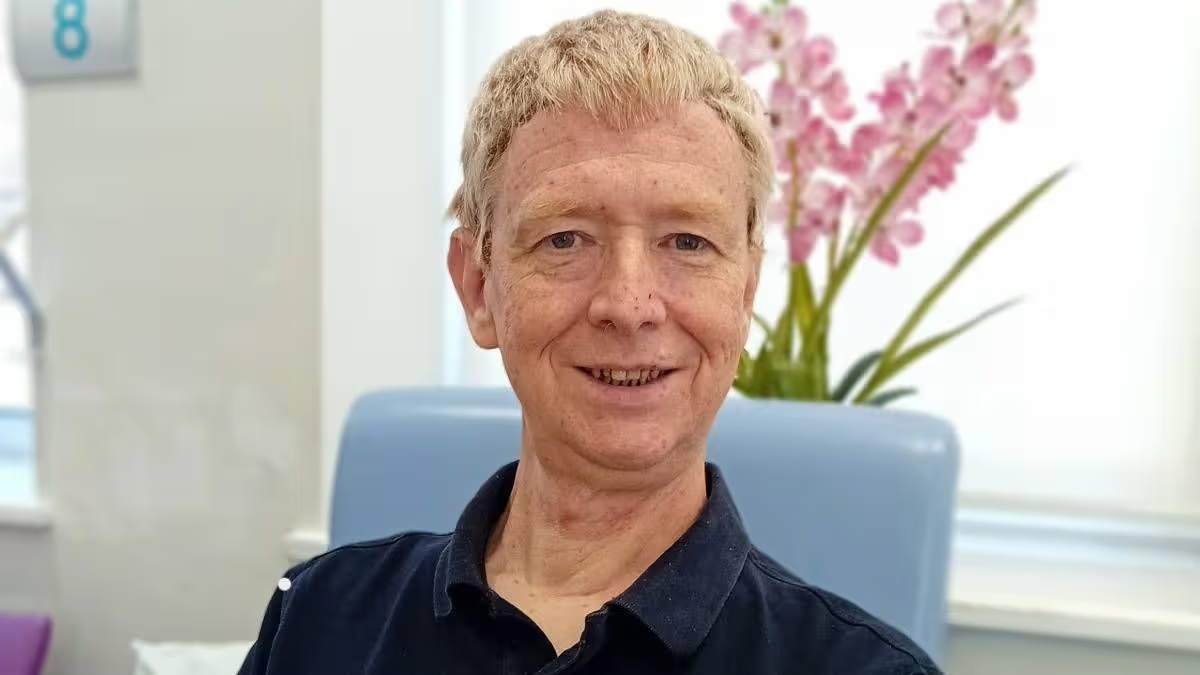
What began as a cherished family holiday in the sun-drenched Greek island of Kefalonia turned into a bureaucratic nightmare for Kyle Harris, his wife Ruth, and their two young sons. Upon arriving at the airport for their Jet2 flight home to the UK, their return was abruptly halted. Despite holding a US passport and having lived in the United Kingdom since he was a baby, Kyle Harris, 39, was refused boarding. The reason was a recent and little-publicised change in UK Home Office rules that now prevents dual nationals from entering the country using a non-UK passport without specific, costly documentation. In an instant, a simple journey home transformed into a stressful stranding, separating a father from his family and his life.
Paragraph 2: A Life Rooted in Britain, Suddenly Questioned
The refusal felt like a profound personal insult to Kyle and his family. For 39 years, his entire life has been built in South Yorkshire. He attended British schools, built a career, paid British taxes and National Insurance for 24 years, and is raising British children. Born in Maryland to a British mother and an American father serving in the RAF, he had always travelled on his US passport without incident. To be told at the airport that this lifelong proof of identity was now insufficient left him feeling like a foreigner in the only country he has ever called home. His wife Ruth captured the family’s shock and hurt on social media, lamenting how a system could make someone with such a deep, documented history of contribution suddenly feel unwelcome and forced to prove they belong.
Paragraph 3: The Harsh Reality of New Border Rules
The family was caught by a regulatory shift enacted in February. Previously, dual-national British citizens could often re-enter the UK on their other passport. The new rules require individuals to present either a valid UK or Irish passport or obtain a ‘certificate of entitlement to the right of abode’—a process costing £589. This change, part of a broader government move toward digital borders, aims to strengthen security but has ensnared unsuspecting citizens like Kyle. The family insists there was no warning during booking or check-in, and they were unaware of any significant public information campaign. Their case highlights a gap between policy implementation and public awareness, leaving ordinary families to face severe consequences.
Paragraph 4: A Health Crisis and a Heartbreaking Choice
The situation was compounded by a serious personal health concern. Kyle requires ongoing medication to treat a pituitary tumour, medication that is difficult to access and manage while stranded abroad. This added a layer of medical urgency to an already dire administrative predicament. At the airport, the family faced an unbearable choice: Ruth and their sons could board the flight without him. Ruth refused outright, stating she would not leave her husband stranded while their children cried for him. Instead, they chose to remain together in Greece, united but trapped, facing an uncertain and expensive path to resolution.
Paragraph 5: Navigating a Maze of Bureaucracy
Stranded, the Harris family embarked on a frustrating quest for solutions. They have reached out to the British consulate in Greece and the Foreign Office in London, submitting what Ruth describes as “lots” of evidence of Kyle’s life in the UK—tax records, birth certificates, and more—to prove his right to return. Their options appear limited to applying for an emergency British passport from abroad or the costly certificate of entitlement. Meanwhile, Jet2 stated their staff acted in accordance with government legislation and sought Home Office guidance, ultimately advising all travelers to check Foreign Office requirements—a step that comes too late for those blindsided by the quiet rule change.
Paragraph 6: A Wider Pattern and a Plea for Humanity
Kyle Harris’s story is not an isolated incident. Ruth reports hearing from other dual nationals similarly unaware of the new rules. Their experience raises urgent questions about the communication and compassion embedded within border security measures. While the government seeks greater control, cases like this reveal a system that can overlook the human realities of citizens with deep roots in the country. The Harris family’s ordeal is a plea for a system that recognises a lifetime of contribution, ensures clear communication of sweeping changes, and treats its citizens with the dignity their history deserves, rather than reducing them to insufficient documents in an airport queue. Their wait continues, a testament to the complex intersection of policy, identity, and family life.