


A New Map of European Real Estate: Finding Income Beyond the Glamour
For decades, a familiar mental map has guided real estate investment in Europe. The brightest spots are its legendary prestige addresses: the grand boulevards of Paris, the serene canal belts of Amsterdam, and the polished, prosperous districts of Munich. These markets are defined by deep liquidity and a historical narrative of prices moving largely in one direction: up. They represent safety, status, and the promise of enduring capital appreciation. However, draw a second, more pragmatic map—one that charts where landlords earn the highest rental income for every euro invested—and many of those celebrated cities fade into the background. New data reveals a compelling shift: some of Europe’s strongest buy-to-let opportunities are no longer in its traditional property hotspots, but in overlooked regional markets, particularly across Southern Europe. This analysis, drawing on figures from Global Property Guide and cross-referenced with major local property portals, ranks the top ten euro area cities by projected gross rental yields for 2026, painting a picture where robust income often requires looking beyond the postcard view.
This ranking reveals a continent-wide theme: the stark trade-off between prestige and yield. Nowhere is this clearer than in Rome, which opens the list in tenth place with a 7.12% average yield. In the historic heart of the city, where international buyers vie for property near the Pantheon, prices are stratospheric, severely compressing returns. A one-bedroom flat there can cost nearly half a million euros but yield a modest 5.51%. Step outside the tourist-thronged core, however, and the economics transform. Across the wider city, similar apartments cost half as much, pushing yields toward 7.7%, with studios delivering over 8%. This pattern of a high-priced, low-yield centre surrounded by more profitable periphery is a microcosm of a larger European story. Similarly, Turin, in fifth place with a 7.68% yield, embodies this divide. Long in the shadow of Milan, this elegant city offers remarkable value, with one-bedroom apartments generating yields above 10% in many areas. Yet, in its own historic centre around Piazza Castello, prices jump and yields halve, proving that even within promising markets, the quest for the finest address comes at a direct cost to rental income.
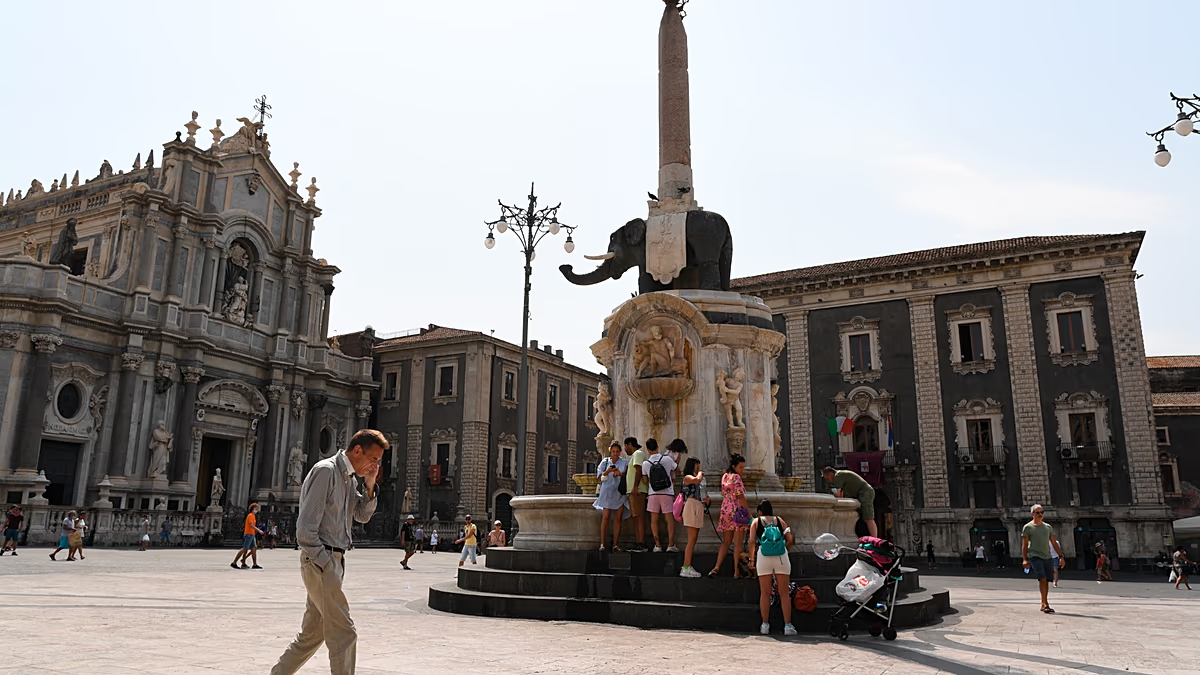
The dominance of Italian cities in the upper tiers of this ranking is striking, highlighting Southern Europe as the new frontier for yield-focused investors. Naples (8th, 7.22%) offers a vibrant, chaotic appeal and startling value, where a €70,000 studio can deliver a 12% gross yield, fueled by constant student and tourist demand. Further south, Sicily emerges as the undisputed champion. Palermo (2nd, 8.25%) combines majestic Norman architecture with some of Western Europe’s most accessible price points, generating yields nearing 10% for one-bedroom flats. Topping the entire list is Catania (1st, 9.17%), a city of Baroque grandeur and volcanic energy. Here, a one-bedroom apartment for €70,000 yields over 11%, while a €51,000 studio returns a chart-topping 12%. Proximity to the glamorous resort of Taormina ensures a perennial short-term rental market, solidifying its status as the eurozone’s premier buy-to-let market for pure rental return.
While Southern Europe shines for value, other regions offer high yields born from different market dynamics. Dublin (9th, 7.22%) and Cork (3rd, 8.20%) represent the potent combination of severe housing shortages and strong tech and pharmaceutical sectors driving relentless demand. In Dublin, this pressure sustains Europe-high rents, while Cork provides a more affordable Irish entry point with even stronger yields from larger units. In the north, the surprise contender is Finland’s Jyväskylä (4th, 8.02%). This university city in the lakelands, where students make up a third of the population, demonstrates that high yields aren’t solely a southern phenomenon. With one-bedroom flats yielding over 9%, it proves that consistent, captive demand from a student population can create a top-tier rental market even with modest capital growth expectations. Meanwhile, Riga (6th, 7.47%) presents a clear, if cautious, proposition: very strong yields supported by low entry prices, but with the acknowledged trade-off of virtually nonexistent capital appreciation over recent years.
The Spanish entry, Barcelona (7th, 7.40%), sits at a complex crossroads. It is the only major Spanish city in this yield-focused ranking, benefiting from Gaudí’s architecture and a global appeal that fuels demand from tourists, remote workers, and students. However, its presence here is underscored by a critical warning: scarcity. Analysts note that affordable rental housing in Catalonia is at historic lows, a supply crunch that props up rents and yields today but also signals a market under immense pressure and regulatory scrutiny. This highlights a crucial consideration for investors—high yields can be a symptom of overheating as much as opportunity. The data suggests that while Barcelona remains profitable, the window for finding value may be narrowing faster than in the less-saturated, rising markets of southern Italy or regional university towns.
Ultimately, this new map of European rental yields invites a fundamental reassessment of investment strategy. The glittering capitals will always hold allure for their stability and status, but for investors seeking the highest income from their capital, the path now leads away from the traditional boulevards. It winds through the vibrant, noisy streets of Catania and Palermo, the student quarters of Jyväskylä and Turin, and the undersupplied urban hubs of Ireland. These markets offer a different proposition: less about spectacular capital gains and more about the steady, compelling mathematics of high income relative to cost. They require an understanding of local dynamics—student populations, tourism flows, and economic diversification—over reliance on a global brand. In the evolving landscape of European real estate, the brightest spots for yield are no longer the most polished, but often the most pragmatic and overlooked.