


Of course. Here is a summary and humanized expansion of the content, structured into six paragraphs.
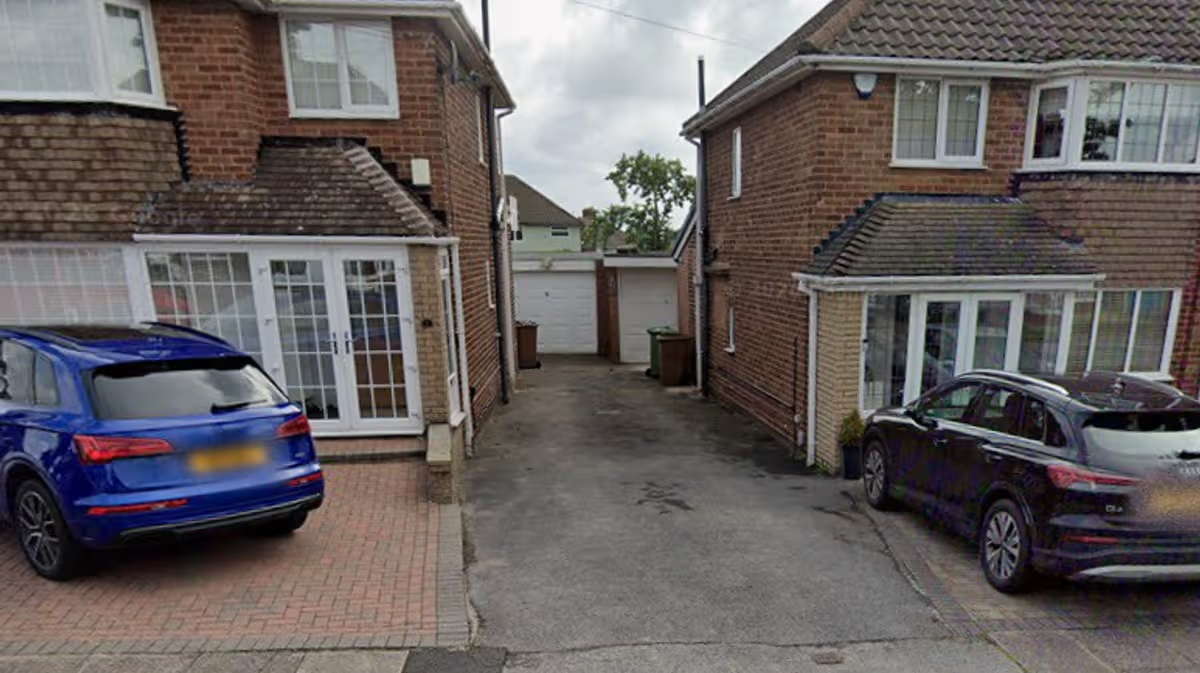
Imagine the whirlwind of finally securing your dream home, unpacking boxes, and beginning the slow process of turning a house into a home. In the midst of this fresh start, a new neighbour extends a hand—not just with a welcome, but with a surprising and substantial cash offer. This was precisely the situation faced by a UK homeowner who, shortly after purchasing a property, was approached by the resident of the house situated at the bottom of their shared driveway. The neighbour proposed to buy the driveway itself for £5,000, emphasizing their intention to take over all maintenance and “make it nice.” For the new homeowner, who acknowledged that aesthetic upgrades were a low financial priority, the offer presented a tantalizing shortcut: a cash injection and freedom from upkeep. Yet, the arrangement was inherently complex, as this driveway was not merely a strip of land; it served as the sole access point for both properties, placing the homeowner in a position of unique responsibility and control.
Seeking clarity, the homeowner turned to an online legal forum, outlining the proposal and asking for pragmatic advice. They queried whether selling was a bad idea, what a reasonable price per square foot might be, and how such a transaction would be legally structured in England. The posture was one of open consideration, weighing the immediate benefit of £5,000 against the long-term implications. At first glance, the deal seemed to offer a tidy solution, relieving the owner of a burden while granting the neighbour the certainty of controlling their own access. This practical framing, however, would soon be met with a tidal wave of caution from the community, which immediately identified the profound pitfalls hidden beneath the surface of the offer.
The response from seasoned forum contributors was swift, unanimous, and emphatic. The very first reply set the tone: “Never in a million years.” Commenters universally warned that divesting the driveway would catastrophically diminish the property’s market value. They reframed the issue from a simple land sale to the loss of a fundamental amenity. As one person starkly put it, losing dedicated on-property parking would render the home a non-starter for a vast pool of future buyers. The £5,000 offer was revealed as a pittance compared to the tens of thousands of pounds in value that could be erased from the home’s overall worth. The advice highlighted that the homeowner wasn’t just selling gravel or tarmac; they were selling a key functional feature, a process as logically suspect as selling off the space around one’s own front door.
Beyond the financial devaluation, the community illuminated a more precarious and personal risk: the loss of autonomy and the creation of a dependency. By relinquishing ownership, the homeowner would place their own access rights in the hands of the neighbour. This could transform a currently straightforward relationship into one fraught with potential conflict. What if future disagreements arose? What if the neighbour decided to restrict access for repairs, or impose inconvenient rules? The sale would permanently alter the power dynamic, making the original owner reliant on the “goodwill” of another for something as essential as reaching their own home. This point struck at the heart of homeownership, which is as much about security and control as it is about investment.
Confronted with this collective wisdom, the homeowner’s perspective underwent a complete transformation. Their initial question about “reasonable sum per sq ft” was gently corrected as a “massively flawed” approach, failing to account for the intangible value of utility and control. When directly asked if they were prepared to see their property’s value “massively downgraded,” the homeowner replied with telling clarity: “Would prefer that not to happen! Thanks.” This moment of realisation was crucial. The conversation had successfully shifted their focus from the short-term gain of £5,000 to the long-term security and worth of their largest asset.
Ultimately, the crowd-sourced counsel provided the homeowner with the confidence to make a firm and final decision. The initial temptation was completely overridden by the stark assessment of the risks. They returned to the forum not with more questions, but with a resolved declaration: “Clearly a terrible idea. WILL NOT SELL DRIVEWAY. Thanks for sounding it out.” This conclusion underscores a vital lesson for any property owner: some assets, particularly those tied to core functionality and access, hold a value far exceeding their square footage or immediate monetary appeal. The episode serves as a powerful reminder that the true cost of a quick cash offer often lies in the permanent surrender of security, autonomy, and future prosperity.