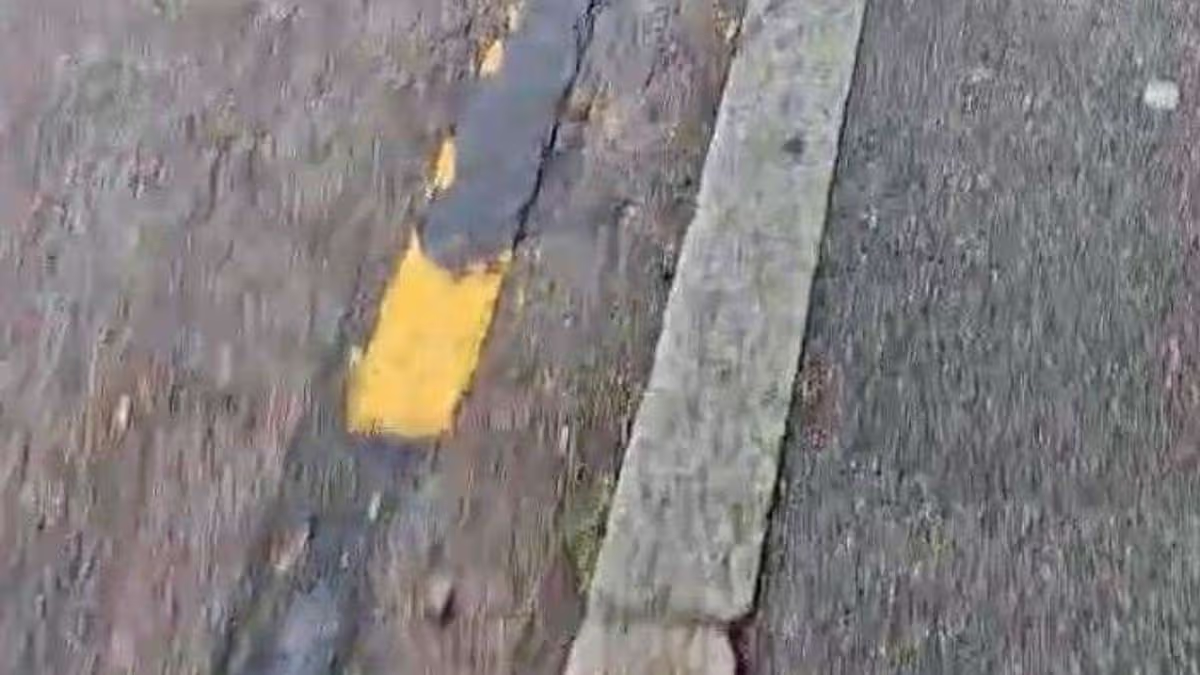



In the coastal Kent town of Margate, within the small residential area of Park Place, a peculiar and persistent drama is unfolding, pitting a mysterious individual against the local authorities. The issue at its core is a familiar urban frustration: a severe shortage of parking. The street is lined with restrictive yellow lines, leaving residents with few legal places to leave their vehicles. In response to this daily inconvenience, an anonymous “bandit” has taken matters into their own hands, embarking on a clandestine campaign of defiance. Armed seemingly with nothing more than a tin of black paint, this mystery artist has been selectively painting over the yellow lines, effectively—if temporarily—creating new parking spots under the cover of night. This act of guerrilla urban modification has both baffled and amused the community, introducing an element of whimsical rebellion into the otherwise rigid framework of council regulations.
The reaction from locals like retiree Carole Laker has been one of quiet delight and amusement rather than outrage. She describes the scenario as “really funny,” picturing the anonymous painter “out in the dead of night with their tin of paint.” For residents who grapple with the parking restrictions daily, the bandit’s actions feel like a shared, if secret, act of protest against a frustrating system. Ms. Laker empathizes with the likely motivation, imagining someone thinking, “I want to park outside my own house and not be restricted by these blooming lines – what can I do?” This sentiment highlights the very human desire for convenience and a sense of ownership over one’s immediate environment, which the blanket council rules appear to overlook. The painter, therefore, has become an unlikely folk hero, a symbol of small-scale resistance that has “tickled” the neighborhood.
However, this whimsical standoff is not without its official consequences. The Thanet District Council (TDC) is obliged to treat the matter seriously. Each time the yellow lines are obscured, council teams are dispatched to restore them, engaging in a repetitive cycle of paint and repaint. The council spokesman underscores that these restrictions exist for critical reasons: to manage congestion, ensure access for emergency vehicles, and maintain general road safety. The covering of the lines, they state, is an unauthorized act that creates risks and undermines a carefully, if imperfectly, planned system. The council’s position is firm and bureaucratic: the lines will be continually reinstated, and residents are urged to report any such vandalism. This creates a stark contrast between the council’s procedural worldview and the painter’s direct, personal intervention.
The dynamic has evolved into a silent, cyclical battle—a “yellow line saga,” as Ms. Laker puts it. It raises questions about the nature of civic disobedience and the point at which a nuisance becomes a protest. Is this a personal vendetta by one particularly inconvenienced individual, or a symbolic act for the whole street? The council has not escalated the matter by installing CCTV or publicly launching an investigation for the culprit, suggesting they view it more as a persistent nuisance than a major crime. Yet, their unwavering commitment to repainting signifies that the rule of law, as represented by road markings, must visibly prevail. Each fresh coat of council yellow over the bandit’s black is a reassertion of control, only to be potentially challenged again under the next cloak of darkness.
This ongoing tale encapsulates a broader tension between individual needs and collective governance. Parking policies are designed for the greater good of traffic flow and safety, but they can feel oppressive and impersonal to those living with their constraints daily. The Margate painter is enacting a very literal form of feedback, using paint to erase what they perceive as an unfair barrier. While the council’s response is predictable and necessary from an administrative standpoint, it fails to address the underlying grievance—the lack of parking—that fuels the conflict. The cycle of paint suggests a dialogue of the deaf, where the action (erasure) and the reaction (restoration) communicate frustration but do not lead to resolution or compromise.
Ultimately, the story of the “double yellow line bandit” is a modern urban fable. It is less about parking and more about a human desire for agency within a system that often feels immutable. The mystery painter, whose identity may never be known, has achieved a minor legend status by performing a simple, defiant act that many have likely fantasized about. For the residents, it provides a continuing source of humor and a touch of intrigue in their daily lives. For the council, it is a recurring maintenance task. And for observers, it serves as a charming reminder of the quiet, sometimes poetic, ways in which individuals can push back against the structures that shape their everyday world, turning a mundane street into a stage for a slow-motion, paint-splattered ballet of dissent.