


Here is a humanized and expanded summary of the provided content, structured into six paragraphs as requested.
Paragraph 1
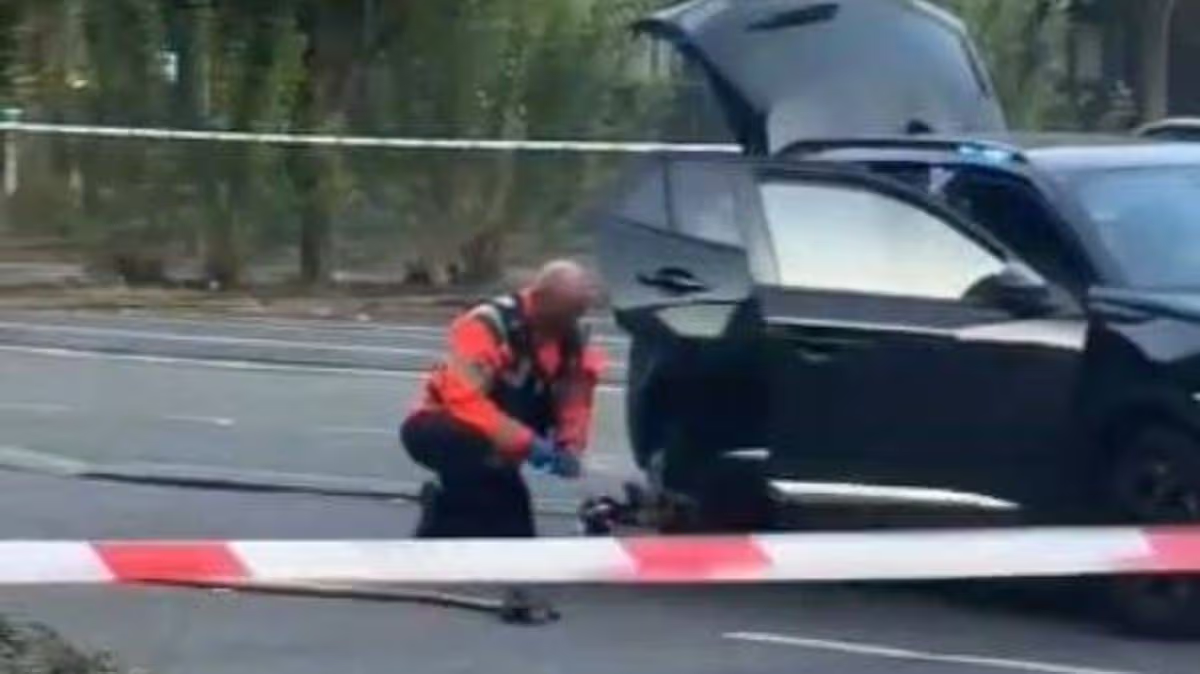
A quiet Wednesday evening in Salford was abruptly transformed into a scene of high-alert emergency response. Shortly after 9 p.m. on May 27th, the familiar routine of the Loganberry Avenue area, nestled near a local shopping precinct, was interrupted by the swift arrival of police and fire crews. The urgency of the situation was immediately communicated to the public as authorities moved decisively to tape off a section of the street, establishing a secure perimeter. This action, always unsettling to witness in one’s own neighborhood, signaled that something out of the ordinary was unfolding, prompting both concern and curiosity among residents.
Paragraph 2
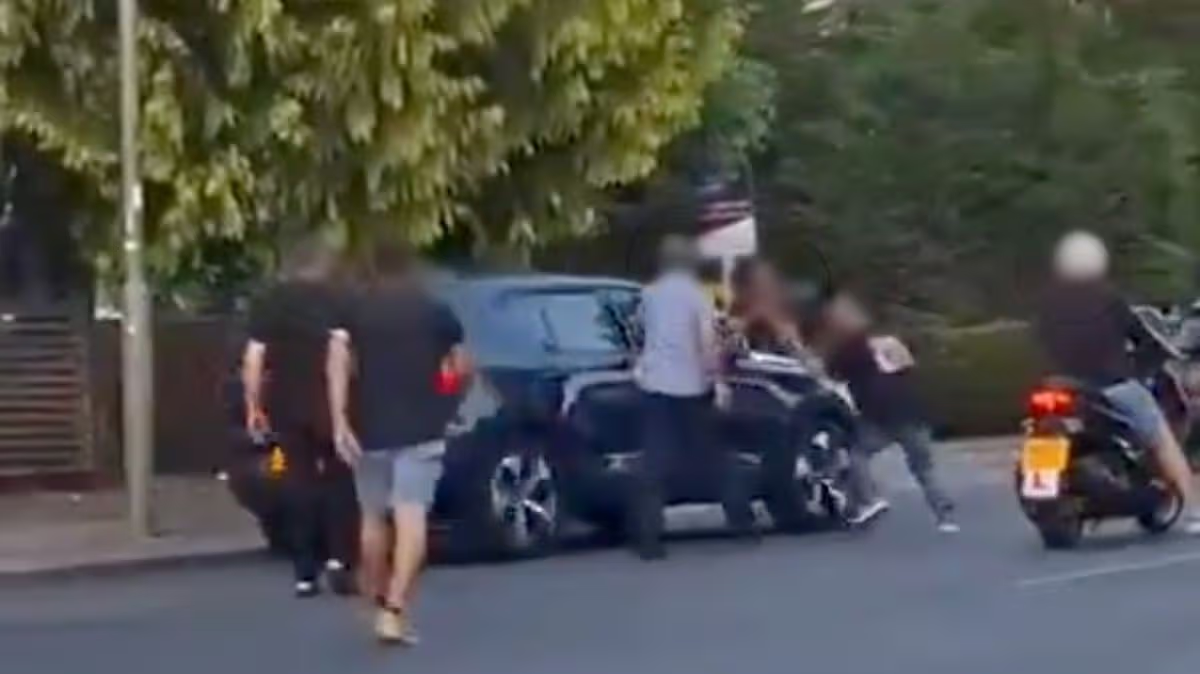
The focus of this coordinated operation was a black vehicle, which became the subject of intense scrutiny. In a reflection of the potential severity of the call, the response team included not only standard fire engines but also armed police officers—a sight that underscores the protocol for incidents involving unknown hazards. Their presence added a palpable gravity to the scene. As the professionals worked, snippets of the operation began to circulate within the community, not through official bulletins, but via modern word-of-mouth: social media. A Snapchat video, shared publicly, offered a citizen’s perspective, capturing the fleet of emergency vehicles with their flashing lights piercing the dusk, a visual testament to the scale of the response.
Paragraph 3
The catalyst for this mobilization was a report concerning a suspected hazardous substance. Such alerts trigger a pre-defined and cautious protocol, where the primary objectives are containment, assessment, and the absolute safety of the public and the responders themselves. Details were scarce in the initial moments, as they often are in developing situations, leaving room for speculation. However, the visible and decisive actions—the cordon, the specialized personnel, the methodical examination of the car—spoke louder than words, indicating that the authorities were treating the threat as credible and acting with an abundance of caution.
Paragraph 4
On the front line of the hazard assessment were the firefighters from the Greater Manchester Fire and Rescue Service (GMFRS). According to their official statement, two fire engines from the Salford station responded promptly to the call, which was initially logged on Hankinson Way, a location integral to understanding the incident’s scope. Their expertise was crucial in the next, critical phase: working in tandem with police colleagues to safely approach the vehicle, identify any potential danger, and neutralize it. The firefighters’ role in such incidents is one of applied science and bravery, requiring them to diagnose a threat and render it harmless.
Paragraph 5
The inter-agency collaboration proved effective. After approximately 45 minutes of meticulous work at the scene, the firefighters successfully completed their primary mission. A GMFRS spokesperson confirmed that the suspected substance was thoroughly “assessed and controlled,” a piece of terminology that, while formal, would have been deeply reassuring to the community. With the immediate hazard mitigated, the incident was formally handed over to the care of Greater Manchester Police. This transition marked a shift from emergency containment to investigation, as the firefighters departed, their task accomplished.
Paragraph 6
While the swift response resolved the imminent danger, questions naturally remained about the origins and nature of the incident. The conclusion of the fire service’s involvement did not signify the end of the matter. As stated, Greater Manchester Police were approached for a fuller statement to provide context and closure. The event, from the first alarm to the standing down of the fire crews, serves as a compelling snapshot of a community’s emergency infrastructure in action. It highlights the silent, often unnoticed, readiness of these services to manage uncertainty and protect public safety, ensuring that what began as a potentially dangerous evening on Loganberry Avenue concluded without injury or widespread disruption.