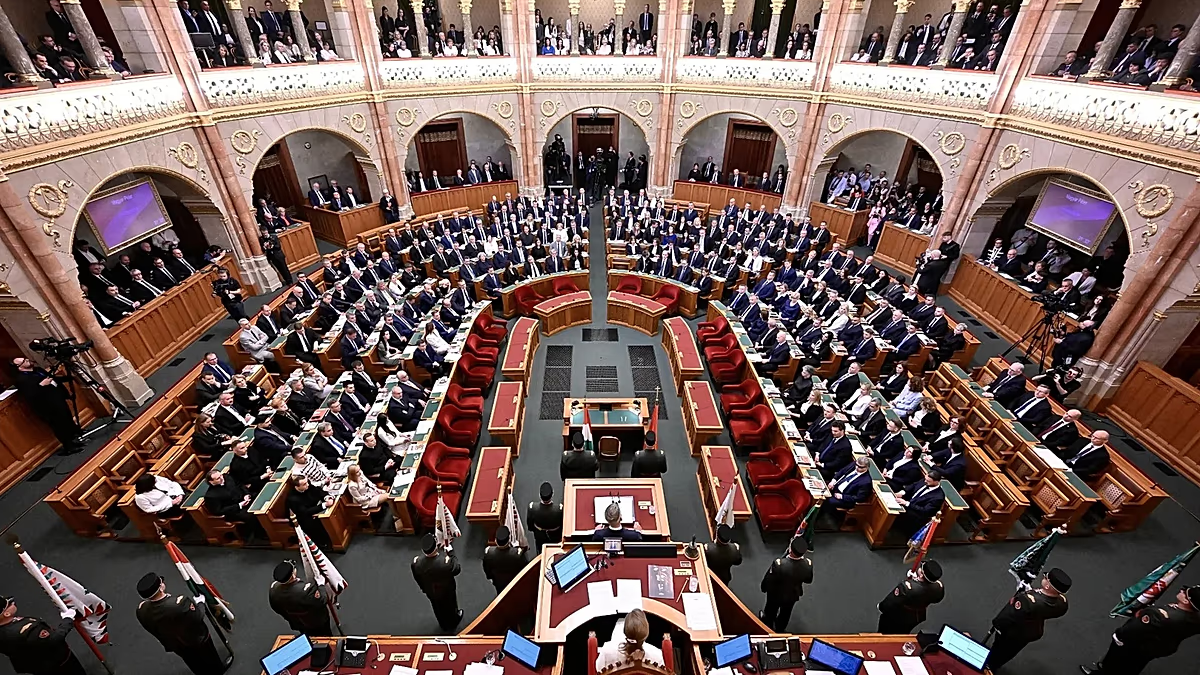



In a swift and decisive legislative move, the Hungarian National Assembly has voted to reverse its planned withdrawal from the International Criminal Court (ICC), marking a significant reversal of foreign policy. The bill, submitted by Prime Minister Péter Magyar, was rushed through a fast-track parliamentary procedure. With an overwhelming majority of 133 votes in favor, against 37 opposed and 5 abstentions, the body moved to formally repeal the law that had set Hungary on a path to exit the international tribunal. This vote, held just before a critical deadline, now sends the legislation to President Tamás Sulyok to be signed into law, concluding a tumultuous chapter that began under the previous administration. This action signifies not just a procedural shift, but a profound realignment of Hungary’s stance on international justice and its role within the global community, re-embracing a system it had recently sought to abandon.
The move to withdraw had been initiated last year by the government of former Prime Minister Viktor Orbán, a period marked by increasing friction with European Union institutions and a nationalist, sovereigntist political stance. The announcement of withdrawal notably coincided with a visit from Orbán’s political ally, Israeli Prime Minister Benjamin Netanyahu. The timing was seen as highly symbolic, given the ICC’s subsequent issuance of arrest warrants in 2024 for Netanyahu and other top Israeli officials over alleged war crimes and crimes against humanity in the conflict with Hamas. By reversing this withdrawal, the new Hungarian government under Péter Magyar is consciously distancing itself from the previous administration’s foreign policy allegiances and reasserting a commitment to multilateral legal frameworks, even when they may implicate allied nations.
However, the debate within parliament revealed deep and persistent divisions over the court’s legitimacy and function. Opponents of the reversal, led by figures like former minister János Bóka of Orbán’s Fidesz party, criticized the accelerated legislative process for stifling substantive debate. Their core argument extended beyond procedural complaints to a fundamental skepticism of the ICC itself. Critics contended that the court has devolved into a political instrument, vulnerable to bias and selective prosecution. This sentiment was echoed by István Apáti of the far-right Our Homeland Movement, who even proposed the ambitious—and diplomatically fraught—idea of creating an alternative international court under Hungarian leadership, reflecting a deep-seated distrust of existing global institutions.
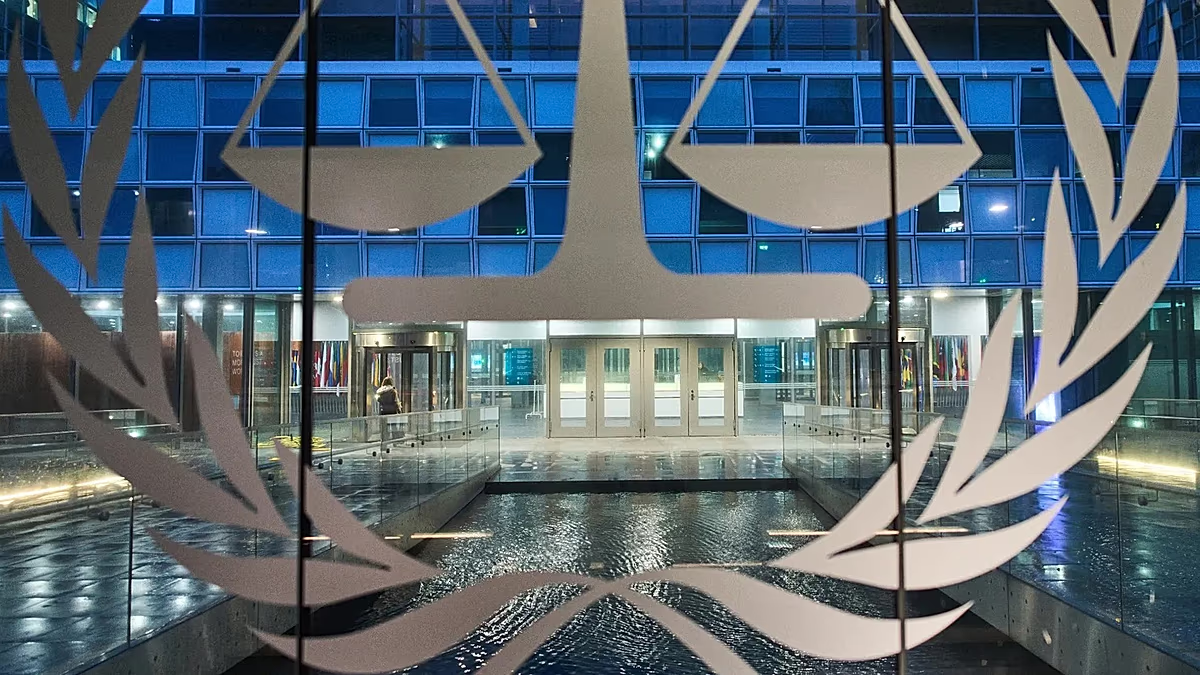
The ICC itself has warmly welcomed Hungary’s change of heart, with its legislative body praising it as an “important decision.” This endorsement underscores the court’s ongoing struggle for universal recognition and enforcement power. Established in 2002 and supported by 125 member states, the Hague-based tribunal was founded on the noble principle of prosecuting genocide, war crimes, and crimes against humanity when national judicial systems fail to act. Yet, its two-decade history has been fraught with challenges, including a limited number of concluded cases and the persistent refusal of major powers like China, Israel, Russia, and the United States to recognize its jurisdiction. Hungary’s return, therefore, represents a moral and political victory for the court, bolstering its roster of members at a time when its authority is frequently contested.
Prime Minister Magyar’s new position creates a complex diplomatic tightrope, particularly concerning Israel. He has stated unequivocally that Hungary would execute ICC arrest warrants against anyone, a declaration that pointedly includes Netanyahu. This stance appears directly at odds with a previous invitation for the Israeli leader to visit Budapest later this year, an invitation extended during the previous administration. Opposition parties were quick to pounce on this contradiction, arguing that hosting a leader subject to an ICC warrant is fundamentally incompatible with membership in the court. This tension highlights the real-world dilemmas that come with this policy reversal, forcing Hungary to navigate between upholding international legal principles and managing sensitive bilateral relationships.
Ultimately, Hungary’s U-turn on the ICC is more than a simple policy correction; it is a statement of values and a recalibration of its geopolitical identity. By choosing to remain within the fold of international criminal justice, the nation reaffirms a belief in a rules-based global order, even as it acknowledges the institution’s imperfections. The debate within its parliament mirrors a larger global conversation about accountability, sovereignty, and the pursuit of justice in an imperfect world. The decision signals a potential shift toward renewed engagement with multilateral European and global institutions, setting a new course that prioritizes cooperative legal frameworks over the unilateralism that characterized recent years. The world now watches to see how this renewed commitment will be tested and upheld in practice.