

The Delicate Dance of Diplomacy and Threats: President Trump’s Stance on Iran
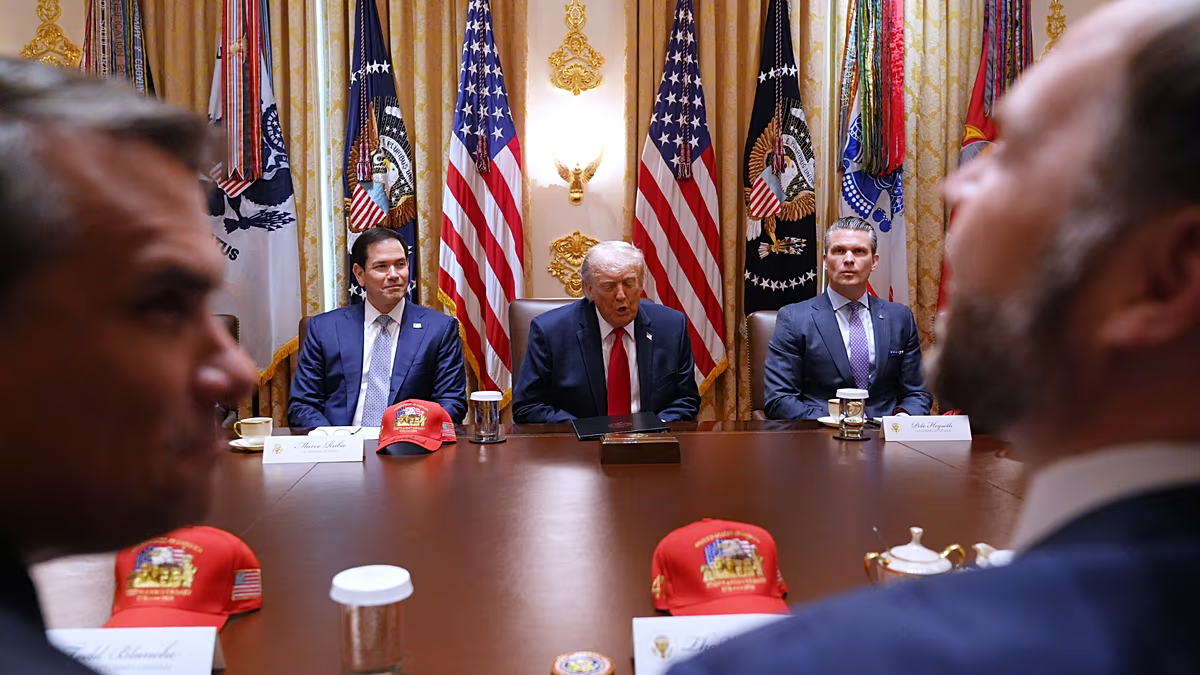
In a statement issued from the White House on Wednesday, May 27, 2026, President Donald Trump presented a complex picture of the ongoing negotiations with Iran, blending cautious optimism with stark warnings. Speaking at a cabinet meeting, the President acknowledged Iran’s apparent desire to reach an agreement to end the conflict that began with joint U.S. and Israeli military operations in late February. However, he expressed clear dissatisfaction with the current proposals, stating, “We’re not satisfied with it, but we will be.” This ambivalence underscores the fragile state of the talks, where hope for a diplomatic resolution is tempered by hardened positions and mutual distrust. Trump emphasized he was “in no rush” to finalize an accord, despite weekend comments suggesting a deal was near, indicating a strategic patience aimed at securing terms favorable to the United States.
Iranian Proposals and American Rebuttals: A Clash of Narratives
The tension was immediately evident in the conflicting narratives emerging from the two sides. Iranian state-run television broadcast details of what it claimed was a draft memorandum of understanding. This alleged outline included significant concessions from Washington: lifting the naval blockade on Iran, restoring normal traffic through the strategically vital Strait of Hormuz, and withdrawing U.S. forces from the Gulf region. Such terms would represent a dramatic reversal of the current military and economic pressure on Tehran. The White House swiftly dismissed this report as a “complete fabrication,” highlighting a deep disconnect in public messaging. This clash suggests that either side may be testing public opinion or negotiating through media leaks, a tactic that further complicates the already sensitive diplomatic process.
Military Posturing and the Shadow of Force
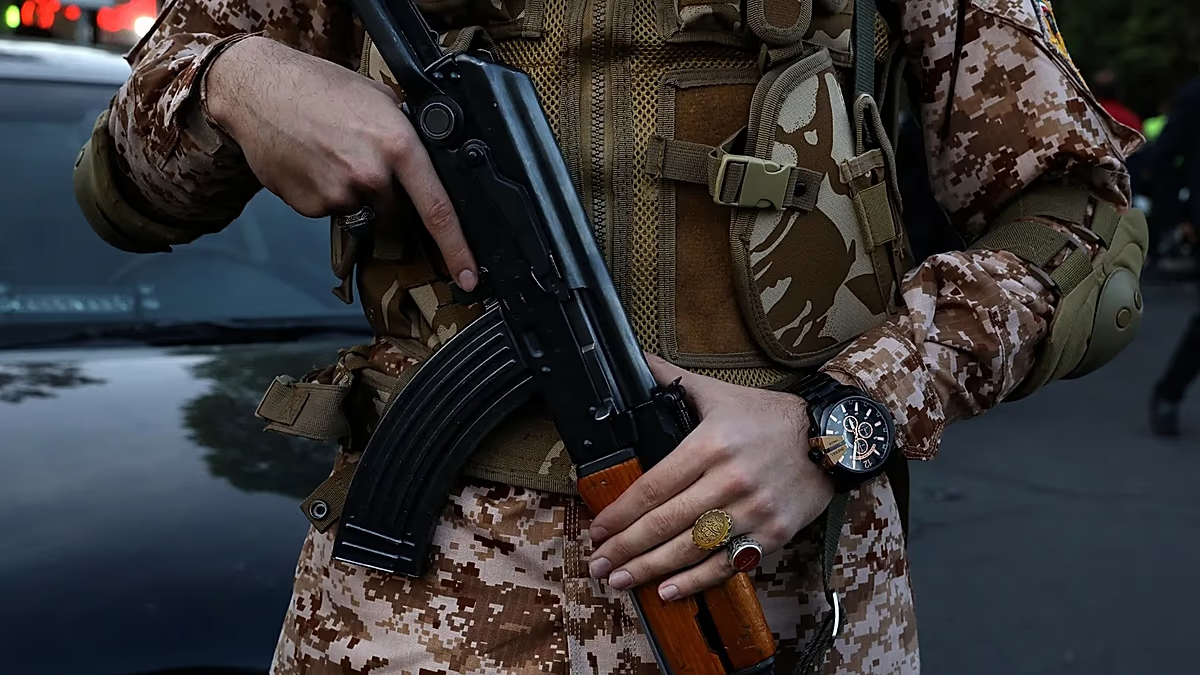
Even as diplomatic channels are active, the shadow of military conflict looms large. The Islamic Revolutionary Guard Corps (IRGC), Iran’s powerful military branch, responded to threats of resumed operations by defiantly stating it would turn its coastline into a “graveyard for the aggressors.” President Trump, in turn, dismissed the Iranian negotiating position as being “on fumes,” a phrase implying their leverage is dwindling. He then issued a stark, and somewhat confused, warning regarding control of the Strait of Hormuz. Rejecting any notion that Iran or Oman could control the waterway or implement a toll system, Trump stated, “Oman will behave just like everybody else or we will have to blow them up.” While this comment seemed directed at Iran, its mention of Oman introduced a new element of uncertainty and aggression, reminding all regional players of the potential for overwhelming U.S. force.
Expanding the Agenda: Linking Deal to Broader Regional Goals
President Trump further complicated the potential agreement by linking it to his broader foreign policy vision for the Middle East. He suggested that an Iran deal might be contingent on Saudi Arabia and other nations formally signing the Abraham Accords, which normalize relations with Israel. “I’m not sure we should make the deal if they don’t sign,” he stated. This connection expands the negotiation beyond immediate ceasefire terms and the nuclear issue, tying it to a long-standing U.S. objective of reshaping regional alliances. It presents a significant new hurdle for Iran, as it indirectly demands that Tehran accept, or at least not obstruct, a geopolitical realignment that strengthens Israel’s position among its neighbors.
The Core Issue: Nuclear Uranium and Interim Solutions
At the heart of the original conflict is Iran’s nuclear program. Trump reiterated that he launched the war to prevent Tehran from obtaining a nuclear weapon. However, he appeared to confirm that the current draft might defer a final solution on Iran’s stockpile of enriched uranium, focusing instead on reopening the Strait of Hormuz to ensure global oil traffic. When asked if he would accept a deal that merely calls for further talks on uranium, he replied, “Well, I would for some of it… Because it’s a memorandum of understanding for speed.” This indicates a potential pragmatic, step-by-step approach, prioritizing an immediate easing of tensions and economic relief over a comprehensive, instantaneous resolution of the most contentious issue. He also ruled out letting Russia or China take custody of Iran’s uranium, closing off another suggested pathway.
The Path Forward: A Moment of Critical Uncertainty
Summarizing the situation, U.S. Secretary of State Marco Rubio, seated beside the President, noted there had been “some progress and some interest” in the talks. His concluding remark, “We’ll see over the next few hours and days whether progress can be made,” captures the acute uncertainty of this moment. The world is witnessing a high-stakes diplomatic ballet, where the desire for peace is counterbalanced by threats of devastating force, and where the terms of a deal extend beyond ending a war to reshaping the regional order. President Trump’s statements reflect a strategy of applying maximum pressure, both rhetorical and military, to extract a favorable and expansive agreement. The coming hours and days will determine whether this pressure leads to a breakthrough or a breakdown, with the fate of the region hanging in the balance.