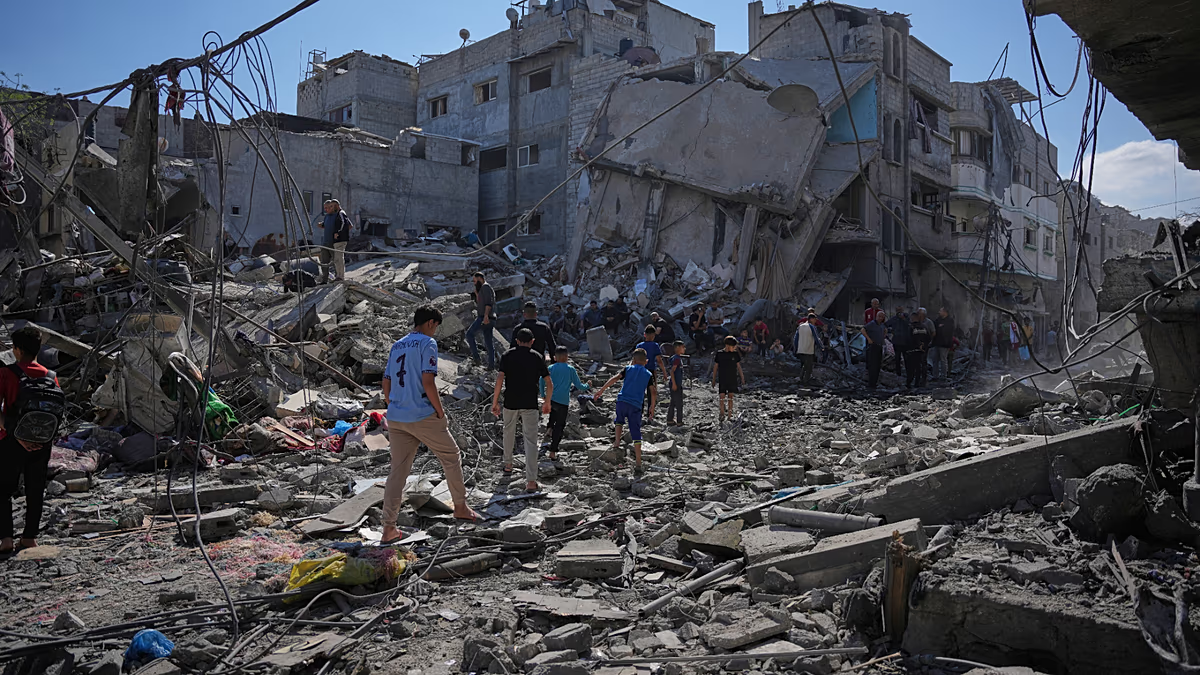
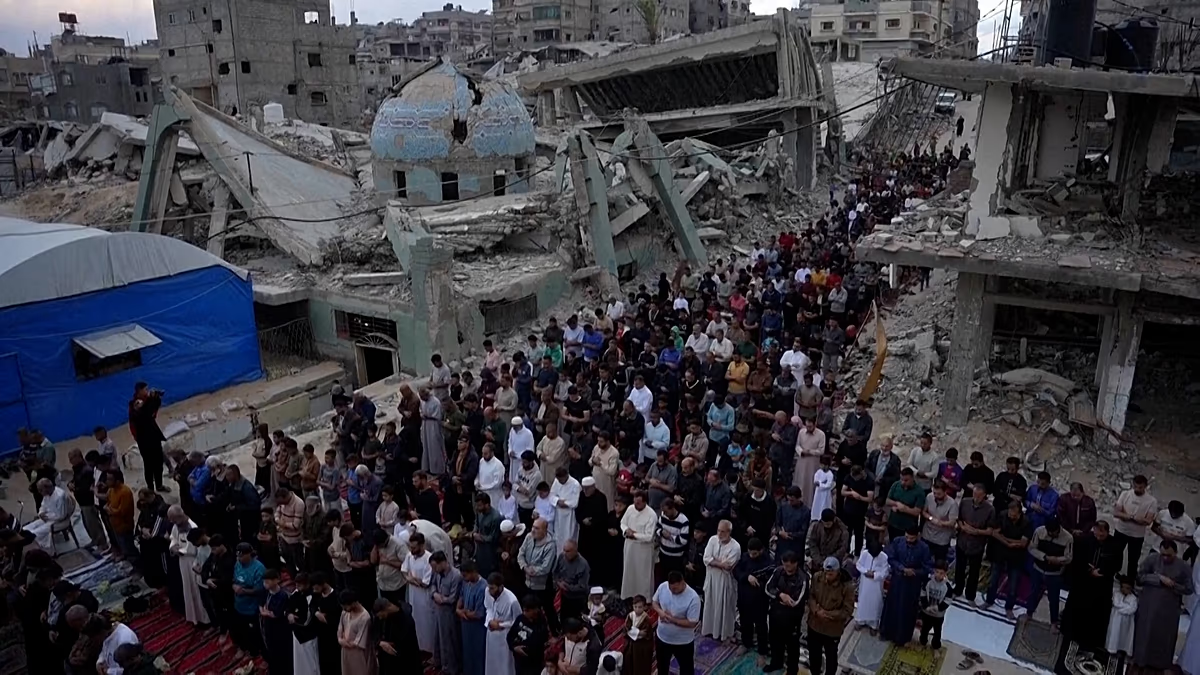


In the shadow of shattered buildings and amidst fields of rubble, worshippers in Gaza laid their prayer mats this Eid al-Adha. The act, normally performed in clean courtyards or grand mosques, was instead conducted beside the ruins of homes and lives, a stark visual testament to the profound disruption of a sacred tradition. This holiday, known as the Feast of Sacrifice, is one of the most significant in Islam, traditionally marked by joyous family reunions, the sharing of gifts, and abundant communal meals that symbolize faith and gratitude. Yet for the residents of Gaza, the very essence of celebration has been extinguished after years of unrelenting conflict, widespread displacement, and cumulative personal loss. The atmosphere, as described by Mahmoud Saqer in Khan Younis, is one of pervasive distress and mourning. His simple, heartbreaking declaration—“There’s no Eid”—echoes the sentiment of a civilian population enduring continued violence, where the foundational pillars of peace and safety necessary for observance have been completely eroded.
The contrast between the global Muslim experience of Eid and the reality in Gaza is agonizingly sharp. While the holiday elsewhere brings a pause from daily routines for prayer, feasting, and familial warmth, in Gaza the struggle is elemental: the fight for mere survival dominates every moment. Ayda Al-Banna, attending prayers in Gaza City with her granddaughter, articulated this devastating shift. Having lost her children to the conflict, she stated that Eid now holds no meaning for her. Her testimony reveals how profound trauma has severed the spiritual and emotional connection to a ritual meant to reinforce community and faith. For many, the holiday’s core themes of sacrifice and remembrance have been coarsely literalized by the war, transformed from a spiritual exercise into a daily, unbearable reality of loss.
Visual evidence from cities like Gaza City and Khan Younis corroborates this somber narrative. Photographs captured only the most fleeting, isolated signs of attempted celebration—a handful of balloons clinging to life near streets defined by devastation. These sparse tokens of normality appear almost surreal against the overwhelming backdrop of collapsed infrastructure, pulverized neighborhoods, and the endless debris of war. The physical landscape itself reflects the inner reality: the capacity for festive expression has been crushed under the weight of destruction. The war has not only ravaged buildings but also dismantled the social and emotional frameworks that enable a community to collectively experience joy and tradition.
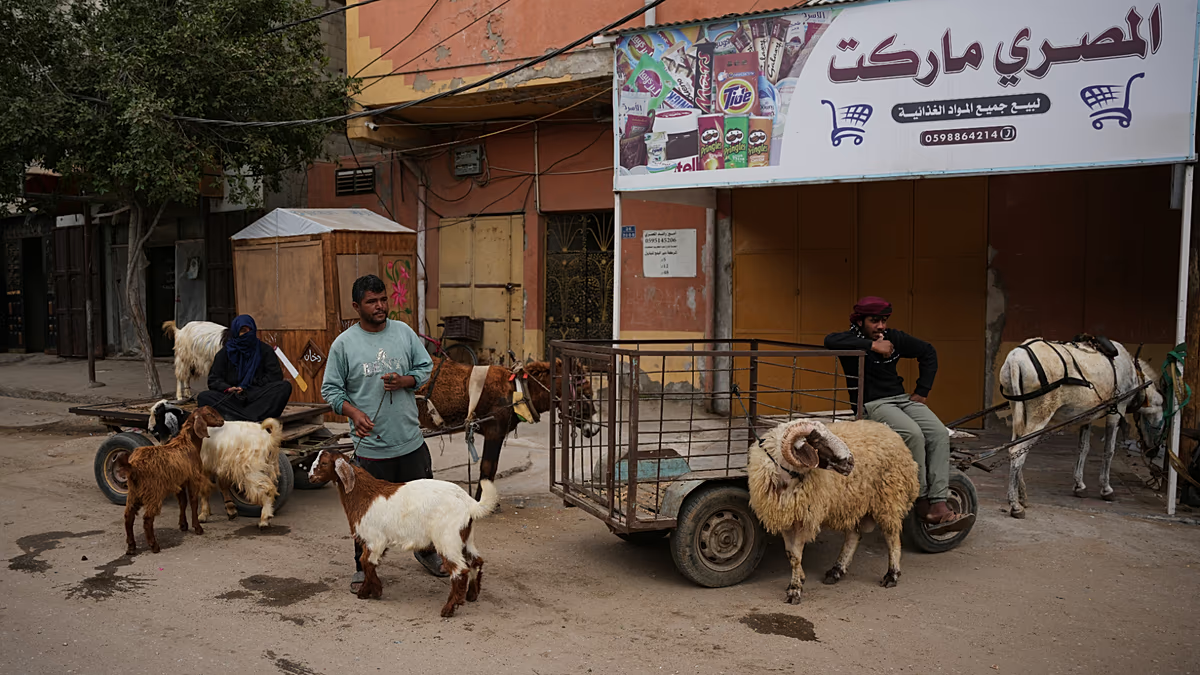
The displacement of a large portion of Gaza’s population further fractures the traditional Eid observance, which is inherently rooted in place and stable community. Families are scattered across makeshift shelters, camps, or the shells of damaged buildings, unable to gather in their homes for the shared meal that is a cornerstone of the day. The ritual sacrifice, often a communal event, becomes impossible amidst scarcity and instability. The focus is necessarily diverted from religious ceremony to the urgent procurement of basic necessities—food, water, safety. This forced prioritization underscores how the conflict has systematically stripped away the layers of cultural and religious life, reducing existence to its most bare and desperate form.
The enduring nature of this crisis—fighting that has intensified over years—means that this disruption is not a single anomaly but a chronic condition. For children growing up in Gaza, the memory of a “normal” Eid, with its associated smells, sounds, and feelings of security, may be faint or nonexistent. The holiday becomes associated instead with mourning, absence, and the constant background of threat. This generational impact represents a profound loss of cultural continuity and spiritual heritage, the erosion of identity itself. The resilience shown in still laying prayer mats amongst ruins is immense, but it is a resilience born of necessity, not of choice, and it stands in lieu of the celebration that faith and tradition deserve.
Ultimately, the scenes from Gaza this Eid al-Adha present a powerful human story of endurance amidst systematic deprivation. It is a narrative where the highest rituals of faith are performed in the lowest conditions of human existence, where the call to prayer resonates over silent streets of destruction. The statements from residents like Mahmoud Saqer and Ayda Al-Banna are not just reports on a holiday; they are testimonies to a wholesale assault on normalcy, well-being, and the sacred. Their words and the accompanying images reveal that in Gaza, Eid is not a feast, but a solemn practice of persistence, a prayer for survival offered beside the ruins of what was once a home, and a life.