
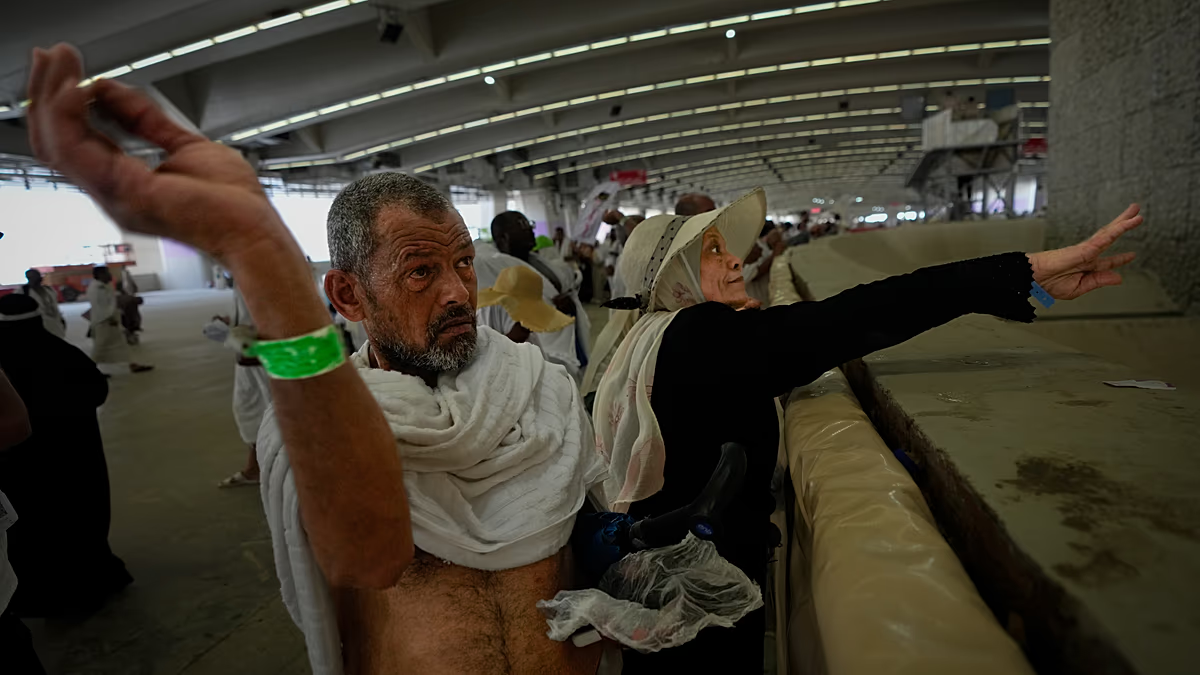


The Hajj pilgrimage reaches one of its most profound and symbolic peaks with the ritual of the stoning of the devil, or “Ramy al-Jamarat.” Following a night of prayer and reflection in the plain of Muzdalifah, pilgrims collect dozens of small pebbles, their hearts and minds focused on the solemn act to come. They then move en masse toward Mina, a vast valley transformed into a sea of white tents. There, they confront three large pillars, or “jamarat,” which represent temptation and evil. With focused intention, each pilgrim throws seven stones at the first and largest pillar, repeating the phrase “Allahu Akbar” (God is Greatest) with each throw. This physically demanding act is not merely a historical reenactment; it is a deeply personal declaration of resistance, a vow to reject sin and temptation in their own lives, just as the Prophet Ibrahim (Abraham) once did.
This ritual is rooted in a story central to Islam, Judaism, and Christianity. According to Islamic tradition, God commanded Prophet Ibrahim to sacrifice his son, Ismail (Ishmael). As Ibrahim prepared to obey this ultimate test of faith, the devil appeared to him at three locations along the path, attempting to sow doubt and dissuade him. In response, Ibrahim, steadfast in his devotion, drove the devil away by throwing stones. The pillars in Mina memorialize these locations and this triumph of unwavering faith over temptation. The act of throwing stones is thus a powerful, physical emulation of Ibrahim’s resolve. It connects every pilgrim, regardless of nationality, language, or social status, directly to the foundational acts of submission that define their faith. The echoes of “Allahu Akbar” from hundreds of thousands of throats create a thunderous chorus of collective spiritual defiance.
The sheer scale of the pilgrimage presents immense logistical challenges, met with extensive planning by Saudi authorities. As pilgrims perform the stoning ritual, other streams of worshippers flow around the Kaaba in the Grand Mosque in Mecca, performing the “Tawaf,” or circumambulation. Aerial images from Mecca capture the breathtaking sight of thousands of worshippers moving in concentric circles around Islam’s holiest site, a human whirlpool of faith. To ensure the safety and smooth movement of millions of people across these sites, Saudi Arabia deploys a vast network of security forces, paramedics, and crowd management specialists. Pathways are segregated, signage is multilingual, and sophisticated surveillance systems monitor crowd density in real-time. These measures are critical in transforming what could be chaotic into a carefully orchestrated, secure environment where pilgrims can devote their full attention to their spiritual duties.
Completion of the stoning ritual marks a pivotal transition in the pilgrim’s journey, symbolized by a physical transformation. Following the casting of the stones, male pilgrims traditionally shave their heads entirely, while women cut off a small lock of hair. This act, known as “Halq” or “Taqsir,” is laden with meaning. It represents a rebirth, the shedding of the past and the emergence into a state of purity and renewal. The shorn head is a visible, unifying mark of humility before God, stripping away vanity and social distinction. For many, it is an emotional moment of release, a tangible sign that the burdens of their past have been discarded and they are leaving the sacred precincts spiritually cleansed and lighter.
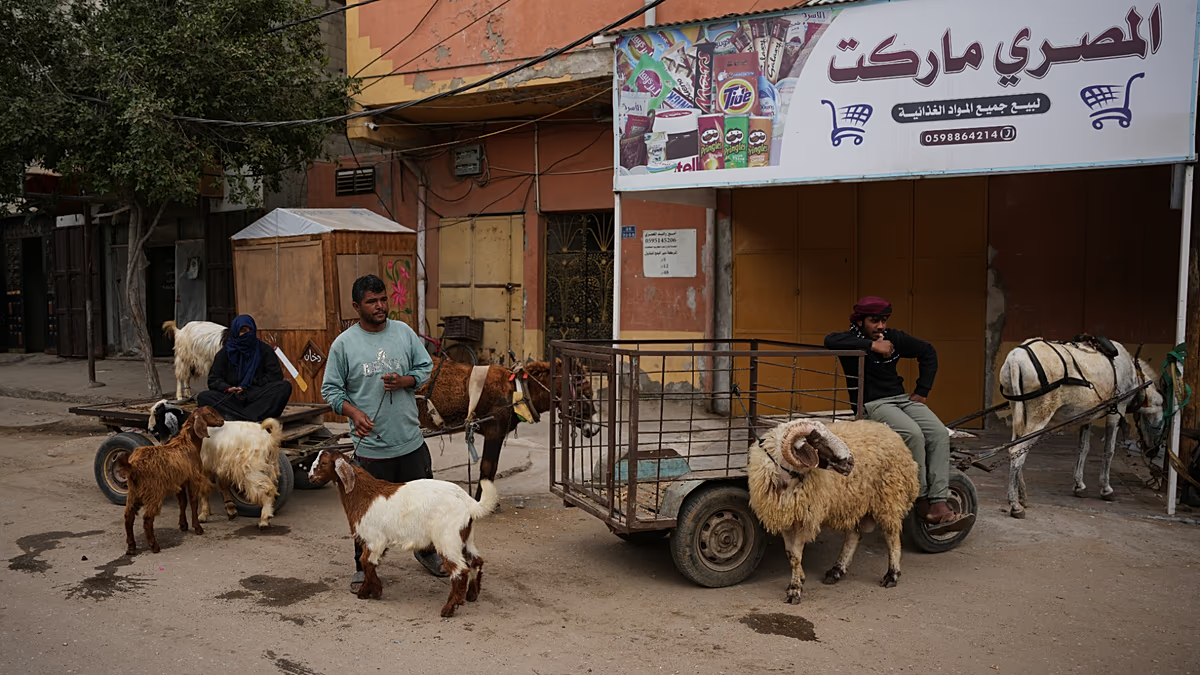
The pilgrimage is intimately connected to the global Islamic celebration of Eid al-Adha, the Festival of Sacrifice. The story commemorated by the stoning is the same story that inspires Eid: God’s provision of a ram to be sacrificed in Ismail’s place. In keeping with this, many pilgrims in Mina participate in the ritual sacrifice of an animal, such as a sheep, goat, or camel. This meat is then distributed to the poor and to the pilgrim’s own family and community, ensuring that the blessings of the act are widely shared. This link means that as pilgrims perform their final rites, Muslims around the world are also preparing for Eid by performing their own sacrifices, attending prayers, and gathering with family. The pilgrim’s individual act of faith in Mina thus resonates in unison with the celebrations of nearly two billion people worldwide, creating a profound sense of global unity.
Ultimately, the rituals of stoning, haircutting, and sacrifice are not isolated acts but interconnected parts of a spiritual journey toward absolute submission to God. From the collective defiance at the pillars to the personal humility of shearing one’s hair, each step is designed to strip away the ego and worldly attachments. The pilgrim leaves Mina not just having re-enacted ancient rites, but having lived them. They carry forward the lessons of Ibrahim’s obedience, the commitment to resist temptation, and the spirit of charity and renewal. As they prepare to depart from Mecca, the physical exhaustion is overshadowed by a profound spiritual fulfillment, the hope of returning home as a “Hajji” or “Hajjah,” reborn and forgiven, their faith solidified by walking in the footsteps of prophets and millions of believers across the centuries.