


The unfolding situation in Laos is a stark reminder of the desperate risks people take to escape poverty, pitting human determination against the unforgiving forces of nature. In a remote region of central Laos, a tense search-and-rescue mission has now entered a critical seventh day. Seven villagers from Xaisomboun province ventured into a local cave on 19 May, only to be trapped by sudden, violent flash floods that sealed the entrance. As of Tuesday, 26 May, their fate remains a heartbreaking mystery, with rescue teams from Laos and Thailand battling treacherous conditions in a race against time to reach them. The operation has captured the quiet anxiety of a community waiting for news, symbolising a struggle for survival that extends far beyond the cave’s dark, flooded passages.
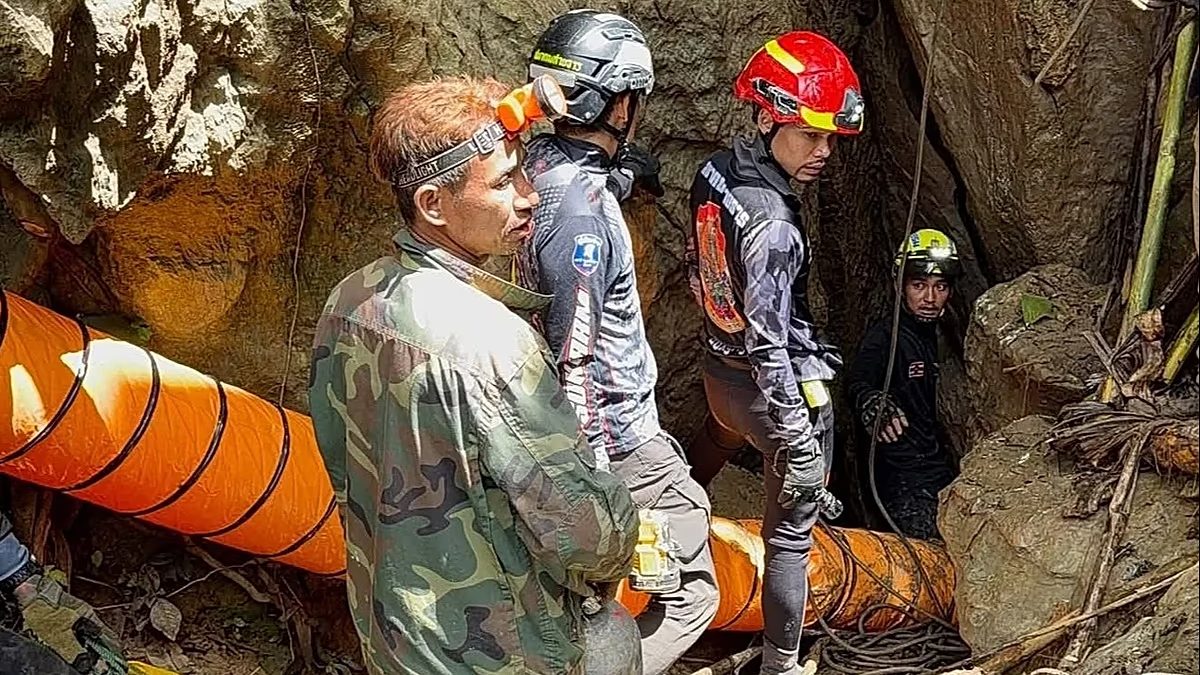
The physical challenges facing the rescuers are immense, painting a picture of a mission operating on the very edge of feasibility. The cave is located in a rugged, mountainous area of Longcheng district, approximately 120 kilometres north of the capital, Vientiane. Simply reaching the site is an ordeal; as videos from Thai rescuers show, it requires a strenuous 4-kilometre hike up steep terrain. The entrance itself is a narrow, rocky fissure, barely wide enough for one person to squeeze through at a time. Inside, divers have navigated roughly 100 metres of a dark, flooded, and claustrophobic tunnel. They believe the missing group may be trapped just 30 metres further in, but reaching that point is currently impossible. Teams are working to pump water from the cave while also exploring narrow air shafts from above, hoping to find an alternative way to reach the trapped villagers, all while contending with ongoing heavy rainfall that continues to hamper progress.
A poignant and troubling question hangs over the entire ordeal: why did these villagers enter such a dangerous cave? While there has been no official statement from the Laotian government, rescuers on the ground have indicated the group was likely searching for gold deposits. Bounkham Luanglath of the Lao rescue group, Rescue Volunteer for People, confirmed to the Associated Press that local residents frequently entered the cave for this purpose, despite repeated warnings from authorities about the extreme dangers. This detail transforms the incident from a simple tragedy into a profound commentary on economic desperation. With an average national per capita income of only about $2,000-$2,500, Laos remains one of the poorest countries in Southeast Asia, and opportunities in its underdeveloped rural regions are even scarcer. For these villagers, the faint hope of discovering gold may have outweighed the very real and known risks of the unstable cave.
This desperate search for resources is set against the backdrop of Laos’s evolving, yet uneven, economic landscape. The nation is not a major global gold producer, but mining is a significant sector for its developing economy, driven largely by foreign investment from neighbours like Thailand and China. While copper is a key export, the mining of rare earth elements—crucial components in everything from smartphones to electric vehicles—has been growing. This industrial context highlights a painful contrast: a formal mining sector attracting international capital exists alongside the perilous, informal scratching for subsistence by individuals in isolated communities. The villagers in Xaisomboun were operating far outside any regulated system, engaging in a high-risk practice born from a lack of viable alternatives, a reality that underscores the deep disparities within the country’s development.
The response to the crisis has been a collaborative, though clandestine, effort. The Lao organisation Rescue Volunteer for People is working closely with local authorities and has been providing updates via social media. Reinforcements arrived over the weekend in the form of experienced rescuers from neighbouring Thailand, who are well-versed in cave rescue operations following the famed 2018 Tham Luang mission. However, information remains tightly controlled. The Laotian Foreign Ministry stated on Tuesday it had no official information to share with the media. This silence is characteristic of the one-party communist state, which maintains strict control over public information and has no organised political opposition. The flow of news, therefore, relies heavily on the grassroots reports from rescue teams on the ground and international news agencies, creating a fragmented picture of the ongoing struggle.
As the operation stretches into another day, it embodies a universal narrative of hope amid grave uncertainty. The international community watches, remembering similar cave rescues, and holds its breath for a miracle. Yet, this incident is uniquely anchored in the specific hardships of rural Laos. It is a story of people pushed to the margins by poverty, forced to gamble their safety for a chance at a better life. Whether the seven villagers are found safe or not, their plight has illuminated the harsh choices faced by many in the region. It calls for a reflection not just on the bravery of the rescuers, but on the underlying economic conditions that drive individuals into the path of such profound danger. The final outcome in that flooded cave remains unknown, but the story it tells about human resilience and vulnerability is already painfully clear.