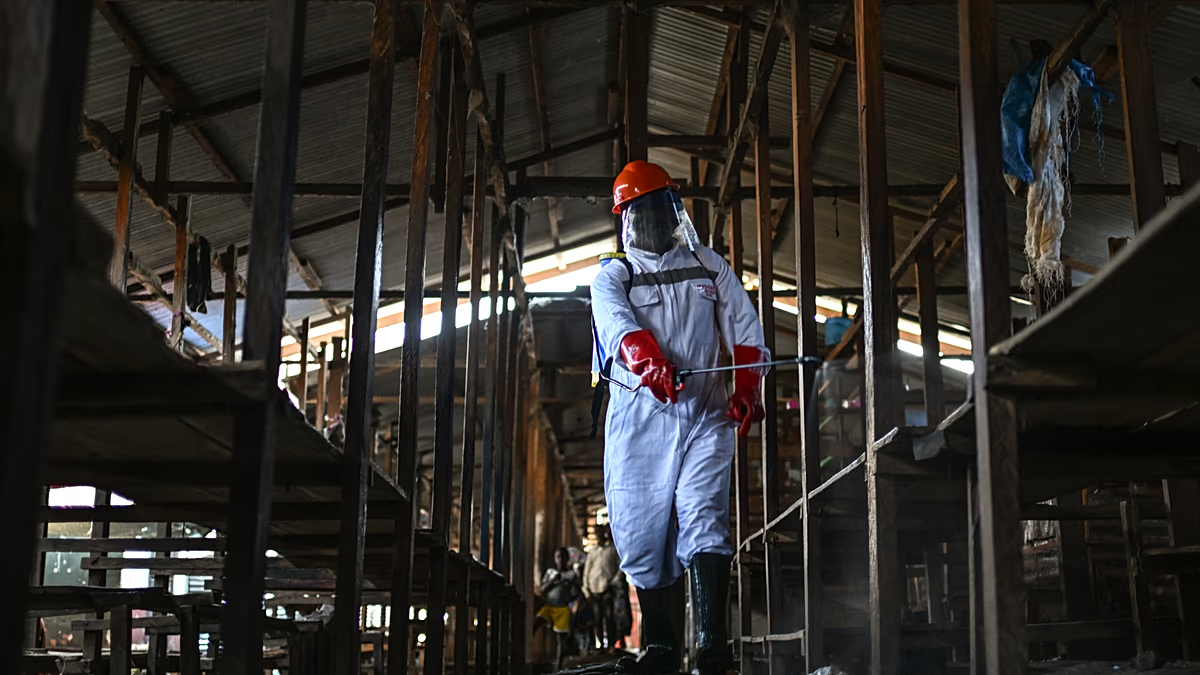


In a significant international response to a growing health crisis, the European Union and UNICEF have dispatched a substantial shipment of 100 tons of critical humanitarian supplies to the Ituri Province in the Democratic Republic of the Congo (DRC). This urgent airlift, which departed from Liege, Belgium, is a direct intervention aimed at bolstering the fight against a newly declared Ebola outbreak. The cargo, carefully curated to address both the immediate viral threat and the region’s broader, fragile health landscape, includes essential medicines, advanced personal protective equipment for frontline workers, specialized infection control materials, and vital treatments for other persistent killers like cholera and malaria. High-performance tents and logistical equipment are also part of the delivery, intended to establish rapid-response medical infrastructure. This consolidated aid package is expected to provide direct support for approximately 100,000 individuals caught in the epicenter of the outbreak, representing a crucial infusion of resources for a beleaguered population.
The context of this emergency shipment is particularly alarming, as the World Health Organization (WHO) officially classified this outbreak as a “public health emergency of international concern” on May 17th. The current crisis is driven by the Bundibugyo strain of the Ebola virus, which presents a unique and formidable challenge: there are currently no licensed vaccines or specific antiviral treatments available for this particular variant. EU Commissioner for Crisis Management, Hadja Lahbib, emphasized that the outbreak poses a “danger to the region, the country, and neighboring countries,” highlighting its potential for cross-border spread. The situation is further exacerbated by the profound vulnerability of the local population. Commissioner Lahbib noted that around five million people in the region are heavily reliant on humanitarian assistance, including one million internally displaced persons scattered across roughly 60 makeshift camps. These conditions of displacement, overcrowding, and limited access to basic sanitation create an ideal environment for the virus to transmit and amplify the human toll.
Recognizing the long-term scientific challenge posed by the Bundibugyo virus, the European Union is complementing its immediate material aid with a strategic financial commitment to research. The EU is contributing €7.4 million to a coordinated research and development plan with the WHO, specifically aimed at fast-tracking clinical trials for potential vaccines and treatments. This investment underscores a commitment to not just managing the current outbreak, but to building future defenses against this deadly strain. Furthermore, the EU is actively coordinating its prevention and preparedness strategies through a robust network of international partners. This includes close collaboration with the Africa Centres for Disease Control and Prevention, the World Health Organization, and EU member states via the Health Security Committee. This multilateral approach is essential for aligning efforts, sharing intelligence, and ensuring a cohesive regional defense.
The Democratic Republic of the Congo is tragically familiar with the ravages of Ebola, having endured 17 separate outbreaks since the virus was first identified there in 1976, with nine occurring in just the last 16 years. This history underscores the chronic instability of the region’s health security and the relentless cycle of crisis and response that defines life for many Congolese communities. Each new outbreak strains an already fragile healthcare system and diverts resources from other pressing medical needs, such as malaria, malnutrition, and maternal health. The persistent recurrence of Ebola points to deep-seated issues, including ecological factors, wildlife reservoirs, and the profound challenges of delivering consistent healthcare and public health messaging in conflict-affected and remote areas. This latest emergency is thus another chapter in a long and painful story for the nation.
Despite the severity of the outbreak in Central Africa, the risk to populations in the European Union and European Economic Area remains assessed as low by the European Centre for Disease Prevention and Control. This assessment is based on the primary mode of Ebola transmission—direct contact with the bodily fluids of symptomatic individuals—which makes widespread international transmission through casual travel unlikely. However, this low risk profile for Europe does not diminish the moral and strategic imperative to act. Containing outbreaks at their source is the most effective way to prevent global spread, and supporting the DRC is both a humanitarian duty and a pragmatic investment in global health security. The EU’s coordinated response, combining emergency logistics, funding for medical research, and diplomatic coordination, reflects this understanding of interconnected global health.
In conclusion, the 100-ton aid shipment from the EU and UNICEF is more than just a delivery of supplies; it is a tangible lifeline and a symbol of international solidarity in the face of a dual challenge: an active Ebola outbreak caused by a treatment-resistant strain and a severe underlying humanitarian crisis. By addressing immediate medical needs, supporting displaced and vulnerable communities, and investing in the scientific tools needed for future battles, this response takes a comprehensive approach. It acknowledges that defeating Ebola in the DRC requires not only stopping the current virus but also strengthening the system that must withstand the next one. The world’s attention, now focused on Ituri Province, must be sustained to break the cycle of outbreak and emergency that has plagued the Congolese people for decades.