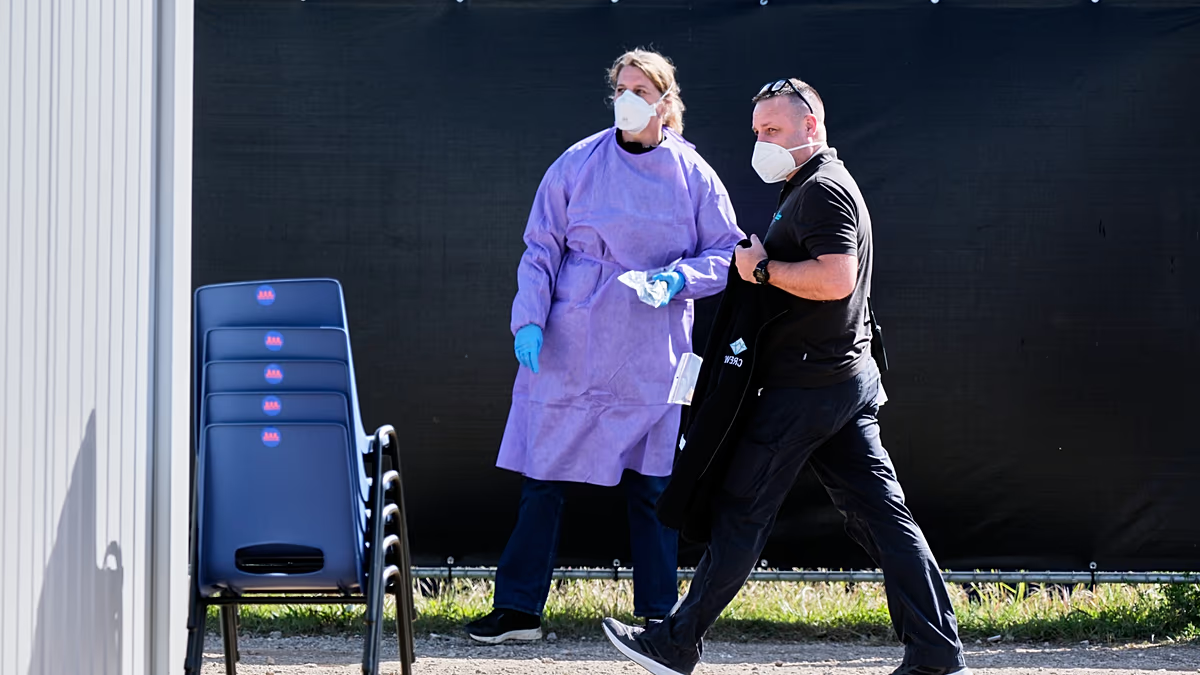




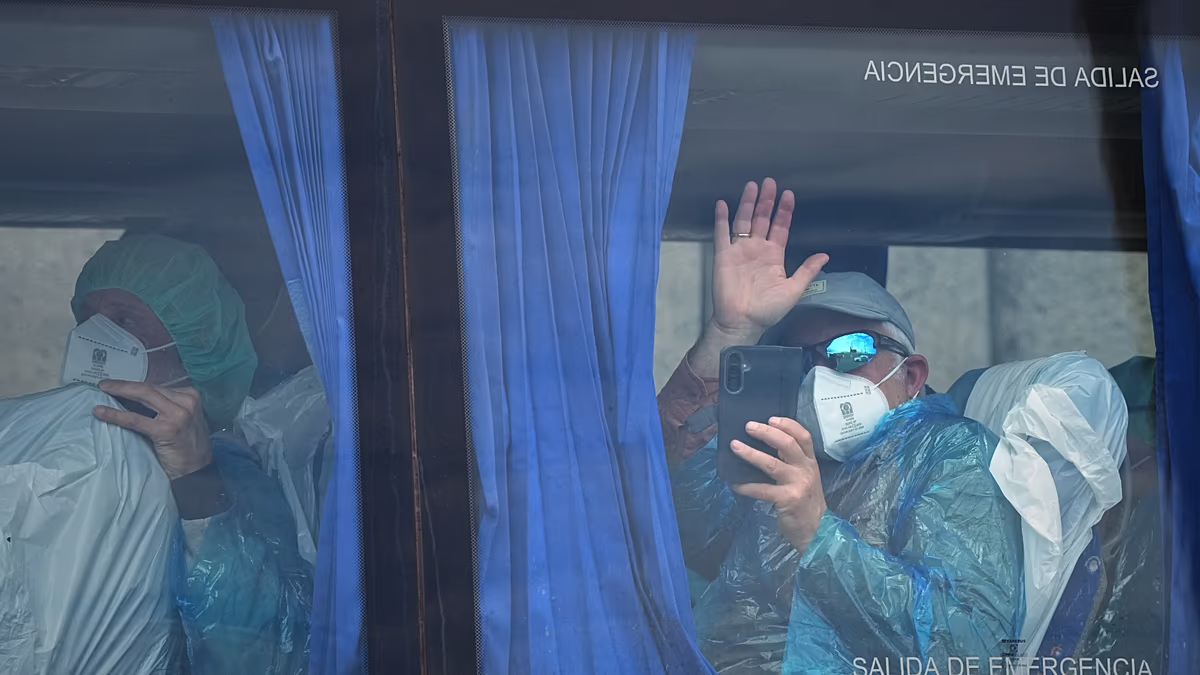
The global journey of the cruise ship MV Hondius has taken a serious and unexpected turn, with its impact now being felt within the halls of a Madrid hospital. The Spanish Ministry of Health has confirmed a significant development: a second Spanish passenger has tested positive for hantavirus. This individual was among the group evacuated from the vessel and placed in quarantine at the Gómez Ulla Central Defence Hospital. This new diagnosis confirms that the outbreak, initially detected on the ship, has extended beyond the first identified case. It underscores the challenging nature of containing such pathogens, even within a controlled medical environment, and brings the total number of confirmed infections among the Spanish evacuees to two.
Importantly, health authorities are emphasizing that this development, while concerning, does not represent an uncontrolled escalation. The newly confirmed case was not a random occurrence but was identified within a group already under strict surveillance. The individual was categorized as a close contact of the initial patient and was therefore already in preventive isolation under the vigilant eye of medical teams. The detection was made through routine PCR testing, a standard procedure within the rigorous protocols activated by Spain’s Early Alert and Rapid Response System. This system exists precisely for this reason: to identify and contain cases within the exposed cohort before any wider transmission can occur, thereby safeguarding the general public.
This meticulous, protocol-driven approach continues to govern the situation. The remaining twelve Spanish passengers from the MV Hondius remain in quarantine at the hospital, where they are under constant medical observation. Their health is being monitored for any signs of illness, ensuring that any potential new case would be identified immediately and managed within the secure facility. The Ministry of Health has stated clearly that the planned isolation measures for this group will remain firmly in place. They are committed to following the full course of action as dictated by international health standards, which in this case mandates a quarantine period of 42 days to cover the virus’s maximum incubation period and ensure no further cases emerge.
The confirmation of a second case, albeit expected by epidemiologists managing the outbreak, brings a renewed focus on the nature of hantavirus itself. Unlike common respiratory viruses, hantavirus is not typically transmitted from person to person. The primary risk to humans comes from contact with the urine, droppings, or saliva of infected rodents. This fact is central to the authorities’ message that the risk to the general population remains low. The patients in Madrid likely encountered the virus in a specific environmental setting, possibly during shore excursions in a region where the virus is endemic in rodent populations. Their subsequent isolation effectively breaks any potential, though unlikely, chain of human transmission.
For the families involved and the public following the news, this period is undoubtedly one of anxiety and waiting. The extended quarantine, while necessary, is a profound test of patience for those confined, not knowing if they will develop symptoms or if the worst is behind them. For the healthcare workers at Gómez Ulla Hospital, it represents a sustained mission of care, observation, and infection control. Their work is a testament to the unseen, diligent efforts of public health systems that operate to contain crises long before they reach the public sphere. This incident serves as a real-world exercise in global health security, demonstrating the processes that swing into action when a pathogen crosses borders.
In conclusion, the situation, while stable, remains in a delicate phase. The Spanish health system’s response has been textbook: swift evacuation, immediate isolation of contacts, proactive testing, and transparent communication. The identification of a second case is a sobering reminder of the persistence of such viruses but also a validation of the containment measures undertaken. The path forward is clear—continued vigilance within the hospital walls until the full quarantine period lapses. The world has learned hard lessons about the importance of robust public health protocols, and this incident, though limited in scale, shows those systems in action, working to ensure that a shipboard outbreak remains just that, and nothing more.