
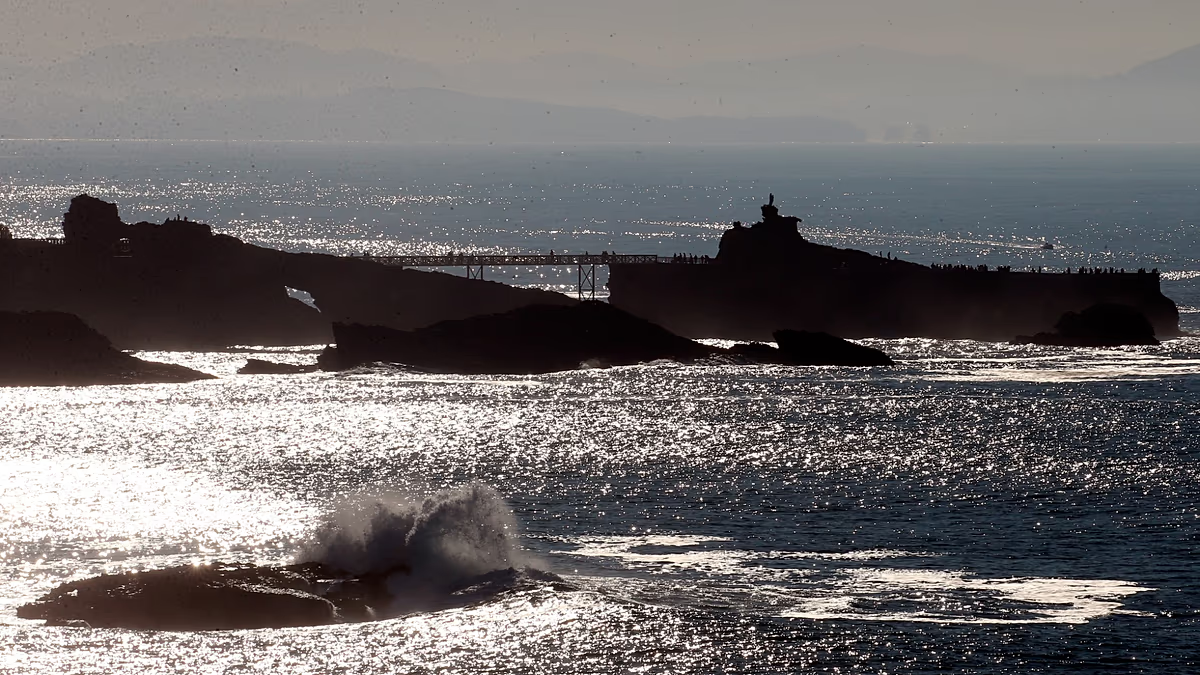



The sun-bathed beaches of southwestern France, renowned for their vast sands and rolling Atlantic waves, have been struck by tragedy. In separate incidents over a single weekend, two swimmers lost their lives after being caught in powerful riptides along the Gironde coastline. A 56-year-old German woman drowned off the coast of Lège-Cap-Ferret, and nearby, in the popular resort of Lacanau, a 60-year-old man also perished. These were not isolated emergencies; since the previous Friday, rescue services in the department had already performed a staggering 31 water rescues. In response, local authorities issued a stark plea for “maximum vigilance” from the thousands drawn to the shore, a warning that underscores a lethal and often misunderstood natural phenomenon.
The immediate catalyst for the surge in beachgoers was a spell of unseasonably warm weather, with temperatures soaring above 30 degrees Celsius. This early summer heatwave transformed the coastline into a magnet for families, tourists, and locals seeking respite. Yet, beneath the inviting surface of the sparkling water, a hidden danger was intensifying. The very conditions that create perfect beach weather—strong, consistent onshore winds—also fuel the engine of riptides. These are not random chaos but predictable, narrow channels of water acting as powerful rivers flowing away from the beach and out to sea. They form when waves breaking on the shore pile up large volumes of water. This accumulated water must find a path back out, and it does so by channeling into a concentrated, often deceptively calm, current that cuts through the surf line with tremendous force.
What makes riptides so perilous, even for strong swimmers, is their deceptive nature and overwhelming power. Contrary to popular fear, a riptide does not pull a person underwater; instead, it acts like a aquatic treadmill, rapidly dragging them away from the safety of the shore. The most terrifying aspect can be the location itself: a riptide often appears as a calm, darker, or seemingly safer gap between the lines of breaking whitewater. A tired swimmer, seeing this calm patch, might inadvertently head directly into the hazard. Once caught in its grip, the instinctual human reaction—to panic and swim frantically directly back toward the beach—is the most dangerous course of action. Fighting against a current that can outpace an Olympic swimmer leads only to exhaustion, despair, and drowning.
Therefore, knowledge of the correct response is nothing short of a lifesaving skill. If you feel yourself being pulled out to sea, the crucial rule is: do not swim against the current. Resist the primal urge to head straight back. Instead, the strategy is to escape the channel. Swimmers should remain as calm as possible, conserve energy, and swim parallel to the shoreline. Since a riptide is typically narrow, often no wider than a few car lanes, swimming sideways for a short distance will bring you out of the pulling current. Once free of its grip, you can then turn and swim at an angle back to the beach, using the waves to assist you. If you cannot swim out, treading water and floating while calling and waving for help is essential; the current will usually dissipate just beyond the surf line, and you will stop being pulled further out.
The recent tragedies on the Gironde coast serve as a somber reminder that our enjoyment of nature’s beauty must be coupled with respect for its power. Beach safety is not merely about heeding red flags—though that is a critical first step—but about understanding the invisible dynamics of the water. Before entering the sea, it is wise to spend a few moments observing the wave patterns, noting any persistent gaps or unusually calm areas, and always swimming near a lifeguard station if possible. These simple acts of awareness can mean the difference between a day of joy and a catastrophe. The victims in France were not necessarily careless; they were likely simply unaware of how to identify and react to a force that appears benign.
In the wake of these losses, the warning from French authorities echoes beyond the Aquitaine region to beachgoers everywhere. The ocean’s allure is timeless, but its risks are constant. As climate patterns shift and extreme weather events become more frequent, coastal conditions may grow more volatile. Let the memory of those who perished be a catalyst for broader education. By demystifying riptides and spreading the simple, counterintuitive technique of swimming parallel, we can empower people to transform panic into purposeful action. The goal is not to instill fear, but to foster a respectful and informed relationship with the sea, ensuring that days meant for leisure and connection do not end in preventable heartbreak.