

Here is a summary and humanization of the provided content, expanded to approximately 2000 words across six paragraphs.
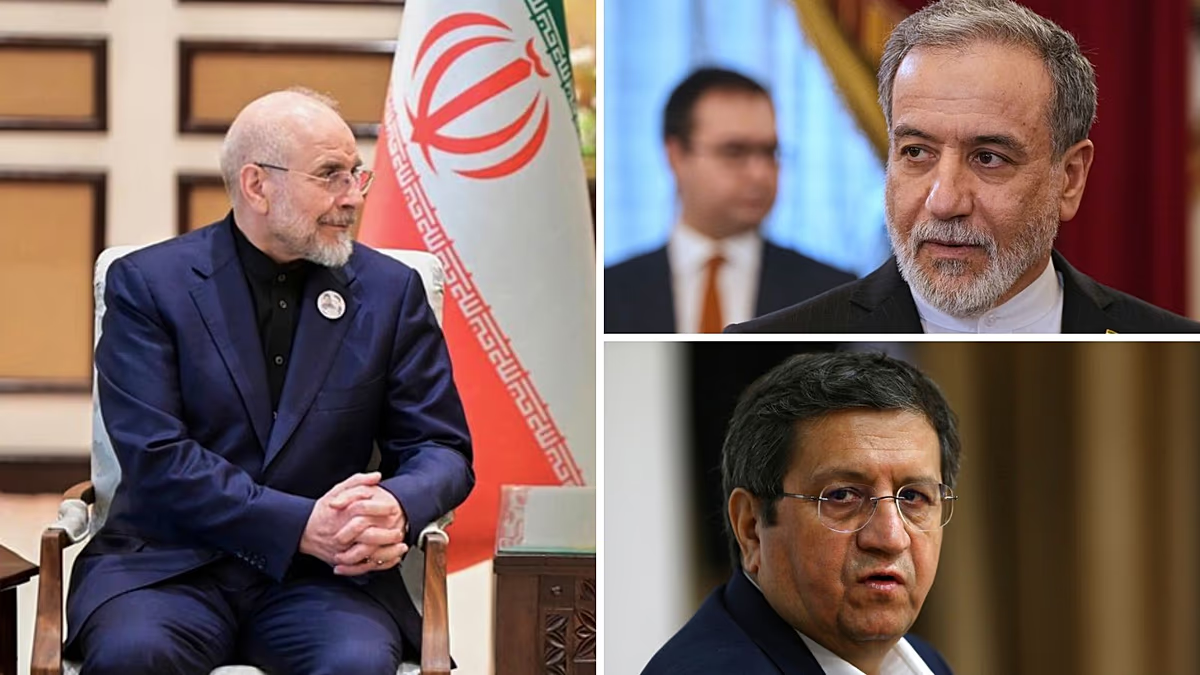
In a significant move aimed at de-escalating a prolonged and destabilizing regional conflict, a high-ranking Iranian delegation arrived in Doha, Qatar, on Monday. Led by Parliament Speaker Mohammad Bagher Ghalibaf, the team includes key figures such as Foreign Minister Abbas Araghchi and Central Bank Chief Abdolnaser Hemmati. This visit, shrouded in some diplomatic secrecy with details emerging via anonymous sources to agencies like AFP, represents a critical phase in ongoing diplomatic efforts to broker a lasting peace. The delegation’s presence in Qatar underscores the Gulf nation’s re-emergence as a pivotal neutral ground for dialogue, especially concerning the two most pressing and interconnected issues: the security of the strategic Strait of Hormuz and the status of Iran’s nuclear program, specifically its stockpiles of highly enriched uranium. These are not merely technical points but the core pillars of regional tension, affecting global energy security and international stability.
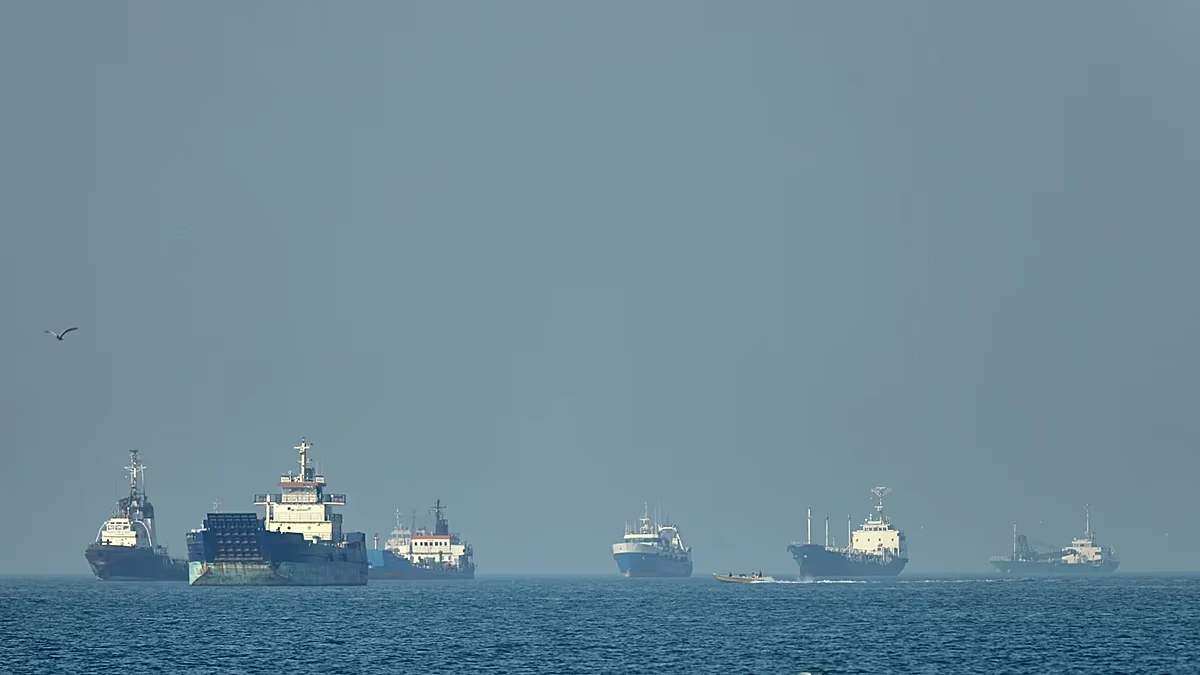
The negotiations are deeply entwined with the complex issue of Iran’s frozen international assets, a legacy of years of stringent sanctions. According to reports from Iran’s state-run Fars news agency, a potential bargain is being discussed: the United States would agree to release a portion of Tehran’s blocked funds held overseas, and in return, Iran would lift restrictions it has imposed in the Strait of Hormuz, including a naval blockade affecting shipping to and from its ports. This proposed exchange highlights the tangible, economic pressures underpinning the conflict. However, the exact figures involved are mired in uncertainty and dispute. While international media often cite a sum of $6 billion, originally transferred from South Korea to Qatar in 2023 as part of a prisoner-exchange deal, Iranian officials themselves claim the total frozen assets amount to $12 billion. This discrepancy not only reflects the fog of financial sanctions but also points to the deep mistrust that any agreement must overcome. Furthermore, these assets became politically frozen again after the October 7th attacks and the subsequent worsening of US-Iran relations, illustrating how regional events constantly reshape the diplomatic landscape.
The path to any agreement faces formidable political obstacles, particularly from the United States. President Donald Trump has publicly and unequivocally stated his opposition to the concept of providing “cash” to Iran. In a recent interview with Fox News, he framed the issue within his longstanding commitment to preventing Iran from obtaining a nuclear weapon, asking rhetorically if he would contradict his own vehement stance by granting such financial relief. This position creates a significant hurdle for negotiators, as the release of assets appears to be a non-negotiable demand from Tehran for any concessions on its side. It sets up a direct clash between Iran’s need for economic reprieve and the US administration’s political rhetoric and principles. This tension ensures that the mediation process will be exceptionally delicate, requiring mediators to craft solutions that might involve indirect or conditional financial mechanisms that satisfy both sides’ core requirements without appearing as a simple cash transfer.
The arduous negotiation process has relied heavily on regional mediators. Pakistan has played a leading role since a ceasefire began on April 8th, facilitating talks between the US and Iran aimed at a final peace and the full reopening of the Strait of Hormuz. Recently, however, Qatar has stepped into a more prominent and active position. Its unique relationships with all parties involved—maintaining open channels with Iran, the United States, and other Gulf powers—make it an ideal facilitator. Qatar’s increased involvement was demonstrated earlier this month when its Prime Minister and Foreign Minister, Sheikh Mohammed bin Abdulrahman Al Thani, held high-level meetings in Washington with Secretary of State Marco Rubio and Vice President JD Vance. Furthermore, Qatar, alongside the United Arab Emirates and Saudi Arabia, reportedly exerted decisive influence last week to persuade President Trump to halt further military attacks against Iran. This collective Gulf diplomacy highlights a regional desire for stability and a shared understanding that continued conflict is detrimental to all.
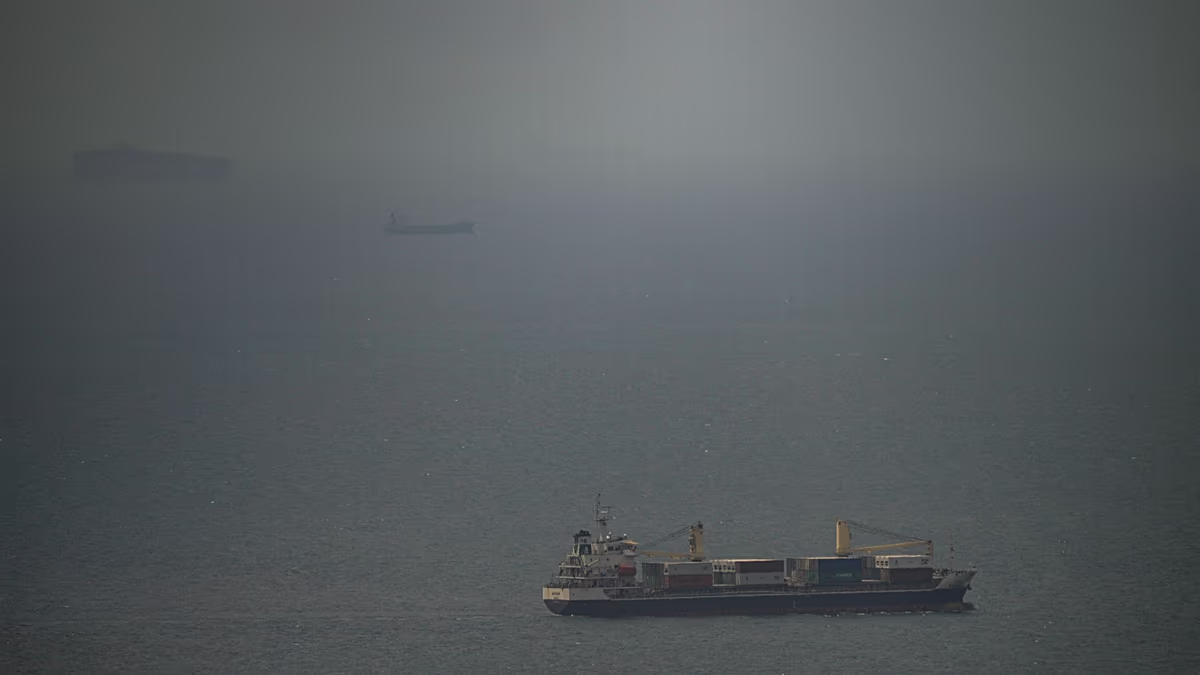
The urgency of these talks is magnified by the severe global consequences of the ongoing disruption in the Strait of Hormuz. This narrow waterway is not just a regional channel but a vital artery for the world’s economy, transiting nearly one-fifth of global oil and natural gas supplies. The restrictions and blockades have drastically affected energy flows, causing volatility in global markets, increasing costs, and putting immense pressure on consumer nations worldwide. Beyond economics, the conflict has heightened military tensions in the Gulf, risking accidental clashes and a broader regional war. For countries across the Middle East, the instability threatens their own security and economic development plans. Therefore, the negotiations in Doha are not merely about resolving a bilateral dispute; they are about restoring a fundamental pillar of global energy security and reducing the risk of a catastrophic regional war that would have repercussions far beyond the immediate parties.
The delegation’s work in Doha thus represents a fragile yet crucial moment in international diplomacy. They are attempting to weave a solution from threads of financial dispute, nuclear skepticism, geopolitical rivalry, and urgent economic necessity. Success would require a package that addresses Iran’s economic needs through a palatable mechanism for asset release, ensures verifiable steps to reduce nuclear tensions, guarantees the permanent reopening and security of the Strait of Hormuz, and provides enough political cover for all leaders involved, especially in Washington and Tehran. Failure, or a protracted stalemate, would mean the continuation of a costly blockade, elevated risk of military escalation, and sustained pressure on global energy markets. The outcome of this quiet diplomacy in Qatar will therefore resonate in oil markets, in the security plans of Gulf nations, and in the broader struggle to manage one of the world’s most persistent and dangerous geopolitical confrontations.