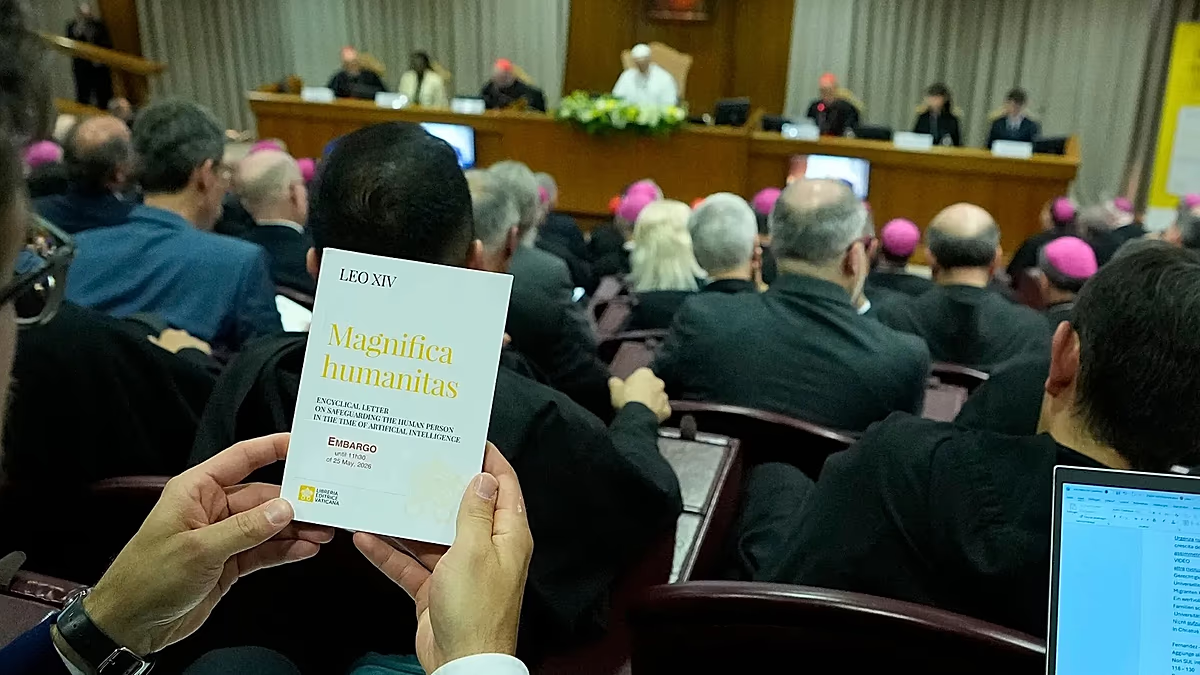



In a world captivated by the seemingly boundless promise of artificial intelligence, Pope Leo XIV has issued a profound and urgent ethical warning. With the release of his encyclical, “Magnifica Humanitas” (Magnificent Humanity), the pontiff has shifted the global conversation from one of pure technological awe to a necessary examination of human cost. At the heart of his message is a stark indictment: the very systems heralded as liberators are, in their current trajectory, creating “new forms of slavery.” The Pope compellingly argues that if a technology “promises emancipation, yet produces new forms of global subordination, it stands in contradiction to the fundamental principle of human dignity.” This framing challenges us to look beyond the sleek interfaces and algorithmic outputs to the often-hidden human toll—from the content moderators traumatized by filtering online horrors to the miners laboring under perilous conditions to extract the minerals essential for our devices. For Pope Leo XIV, the true test of our era’s ethical character lies in confronting these systemic injustices woven into the fabric of technological progress.
The pontiff’s call is not for abandonment, but for a fundamental reorientation. He advocates for AI to be proactively “disarmed” and made “human-friendly,” suggesting that the current path is one of inherent danger. He warns specifically against “a race for ever more powerful algorithms and larger datasets, driven by the desire to secure geopolitical or commercial dominance.” This critique identifies the root of the problem not in the machines themselves, but in the human motives of competition, profit, and power that fuel their development. The vision he proposes is one where technology serves humanity’s flourishing, rather than humanity becoming a resource to feed an insatiable technological race. It is a plea to prioritize wisdom over mere capability, and communal well-being over competitive advantage.
This technological encyclical did not emerge in a vacuum. It was delivered on the heels of Pentecost, a sacred day marking the descent of the Holy Spirit upon the apostles. Before an assembly of over 5,000 worshippers in St. Peter’s Basilica, Pope Leo XIV offered a poignant prayer for peace, pleading that humanity might be saved “from the evil of war.” He drew a powerful distinction between the world’s solutions and divine grace, stating, “Let’s pray that it may free humanity from misery, which is redeemed not by incalculable wealth, but by an inexhaustible gift.” This spiritual context is essential for understanding his subsequent comments on AI. The pope was drawing a direct line between the violence of warfare and the structural violence of exploitative systems, insisting that true redemption comes from a spirit of self-giving love, not from accumulated power—whether military or technological.
Reflecting on the Pentecost story, the pope emphasized the transformative power of wounds healed by resurrection. He noted that the Risen Christ showed his disciples “his hands and his side,” revealing that the scars of his Passion were not erased but transfigured into signs of eternal life. From this, Pope Leo XIV drew a metaphor for renewal, declaring that “The Holy Spirit enlightens minds and instils new vitality in our hearts.” He contrasted this divine vitality with changes that “do not bring new life to the world, but make it grow old through error and violence.” This teaching provides the theological underpinning for his critique of AI: a technology that enslaves and divides is a force that ages and wounds the world, while a technology guided by ethical discernment and a genuine love for humanity can be part of a healing and lifegiving process.
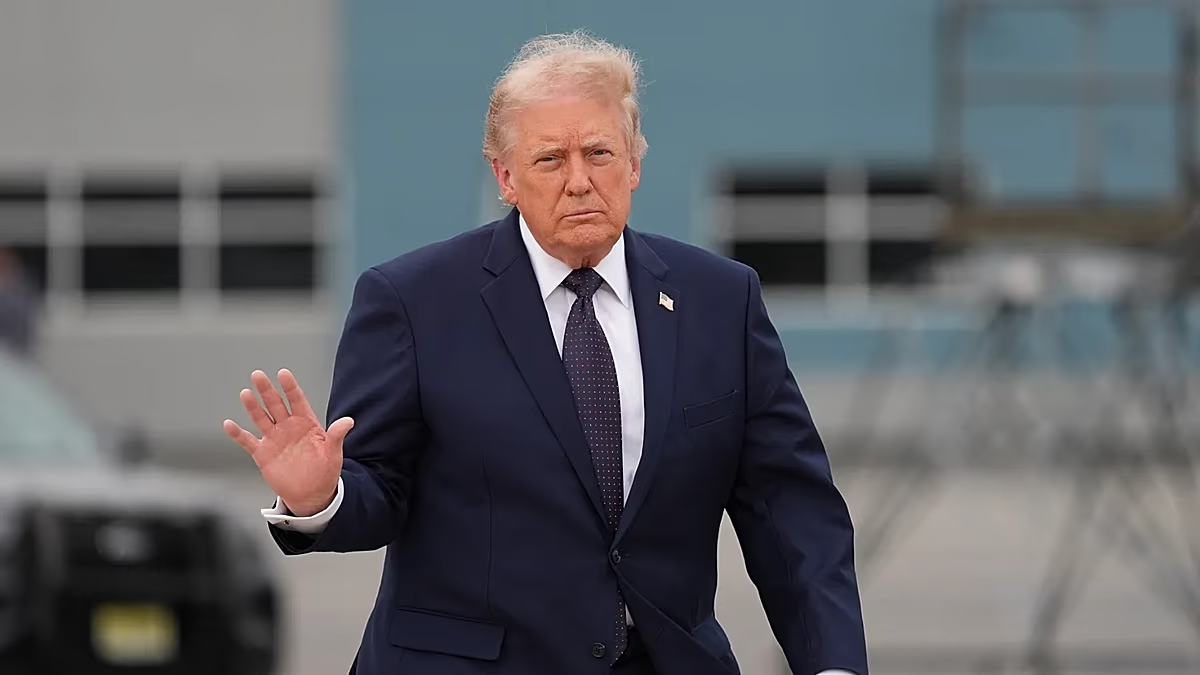
The pontiff’s stance on peace and technology also serves as a pointed engagement with contemporary geopolitics. His remarks alluded to recent world events, notably rejecting any attempt to justify warfare as divinely sanctioned—a clear reference to earlier claims by the Trump administration portraying military action as a “just war” supported by divine power. Pope Leo XIV categorically denied this, insisting that Jesus “does not listen to the prayers of those who wage war.” This reaffirmation of a consistent Catholic peace ethic informs his entire approach to global power dynamics, including those played out in the digital realm. Just as he condemns the spiritual error of seeking divine blessing for violence, he condemns the ethical error of pursuing technological dominance at the expense of human dignity. Both, in his view, are corruptions of power that lead away from true human progress.
Ultimately, Pope Leo XIV’s twin messages from the Pentecost mass and the “Magnifica Humanitas” encyclical form a unified and compelling vision. They are a call to discernment in an age of profound and often disorienting change. He challenges political leaders, tech executives, and every citizen to choose between two paths: one driven by a competitive race for dominance that risks creating new forms of subjugation, and another guided by a spirit of shared humanity that seeks to heal, uplift, and empower. His words remind us that the most pressing questions of our time—from warfare to artificial intelligence—are not merely technical or political, but deeply spiritual and ethical. The true measure of our future will be found not in the sophistication of our algorithms, but in our unwavering commitment to human dignity, peace, and the redemptive power of selfless love.