


In a stark address to the GLOBSEC conference in Prague, Dr. Anwar Gargash, the Diplomatic Adviser to the UAE President, issued a compelling wake-up call to Europe. The year is 2026, and the reverberations of conflict in the Gulf have crystallized into a direct and urgent challenge to European security and prosperity. Dr. Gargash framed the current turmoil not as a sudden explosion, but as the inevitable harvest of long-sown seeds. “We did not arrive at where we are in 2026,” he stated, pointing to years of underlying discontent within both the Middle East and the broader international system. This historical context is crucial; the region’s present instability is a chronic condition that has now reached an acute phase, with consequences that ripple far beyond its shores.
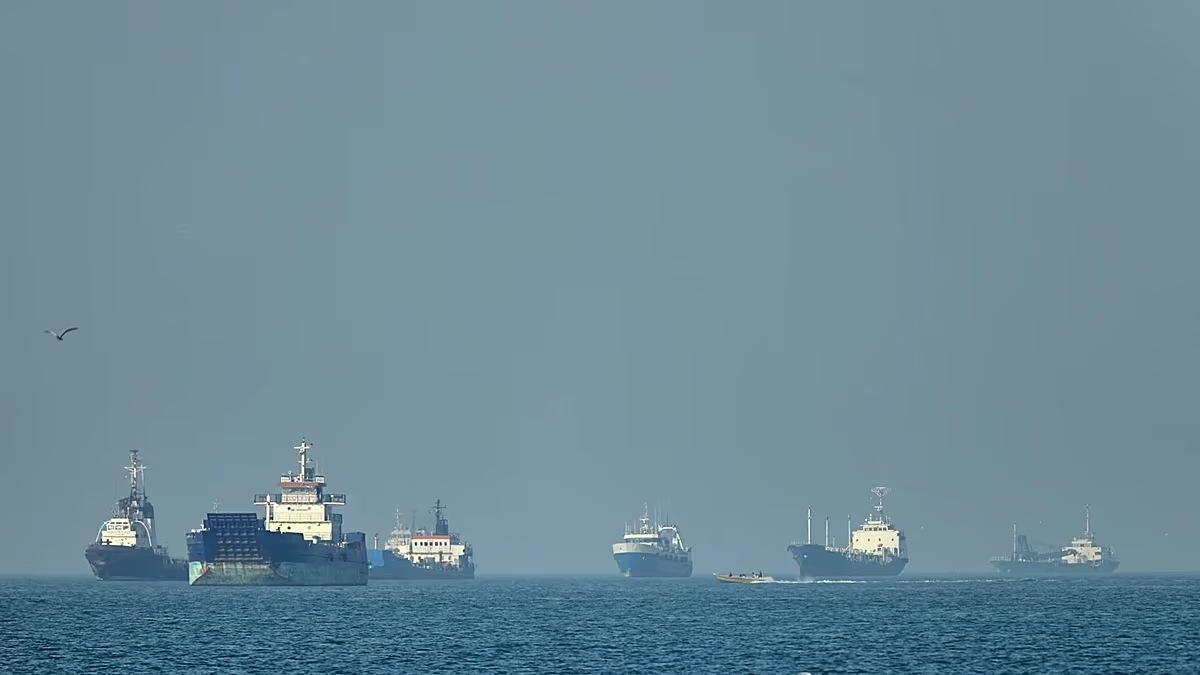
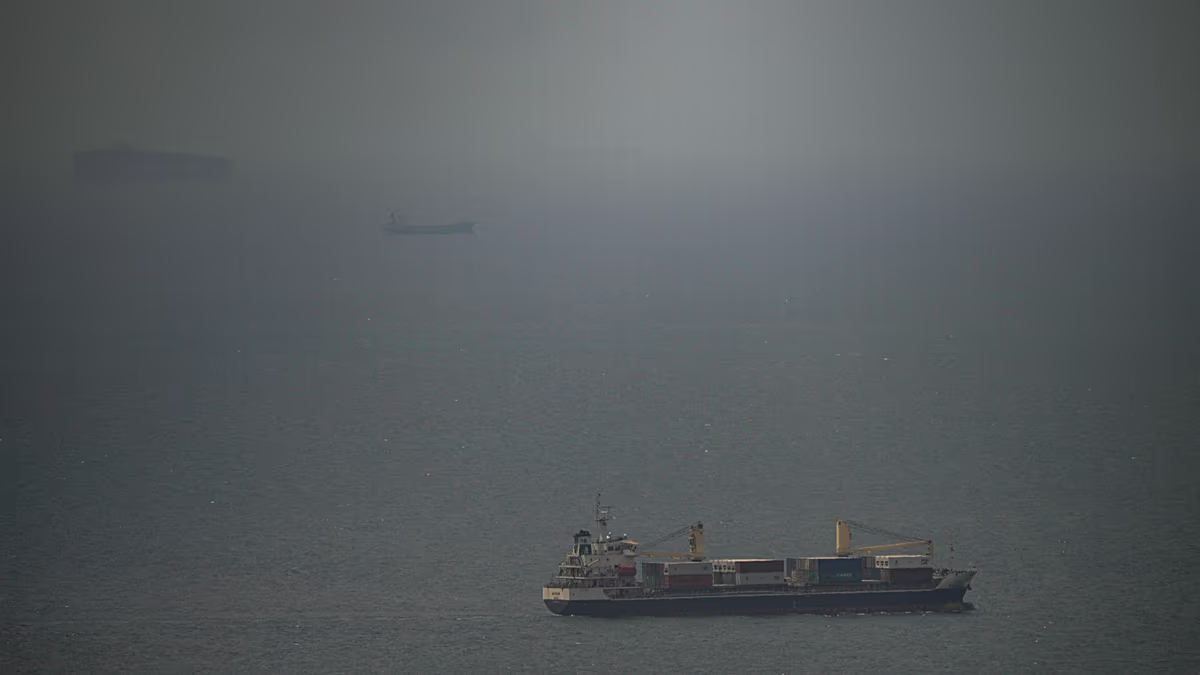
The immediate focal point of this crisis is the Strait of Hormuz, the narrow maritime chokeline through which approximately one-fifth of the world’s oil and a significant portion of its liquefied natural gas must pass. Dr. Gargash warned that this vital artery has become “a vital part of the overall conflict,” subject to pressures and attacks that threaten to strangle global trade. For Europe, still mindful of recent energy shocks, this is not a distant geopolitical abstraction. “Today, any change in the status of Hormuz will have serious implications on all of Europe,” Gargash emphasized, urging European nations to see the security of the Strait as intrinsically linked to their own energy security, economic stability, and trade flows. The message was clear: European homes and industries are heated and powered by fuels that traverse this contested waterway.
Dr. Gargash provided a sobering glimpse into the sheer scale of the assault that precipitated this crisis, detailing the “worst-case scenario” faced by the UAE. Over a horrific 40-day period, the country was targeted by a staggering barrage of roughly 3,300 missiles and drones, primarily originating from Iranian-backed groups. While he noted with pride that UAE air defences successfully intercepted about 96% of the projectiles, the psychological and strategic impact of such a sustained bombardment is profound. It underscores a region living under constant threat, where critical infrastructure, from desalination plants to oil terminals, is in the crosshairs. This firsthand account from a nation on the front lines served to humanize the crisis, moving it from news headlines to a palpable reality of survival and resilience.
In the face of this turbulence, Dr. Gargash outlined a nuanced path forward, one that balances defence with diplomacy. He was explicit that the UAE is not calling for European boots on the ground or direct military intervention in an active conflict. Instead, the appeal is for committed, strategic engagement in upholding the principle of freedom of navigation. This means enhanced maritime security cooperation, diplomatic weight thrown behind protective measures, and a recognition that protecting the Strait is a core European national interest. He acknowledged and praised the support already received from nations like France and Greece, suggesting that such partnerships are the model for the future—a collective guardianship of global commons.
Despite the shadow of war, Dr. Gargash struck a note of steadfast confidence in the UAE’s fundamentals. “Our societies are quite attractive societies. This is also a country of opportunities in many ways,” he asserted, arguing that the nation’s economic and social foundations remain strong. This resilience, however, is not a reason for complacency but a foundation from which to build a lasting peace. He pointedly described Iran as “a much-weakened state today,” yet cautioned that the war has unleashed dangerous subsets of crisis, from proxy attacks to shipping disruptions. The solution, therefore, cannot be purely military.
Concluding with a vision for the future, Dr. Gargash made a powerful case for sustainable diplomacy. “We do need to really find a political solution, stay away from further military confrontations, but dig deep in order to address the root causes of instability in the Gulf,” he stated. This call to “dig deep” is an acknowledgment that temporary ceasefires or tactical de-escalations are insufficient. The ultimate goal must be a comprehensive political settlement that addresses the underlying grievances and security dilemmas that have plagued the region for decades. For Europe, the choice is framed as one of proactive investment in regional stability or reactive suffering from the inevitable economic and security shocks that continued instability will guarantee. The path to securing Europe’s energy and trade, it seems, runs through the difficult but essential work of fostering peace in the Gulf.