

The Weight of Scandal: Madrid Protests Demand Prime Minister’s Resignation
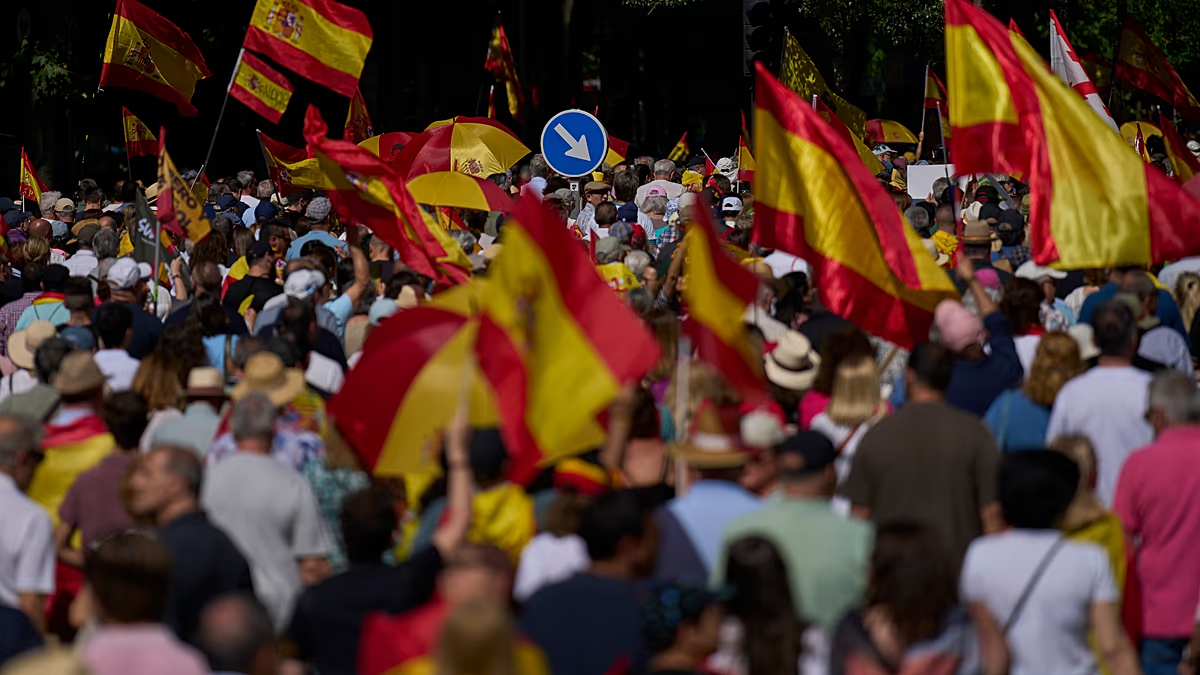
The heart of Madrid, normally a vibrant hub for tourists and locals alike, was transformed this weekend into a sea of red and yellow, the colors of the Spanish flag, carried by thousands of demonstrators united by a single, resonant demand. Chants calling for resignation echoed off the historic facades as a massive crowd marched through the city’s central avenues, their target clear: Spanish Prime Minister Pedro Sánchez. The protest, a vivid and noisy display of public discontent, was fueled by mounting corruption allegations that have ensnared members of the Prime Minister’s political circle, casting a long shadow over his socialist government and threatening to destabilize the nation’s political equilibrium. This was not merely a political rally; it was a visceral expression of frustration from citizens who feel betrayed by those entrusted with power.
Visual evidence of the protest’s scale circulated widely, with video footage capturing the dense, moving crowds awash with national flags. The atmosphere was charged, not with celebration, but with determined anger, as demonstrators of various ages and backgrounds voiced their disillusionment. The air was thick with chants against the socialist leader, a rhythmic and collective catharsis for many who believe integrity has been compromised at the highest levels. The dissonance in reported numbers—organizers claimed a turnout of 120,000, while government estimates were closer to 40,000—itself speaks to the deep divisions and the high-stakes nature of the moment. Regardless of the exact figure, the undeniable visual was one of a significant portion of the citizenry taking to the streets, demanding accountability in the most public way possible.
This public outcry did not emerge in a vacuum. It is the direct result of escalating political pressure on Sánchez, stemming from several ongoing corruption investigations that have steadily dominated headlines and parliamentary debates. These probes have allegedly touched figures close to the Prime Minister, leading opposition parties to amplify their calls for transparency and consequences. The protest, therefore, represents the physical manifestation of a political storm that has been brewing for months, where every new headline or judicial update fans the flames of public suspicion and partisan conflict. It is a crisis of trust, where the details of legal inquiries translate into a powerful narrative of corruption for the opposition and their supporters.
The growing tensions are not confined to the streets; they have seeped into the very fabric of Spain’s governing institutions, creating a palpable rift between the government and opposition parties. Parliamentary sessions have become battlegrounds, with the corruption allegations serving as the primary weapon for critics of the Sánchez administration. This protest acts as a megaphone for that parliamentary opposition, translating political maneuvers into a public spectacle. It underscores how allegations, even before proven in court, can erode governability and consume the political agenda, turning governance into a continuous exercise in damage control and deepening the societal divide between left and right.
For Prime Minister Pedro Sánchez, navigating this turmoil presents an immense challenge. His leadership is now under a dual assault: from the judicial system conducting its investigations, and from the court of public opinion, which delivered a stark verdict on the streets of Madrid. His response to these allegations and the public anger will critically define the remainder of his term. Will he distance himself from those implicated, enact stricter anti-corruption measures, or dismiss the protests as politically motivated theater? Each potential path carries significant risk, affecting his party’s cohesion, his parliamentary alliances, and his standing with an increasingly skeptical electorate.
Ultimately, the Madrid protest is a powerful snapshot of a democracy grappling with allegations that strike at the core of public trust. Beyond the immediate political fate of Pedro Sánchez, the demonstrations highlight a recurring and painful theme in Spanish society: the corrosive impact of corruption scandals on civic faith. The crowds marching with their flags were not just protesting a person or a party; they were voicing a deeper yearning for ethical governance and the preservation of democratic integrity. As the investigations continue, the echoes of their chants will serve as a persistent reminder to all in power that the public’s patience for scandal is wearing thin, and the demand for accountability is both loud and clear.