


Here is the humanized and expanded summary, structured into six paragraphs as requested:
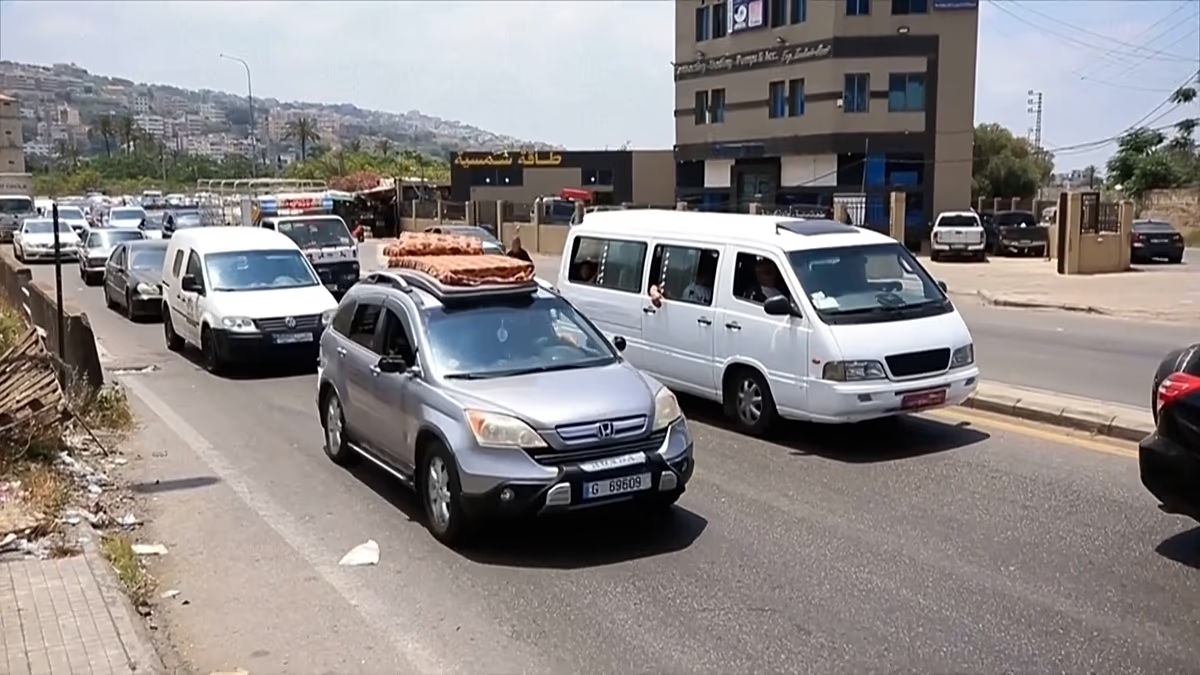
The coastal highway leading north from Tyre has become a river of fleeing humanity, a slow-moving exodus of fear and uncertainty. Cars are so overloaded with the remnants of shattered lives—mattresses strapped to roofs, luggage bursting from trunks, children’s toys wedged beside elderly relatives—that they seem to groan under the weight. Dogs peer anxiously from windows and cats in carriers meow from back seats, completing the portrait of a population in full retreat. This frantic traffic, primarily heading towards the relative, though precarious, safety of cities like Saida, is the visceral manifestation of a breaking point. The once-vibrant southern city of Tyre, known for its ancient ports and bustling markets, is being emptied, street by street, family by family, as the thunder of nearby strikes grows louder and more frequent. The mounting casualties and shattered infrastructure have overridden the profound human desire to stay home, forcing a calculation where the unknown dangers of the road are deemed lesser than the certain peril of staying behind.
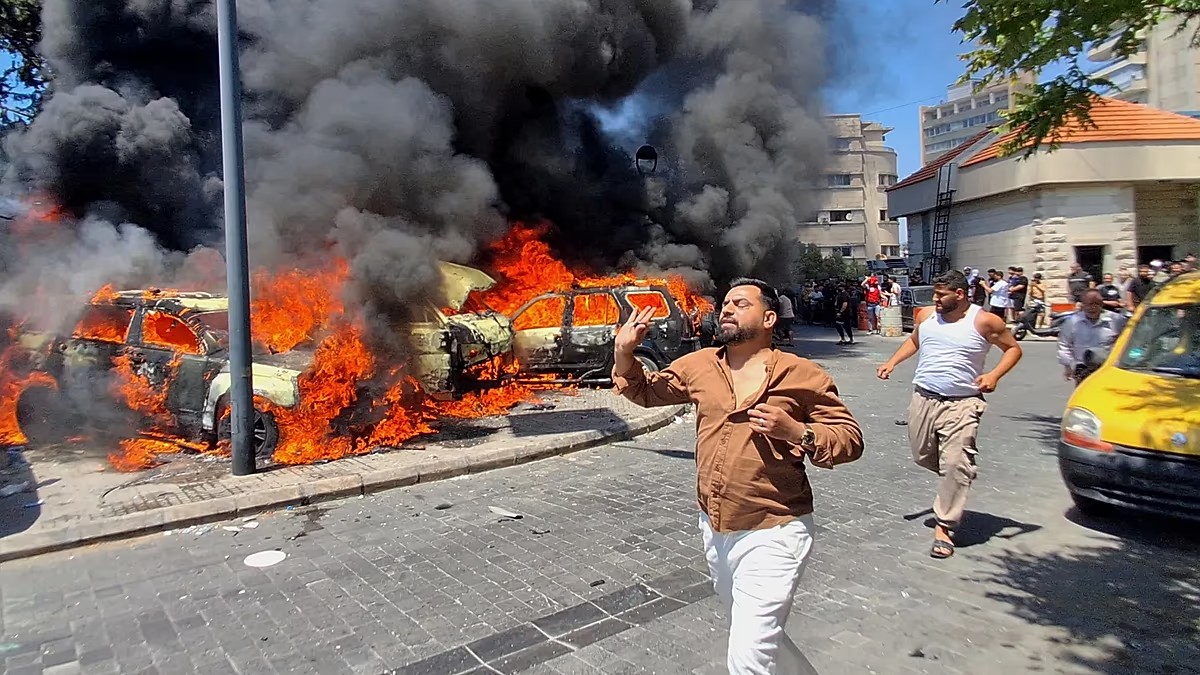
This mass evacuation unfolds against a backdrop of dangerously escalating regional tensions, where a single miscalculation could spark a wider war. The recent cycle of strikes and counterstrikes involving Israel, Hezbollah, and Iran has cast a long, dark shadow over the entire Levant, with southern Lebanon bearing the immediate brunt. The conflict has now pierced the fragile sense of security that some communities had cautiously held. In Tyre’s historic Christian quarter, among some of the world’s oldest churches, religious leaders have issued desperate pleas for international intervention. Their calls carry a particular weight of historic tragedy, as Israeli warnings have now expanded to engulf areas that had, until recently, been spared the worst of the bombardment. The psychological impact of this expansion is profound, signaling that nowhere is truly considered off-limits, erasing the last mental sanctuaries for a beleaguered populace.
The human cost of this protracted conflict is staggering in scale. Lebanese authorities report that approximately 3,500 lives have been lost, a number that represents not just statistics, but fathers, mothers, children, and friends, each leaving a void in a tightly knit society. More overwhelming still is the figure of over 1.2 million people displaced within Lebanon’s borders—a nation already reeling from profound economic and political crisis. This means roughly one in five Lebanese citizens has been forced from their home, joining a heartbreaking diaspora within their own country. Schools, unfinished buildings, and overcrowded relatives’ apartments have become makeshift shelters, straining resources and nerves to the breaking point. This immense displacement is a crisis layered upon multiple existing crises, pushing the country’s social fabric and infrastructure beyond any reasonable limit.
Adding a layer of profound cultural and historical tragedy to the destruction is Tyre’s identity as a UNESCO World Heritage Site, a city continuously inhabited for over five millennia. Its archaeological treasures, from Roman hippodromes to Phoenician harbors, are not merely tourist attractions but the foundational stones of human civilization, physical chronicles of commerce, culture, and conquest that have shaped the Mediterranean world. To see such irreplaceable heritage suffer extensive damage in recent weeks is an assault on human history itself. For residents, this destruction is both deeply personal and universally resonant; they are not only losing their homes and businesses but also the very landmarks that define their identity and connect their personal stories to the grand narrative of humanity. The choice to leave is thus doubly painful, involving an abandonment of both present security and ancient legacy.
Consequently, those joining the exodus are doing so with heavy hearts and immense uncertainty. The decision to pack a lifetime into a few bags and drive into the unknown is not made lightly. For many, there is no assured destination, no waiting home with a spare bed. The journey north is a flight from danger, not a journey to safety. The anxiety is palpable: Will there be fuel for the journey? Will the route itself become a target? Where will we sleep tonight? How long will we be gone? These questions hang in the air, unanswered. They leave behind hollowed-out neighborhoods, shuttered shops, and silent streets where the echoes of daily life—children playing, merchants hawking, friends chatting—have been replaced by the ominous quiet that precedes shelling and the distant echoes of explosions.
Ultimately, the scene on the highway from Tyre is a stark microcosm of modern conflict’s brutal calculus. It represents the moment when the scales tip, when the instinct to preserve life overrides the deep bonds to place, history, and community. Each overloaded vehicle is a story of rupture, carrying within it the trauma of sudden departure and the aching hope for an eventual return. As regional powers exchange fire, the true weight of the confrontation is borne by ordinary families, their pets, and their piled-high possessions, inching their way north on a congested road, carrying with them not just their belongings, but the fragile remnants of a normalcy that has been violently shattered. Their flight is a silent, powerful testament to the failure of diplomacy and the human cost of a war that, for those in the back seats and driver’s seats, they did not choose but must survive.