


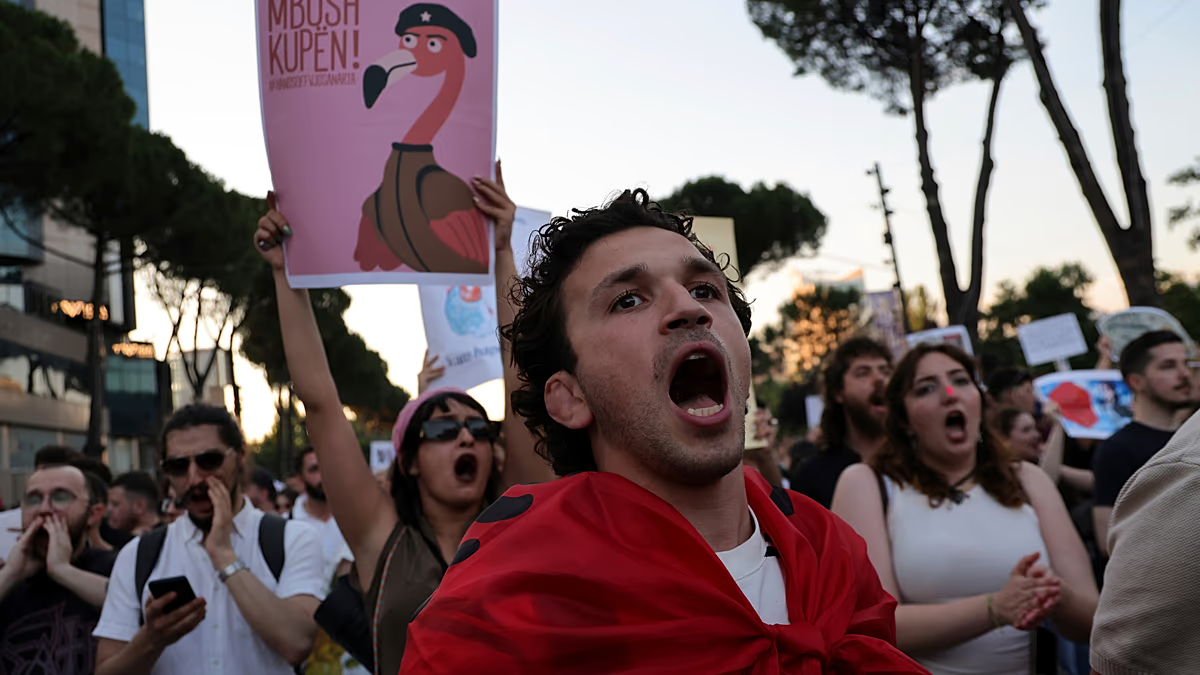
For twelve consecutive days, the heart of Tirana has pulsed not with its usual rhythm, but with the steadfast beat of protest. On June 11th, this beat grew louder as thousands of Albanians gathered once more, their collective voice rising against a single, symbol-laden project: a proposed luxury resort development along the Adriatic coast, backed by American financier Jared Kushner. This was no ordinary demonstration; it was a sustained civic outcry that has transformed a real estate deal into a national referendum on Albania’s future, its values, and the very meaning of progress. The marchers’ demand was clear and direct: the resignation of Prime Minister Edi Rama, whom they accuse of prioritizing foreign investors over the Albanian people and their natural heritage. Their signs and slogans painted a picture of a government they see as out of touch, while an unexpected symbol—inflatable flamingos—whimsically yet pointedly highlighted the deep environmental fears at the core of their anger.
The chosen battleground is not just any coastline, but the ecologically precious Vjosa-Narta landscape, a mosaic of wetlands, lagoons, and dunes recognized as one of the country’s most significant natural areas. For environmental groups and local activists, this is ground zero. They warn that constructing a large-scale luxury resort in such a sensitive zone would irrevocably damage habitats that serve as critical waystations for countless migratory birds. The inflatable flamingos, therefore, are more than protest props; they are poignant reminders of the living creatures whose survival is intertwined with the health of these wetlands. The protest has powerfully connected the dots between a high-end tourism project and the potential silencing of bird calls, the disruption of delicate ecosystems, and the loss of a natural commons that belongs to the nation, not to any single developer.
However, the flames of protest have been fanned by concerns that extend far beyond the environmental. For many Albanians, the Kushner project has become a glaring symbol of misplaced priorities in a nation grappling with foundational challenges. Protesters and opposition voices argue passionately that public funds, political capital, and governmental attention should be directed toward rebuilding hospitals, modernizing schools, and fixing crumbling infrastructure—the bedrock of a functioning society. The spectacle of a government vigorously supporting a secluded haven for the wealthy, while many citizens contend with everyday struggles, has struck a nerve. This tension frames a profound and urgent question: what kind of development truly serves Albania? Is it enclaves of luxury, or investments in public goods that uplift every citizen?
In response, the government of Prime Minister Edi Rama has doubled down on its economic argument. Officials maintain that projects of this scale and caliber are essential for boosting high-end tourism, attracting foreign capital, and stimulating job creation and growth. They portray the development as a vote of confidence in Albania’s potential and a necessary step in aligning the country with European standards for investment and economic diversification. This perspective frames the opposition not as protectors of heritage, but as obstacles to modernity and prosperity—a narrative clash that is common in developing economies seeking a foothold in the global market. The standoff thus represents a classic, yet intensely local, conflict between visions of the future: one measured in GDP and international prestige, and another measured in social welfare and environmental integrity.
Adding a layer of legal and political gravity to the already heated public debate, Albania’s state anti-corruption agency has announced it has opened an investigation linked to the resort development. While officials have withheld specific details, the mere existence of such a probe fuels public skepticism. In a region where memories of corrupt deals and opaque governance are still fresh, the investigation validates protesters’ deeper anxieties about the transparency of the entire process. It raises uncomfortable questions about the influence of powerful foreign interests and whether all procedures were followed scrupulously. This legal scrutiny ensures the controversy will not remain confined to the streets but will echo through official institutions, potentially for months to come.
Ultimately, the protests in Tirana transcend a single construction project. They have evolved into a wider, passionate debate about the soul of a nation at a crossroads. As Albania seeks membership in the European Union—a journey demanding rigorous standards in rule of law, environmental protection, and democratic accountability—the choices it makes now are scrutinized as never before. The sustained civic engagement on the streets demonstrates a population actively defining what it wants that European future to look like: not merely an imitation of external models of development, but a path that fiercely guards its natural treasures and prioritizes the well-being of its citizens. The chants in Tirana are, therefore, more than shouts of opposition; they are a declaration that the Albanian people demand to be the primary authors of their own national story.