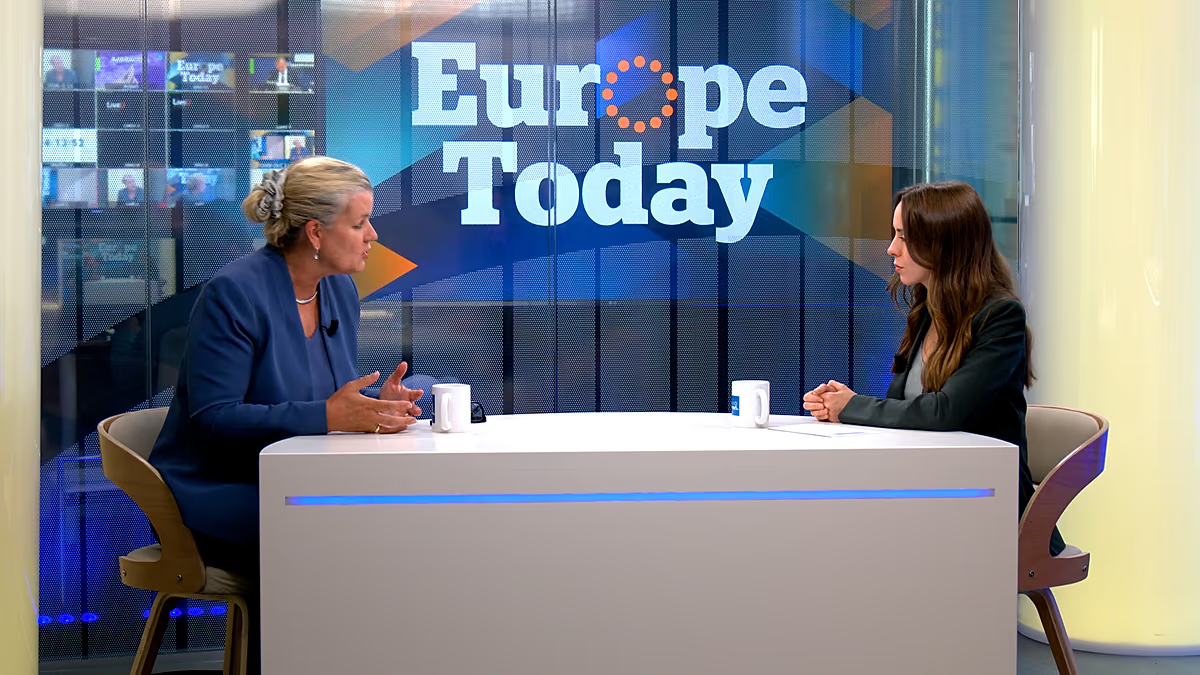
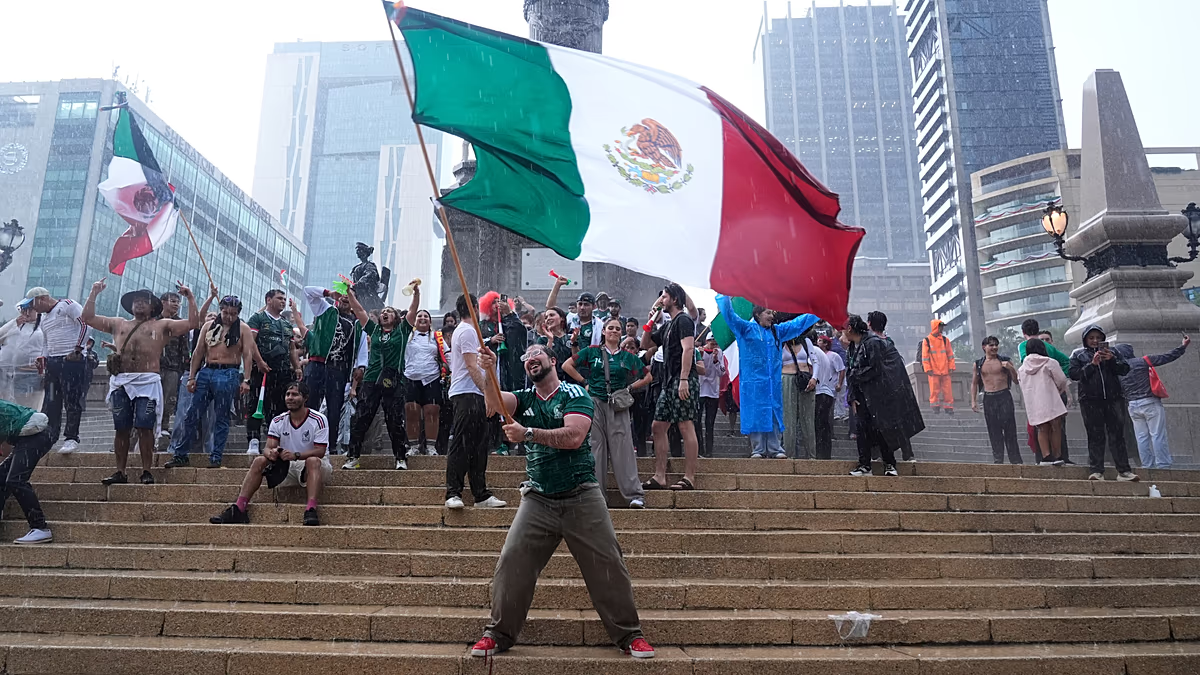



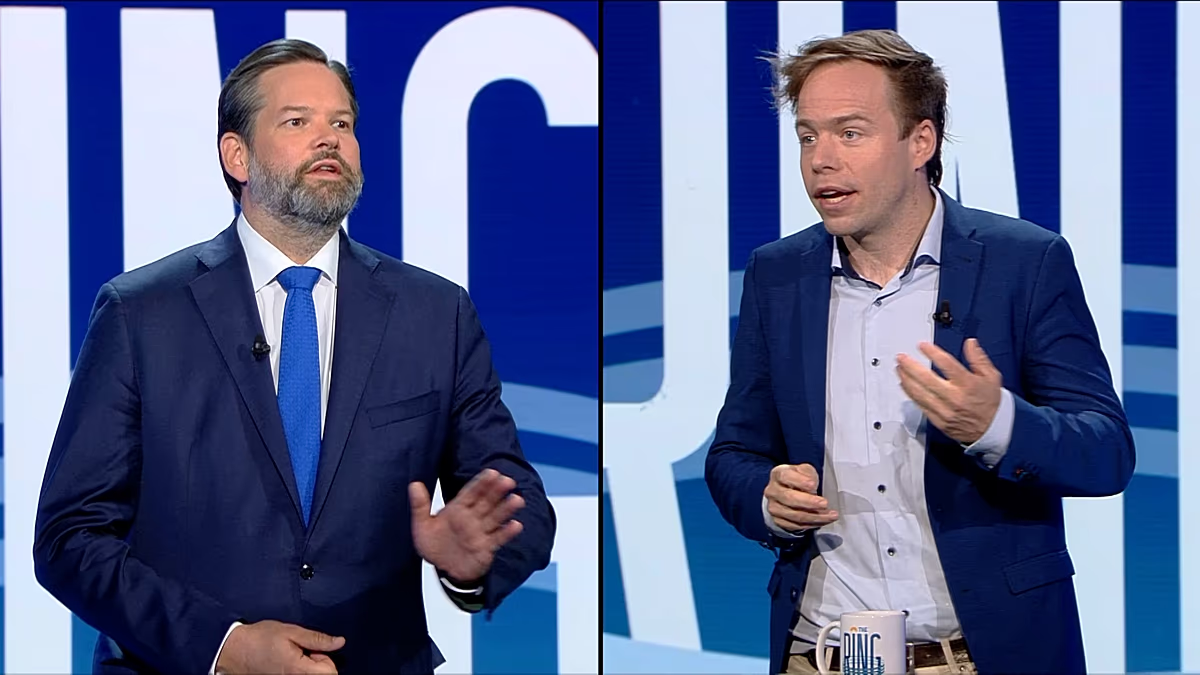
The 2026 FIFA World Cup, set to captivate millions across the globe, is being heralded as a monumental celebration of sport and unity. In official proclamations, the event is framed as a vital, joyous escape—a force powerful enough to momentarily dissolve global divisions and political strife in favor of shared human passion. FIFA President Gianni Infantino has powerfully articulated this vision, suggesting that for ninety minutes plus added time, the beautiful game offers billions a precious respite from the worries of work, home, and national crises. This ideal of football as a universal, apolitical festival is a sentiment echoed by voices like Lukas Mandl, a Member of the European Parliament from Austria, who asserts that for these few weeks, football makes the world a family, and that politicizing or making it elitist undermines that sacred bond. At its heart, this perspective champions football’s pure, connective spirit, viewing the World Cup as a rare and necessary moment of global camaraderie.
Yet, this aspirational narrative is colliding forcefully with an unprecedented wave of logistical and political controversies, suggesting the tournament has irrevocably entered the complex arena of global geopolitics and corporate scrutiny. The 2026 edition itself is historic and vast, hosted for the first time by three nations—Canada, Mexico, and the United States—and expanded to include 48 teams. This colossal scale alone introduces immense challenges, from cross-border coordination to environmental impact. More pointedly, the run-up has been dominated by issues that strike at the sport’s core relationship with its fans, most acutely the explosion of ticket prices. For many supporters, the dream of attending has been dashed by costs driven by dynamic pricing algorithms and a perceived prioritization of profit over accessibility, turning a people’s game into a luxury experience and prompting threats of boycotts.
This commercial pressure forms the center of a critique powerfully advanced by politicians like Rasmus Andresen, a German Green MEP. He warns that football is at a dangerous crossroads, risked becoming merely a playground for international investors and financial speculators. When loyal supporters are priced out of stadiums and historic clubs are treated as disposable assets in global investment portfolios, the essential social and community fabric of the sport is torn. Andresen calls for robust regulatory intervention, particularly from European institutions, to enforce transparency, regulate club ownership, and create fair rules for ticket pricing. His argument posits football not as a mere business, but as a vital public good—a cultural institution whose communal value must be protected from unbridled commercial exploitation to preserve its soul for future generations.
Furthermore, the World Cup finds itself entangled in a web of international political tensions that refuse to be left at the stadium door. From debates over the inclusion of teams representing nations in conflict or under scrutiny for human rights records, to the logistical and symbolic challenges of hosting in countries grappling with immigration policy and internal social divisions, the tournament is a mirror to the world’s fractures. Issues of racism, discrimination, and freedom of expression also persistently surface, both on and off the pitch, compelling organizations like FIFA to navigate diplomatic minefields. This reality contradicts the ideal of a purely apolitical spectacle, proving that an event of such magnitude cannot exist in a vacuum; it inevitably reflects and amplifies the geopolitical currents of its time.
Consequently, the central question looming over the 2026 tournament is not merely who will lift the trophy, but what future model of global football will prevail. Can the World Cup maintain its former glory and universal appeal while balancing the immense commercial forces it generates and the political complexities it encounters? The coming weeks will serve as a live test case. Will the experience for fans in North America—shaped by affordability, accessibility, security, and atmosphere—validate the inclusive, unifying rhetoric of the organizers? Or will it expose a growing rift between the sport’s corporate engine and its grassroots heart? The world will be watching to see if the beautiful game can successfully harmonize its dual identities: as a lucrative global entertainment industry and as a cherished, community-based passion that belongs to everyone.
Ultimately, the 2026 World Cup represents a pivotal chapter in the ongoing story of sport in society. It encapsulates a tension between two powerful ideas: football as a private joy, a simple escape that unites humanity through shared emotional spectacle, and football as a public stage, unavoidably subject to economic forces and political realities. The dialogue between figures like Mandl, who champions the former, and Andresen, who advocates for safeguarding it from the latter, defines this moment. The tournament’s legacy will be measured not only in goals scored and records broken, but in how it manages this balance. The hope for billions remains that the power of the game itself—the breathtaking skill, the nail-biting drama, the collective cheers and sighs—will, even if just momentarily, transcend the controversies and remind us all of the common ground we share.