

It was an unexpected conclusion to what had otherwise been a profoundly successful and spiritually resonant week across Spain. Pope Leo XIV’s pastoral journey, which carried him from the historic plazas of Madrid to the architectural marvels of Barcelona and finally to the volcanic landscapes of the Canary Islands, was marked by messages of hope, unity, and a powerful plea for compassion toward migrants. The trip’s symbolic high point was the solemn inauguration of the new tower of the Sagrada Familia basilica, a moment blending faith with timeless human artistry. As Friday afternoon waned on the island of Tenerife, the atmosphere was one of quiet fulfillment, with the pontiff having completed his engagements and Spanish King Felipe VI present on the tarmac to offer a formal and respectful farewell. The expectation was for a routine departure, a smooth flight home to Rome, and a quiet end to a busy papal visit.
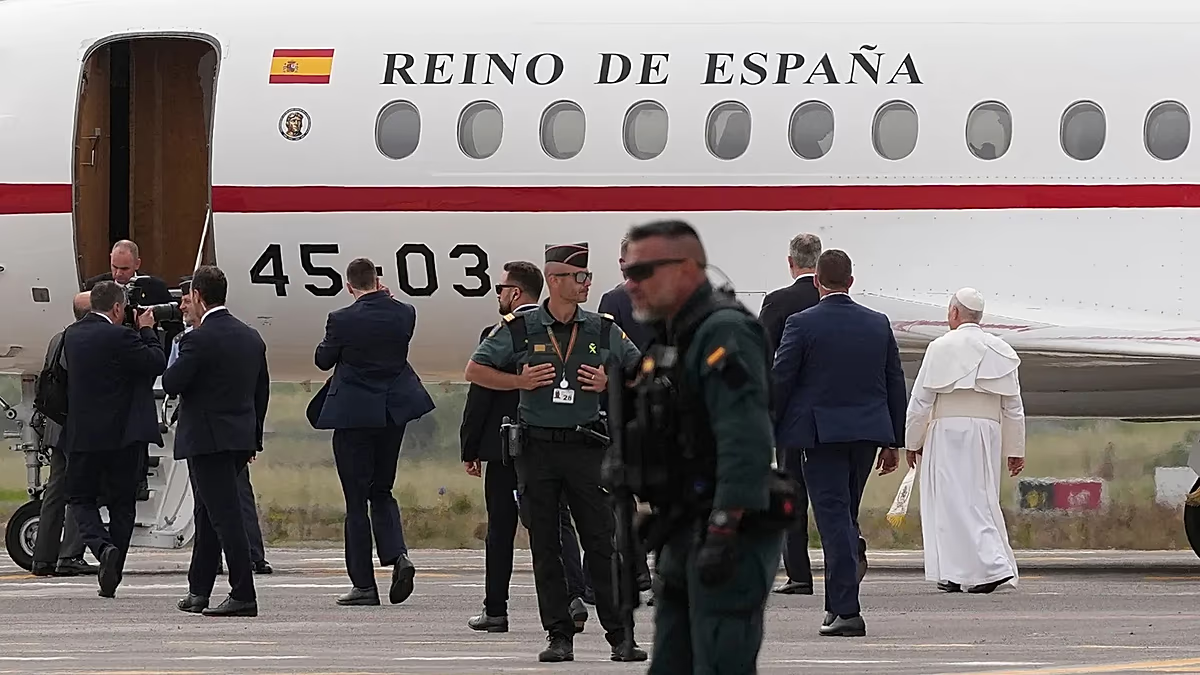
This routine, however, was swiftly upended by the meticulous and safety-first protocols of modern air travel. After the pope and his entourage had boarded the designated Iberia aircraft, a technical issue was detected. An AFP reporter on the scene noted the unusual sight of both Pope Leo XIV and King Felipe VI disembarking and returning to the terminal. For about eighty journalists, Vatican officials, and clergy members who remained onboard, updates came directly from the flight deck. The pilot initially cited a technical fault, later specified as an engine startup failure, and suggested that strong crosswinds might be a contributing factor. In a calm, professional manner, he outlined the plan to tow the aircraft for a restart attempt, assuring everyone, “We will try this. If it is successful, we can depart.” This behind-the-scenes glimpse revealed the seamless coordination between the flight crew, ground maintenance, and security details, all operating under the pressure of an unusual situation.
The delay, while minor in the grand scheme, was historically notable. Veteran journalists accompanying the trip remarked that it had been decades since a papal flight encountered a problem serious enough to require a change of aircraft. Their memories drifted back to the long pontificate of St. John Paul II, which saw its own share of travel improvisations—from a snowstorm diversion to Naples in 1986 to an unplanned landing in apartheid-era South Africa in 1988 due to severe weather. These anecdotes underscored a timeless truth: despite the immense global stature of the office, the Pope remains a pilgrim subject to the same mundane realities as any other traveler. The intricate choreography of these trips, where the Italian carrier ITA Airways typically plays a key role, is a testament to both diplomacy and logistics, with the papal party and security at the front and the world’s press documenting every moment from the rear.
In a gesture of immediate and gracious solidarity, Spanish King Felipe VI resolved the impasse. Demonstrating the deep respect and warm hospitality that had characterized the entire state visit, the king offered one of his own official aircraft, a Falcon jet, for the pontiff’s journey back to Rome. This act of royal courtesy ensured the Pope’s schedule faced minimal disruption and highlighted the strong bonds between the Holy See and the Spanish monarchy. The original Iberia plane, which had proudly carried the pope between Spanish cities earlier in the week—even sharing video of a smiling Leo XIV in the cockpit escorted by Spanish military aircraft—would remain behind for repairs. The Falcon jet took off from Tenerife just after 6:00 PM local time, carrying the pope and his core delegation toward an expected late evening arrival in Rome.
This unforeseen event did little to overshadow the substantive legacy of the journey. Throughout his tour, Pope Leo XIV consistently returned to the urgent theme of human migration, appealing for greater empathy and more concrete solutions for those undertaking perilous journeys in search of dignity and peace. In the Canary Islands, a key arrival point for migrants crossing the Atlantic, his words carried particular weight and resonance. The technical glitch on the tarmac, rather than becoming the dominant story, instead became a footnote—a humanizing moment of adaptability amidst a trip dedicated to profound human questions. It served as a reminder that progress, whether in diplomacy, faith, or engineering, is often accompanied by unexpected hiccups that require patience, cooperation, and a calm change of plans.
As the Falcon jet climbed into the sky over the Atlantic, the week’s true focus came back into view. The inaugural blessing of the Sagrada Familia tower, a new spire reaching toward the heavens, stood as a lasting metaphor for the visit: an aspiration toward higher ideals, built over time through perseverance. The successful, heartfelt engagements in Madrid, Barcelona, and the Canaries demonstrated a vibrant connection between the pontiff and the Spanish faithful. The minor travel disruption simply affirmed that even the most carefully laid plans are humbled by reality, a universal experience that subtly underscored the Pope’s messages of humility, solidarity, and shared human journey. His mission, uninterrupted, continued its flight home.