

Paragraph 1
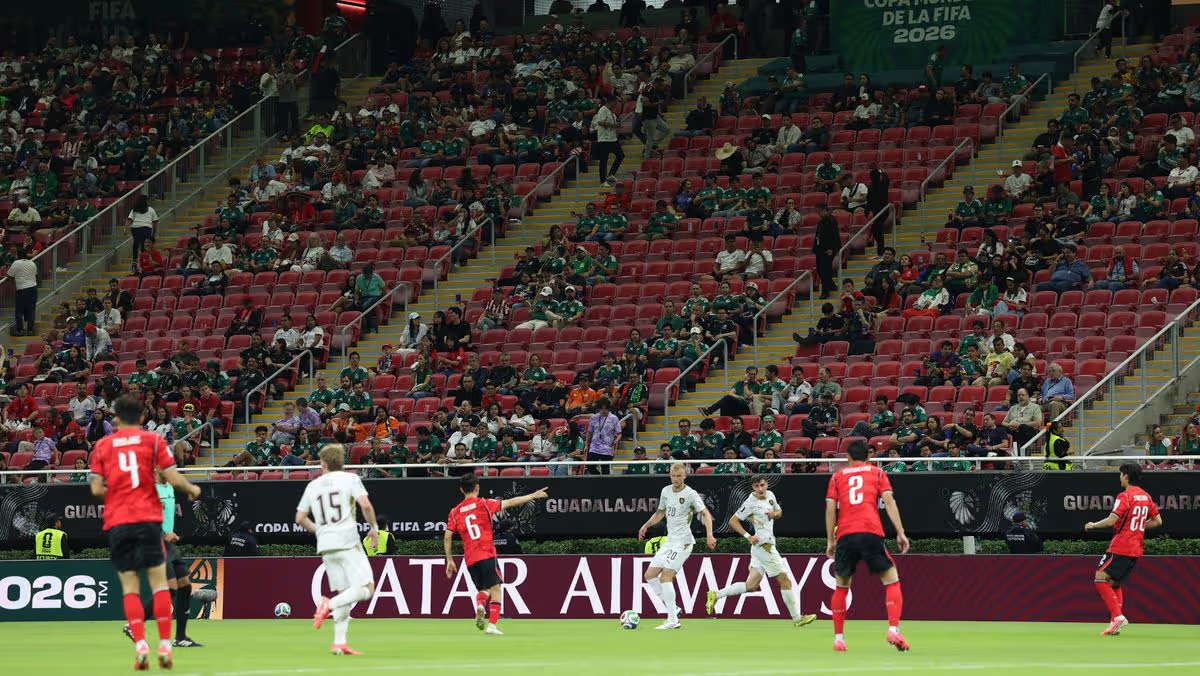
As the second match of the World Cup kicked off at Estadio Akron in Guadalajara, a troubling visual emerged that contradicted the usual electric atmosphere of football’s greatest tournament. Television cameras broadcasting South Korea’s 2-1 victory over Czechia to a global audience instead captured a sea of empty seats, stretching row upon row. The irony was palpable as FIFA President Gianni Infantino sat among the sparse crowd, with the vast, unoccupied sections of the stadium forming a stark backdrop. The official attendance was announced as nearly 45,000, claiming to be just shy of capacity, yet the undeniable images told a different story—one of conspicuous absence and growing disconnect between the event’s organisers and its lifeblood: the fans.
Paragraph 2
This disconnect is being directly attributed by supporters and advocacy groups to FIFA’s controversial ticketing strategy. Angered fans and observers quickly took to social media, expressing disbelief at the visible gaps in the stands. Many pointed to FIFA’s adoption of a “variable pricing” model—similar to dynamic pricing used by airlines and some concert venues—as the primary culprit. This approach, a first for the World Cup, has been accused of artificially inflating costs and misleading supporters. Football Supporters Europe (FSE), a major fan network, highlighted that prices had jumped fivefold compared to the 2022 tournament in Qatar. They argue that this policy has effectively priced out both local Mexican supporters and international travellers, transforming the World Cup from a universal celebration into an increasingly exclusive affair.
Paragraph 3
The experience of veteran England supporter Garford Beck, attending his tenth World Cup, encapsulates the frustration. He noted that the empty seats were “really noticeable” to a worldwide television audience and predicted more would follow, particularly for matches involving less prominent footballing nations. Beck starkly illustrated the economic disparity, explaining that for a fan from the Democratic Republic of Congo, the cost of a single ticket could equate to roughly 16 years of average wages. His sentiment that “FIFA is getting what it deserves” echoes a growing disillusionment. The issue is compounded by a flooded secondary market, where countless tickets are listed for resale as fans struggle with the combined burden of exorbitant ticket, travel, and accommodation costs, suggesting a major miscalculation in demand.
Paragraph 4
In defence, President Infantino has stood firm, describing FIFA’s pricing as “accurate” for the North American market and pointing to “unprecedented” demand. He emphasized that the tournament’s lowest entry ticket of $60 is cheaper than playoff tickets for major American sports leagues. However, critics, including FSE, counter that these most affordable tickets were exceedingly scarce and often snapped up before the general public had a chance, rendering the claim largely symbolic. The reality for marquee matches is far steeper. For instance, tickets for the USA’s opening game started at over $1,100 through official channels, with median resale prices hovering around $800. The most expensive seats for the final soared past $10,000, with resale listings briefly approaching an astonishing $33,000.
Paragraph 5
The ticketing controversy has attracted formal scrutiny beyond fan complaints. The attorneys general of New York and New Jersey have issued subpoenas to FIFA, investigating whether fans were misled about seat locations and if the organisation’s release strategies contributed to price gouging. Furthermore, Football Supporters Europe has filed a formal complaint with the European Commission, accusing FIFA of shutting out ordinary supporters. This legal and regulatory attention underscores that the empty seats represent more than just a public relations problem; they signify potential failures in market practice and transparency. The situation has even drawn commentary from figures like former US President Donald Trump, who publicly blasted the high prices, indicating the scandal’s reach beyond the sports world.
Paragraph 6
The spectacle of vacant seats is a profound embarrassment for FIFA, clashing with the organisation’s stated mission to promote football for all. While FIFA maintains that its pricing model is standard in the host region and that profits are reinvested into the sport, the visual evidence and fan outcry suggest a significant strategic error. This episode risks tarnishing the tournament’s legacy, framing it as an event accessible only to the wealthy elite rather than a global festival for every fan. As the World Cup progresses, the world will be watching not just the action on the pitch, but also the stories in the stands, to see if this rift between the governing body and the global football community can be healed or if it will define this edition of the beautiful game’s premier competition.