




The Great British Savings Slumber: Millions Miss Out as Banks Profit from Inertia
In the heart of Britain’s financial landscape, a quiet but profound contradiction persists. While headlines celebrate booming bank profits and a frenzy of activity around tax-free savings, a staggering £116 billion lies dormant in over a million current accounts, earning precisely nothing. This inertia, a blend of habit, uncertainty, and perceived convenience, is costing UK savers dearly. At a time when every penny counts, analysis reveals that the typical saver with a large, inactive balance is forfeiting an average of £4,700 annually in potential interest. This reality sits uneasily alongside data showing savers are simultaneously capable of decisive action, as evidenced by a record-breaking £12 billion poured into Cash ISAs in a single month. The scene is set for a renewed debate: in an era of high profits for lenders, are banks doing enough to awaken their customers from this costly financial slumber?
The scale of the problem is illuminated by research from savings provider Spring. They found that at the end of March, 1.04 million current accounts holding more than £50,000 were paid zero interest, with the average balance in these idle accounts being £111,537. Even more broadly, a shocking 87% of the UK’s 91 million current accounts in credit—approximately 79 million accounts—offer no interest whatsoever on balances. For many, their bank is merely a secure parking spot, a habit formed over years. Derek Sprawling of Spring notes that “it comes down to convenience or habit,” but emphasises that with such substantial sums, the price of inaction is no longer trivial. This behavioural trap is compounded by a lack of financial engagement; 36% keep savings with their main bank out of loyalty or simplicity, and 21% hold savings directly in a non-interest-bearing current account, often unaware of the silent erosion of their money’s purchasing power.
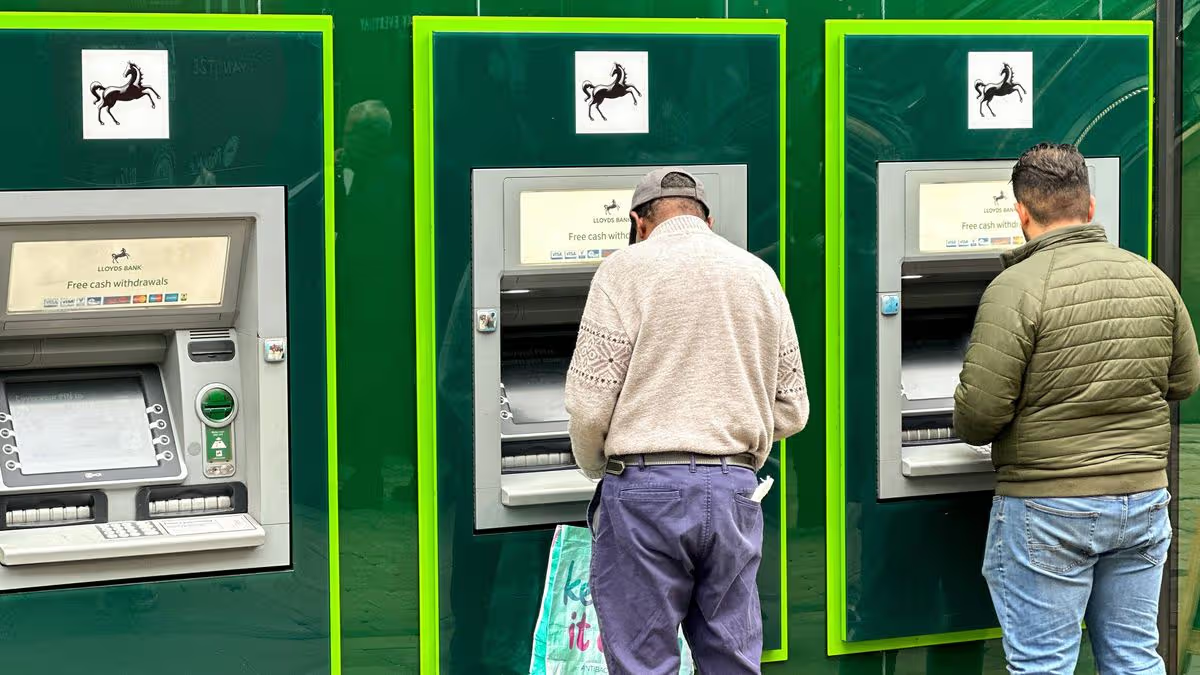
This widespread saver inertia has become a significant engine for high street bank profitability. These institutions can use the vast pools of deposited cash, on which they pay little or no interest, to fund mortgages, personal loans, and credit cards. On these products, customers face considerably higher borrowing rates. The difference between these two rates—the cheap cost of funding and the higher income from lending—fuels substantial earnings. Recent results underscore this dynamic: Lloyds Banking Group reported pre-tax profits of £6.7 billion, up 12%, while NatWest recorded £7.7 billion, a 25% increase. While these profits reflect a complex business environment, the contrast is stark: billions in earnings for banks juxtaposed with billions in lost interest for loyal customers who have not moved their money.
The opportunity cost for dormant savers is severe and quantifiable. Inflation, though currently at 2.8%, has recently been a brutal force, peaking at 11.1% in October 2022. According to the Bank of England’s calculator, £100 from 2016 is needed to buy what £140 buys today. Money left in a zero-interest account is therefore guaranteed to lose real value. In stark contrast, the active saver can access dramatically better returns. The average easy-access savings account pays around 2.5%, potentially preserving some purchasing power, while the average one-year fixed-rate account offers 4.23%. For someone with the average dormant balance of £111,537, securing that 4.23% rate translates to over £4,700 in annual interest before tax—money that is currently being left on the table.
This evidence of saver capability is nowhere clearer than in the recent stampede into Cash ISAs. These accounts offer comparable rates to standard savings accounts, with one-year fixes averaging 4.25%, but with the crucial benefit of tax-free interest. This perk is driving unprecedented action ahead of a significant change: the annual Cash ISA allowance is planned to drop from £20,000 to £12,000 starting in April 2027. The £12 billion deposited in April alone—the second-largest monthly influx ever—signals a population acutely aware of a closing window. As Charlene Young of AJ Bell explains, many are “eager to make the most of the current allowance while they still have the opportunity.” This surge proves that when motivated by a clear, tangible benefit and a deadline, Britons can and will engage proactively with their savings.
Yet, this ISA frenzy only deepens the mystery of the dormant billions. It reveals a two-tier saver nation: one segment is agile, tax-savvy, and capitalising on opportunities; another, perhaps larger segment remains stuck in routine, bewildered by choice, or simply disconnected from their finances. The threat remains real for both. Young cautions that persistent inflation, exacerbated by global tensions and supply chain issues, continues to “pose a threat to cash held in low-paying accounts.” The conclusion is inescapable. For financial wellbeing, breaking the habit of inertia is not merely advisable but essential. Moving money from a sterile current account into a competitive savings or ISA product is a straightforward defence against inflation and a step towards financial empowerment, in a system where the cost of comfort and convenience is proving to be astronomically high.