



Paragraph 1: The Evolving Heart of the Museum
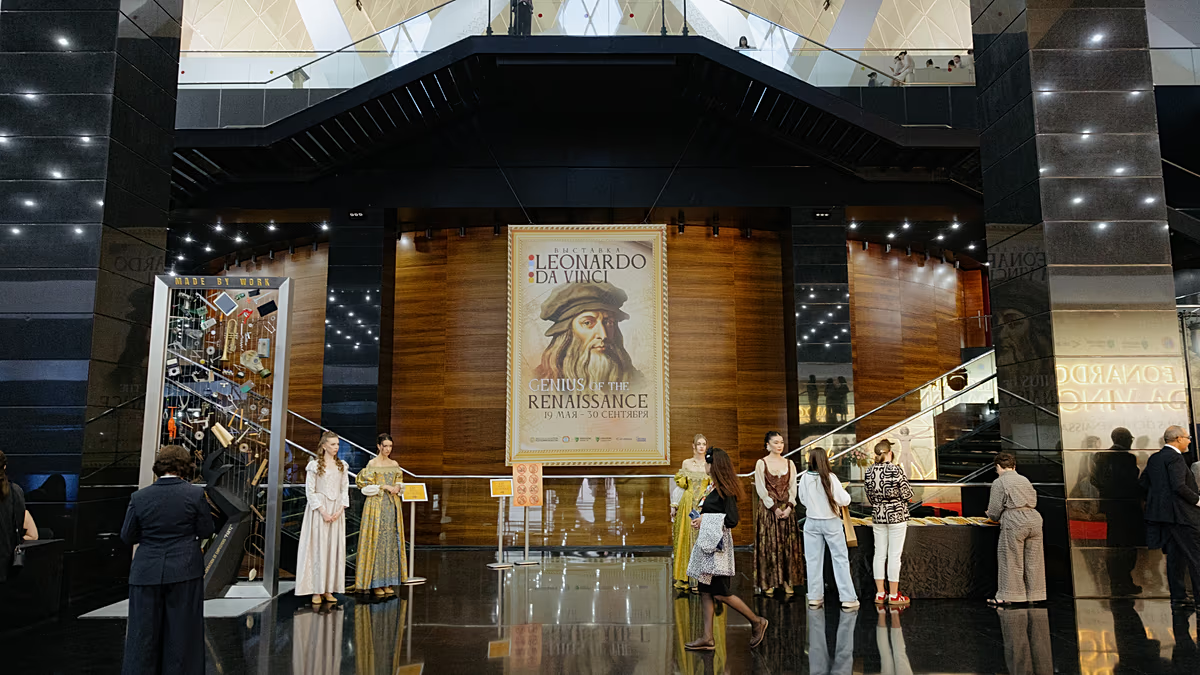
Think back to your last museum visit. Was it a quiet hall of artifacts, or a dynamic space that challenged and moved you? That lasting impression is precisely what the European Museum of the Year Award (EMYA) seeks to celebrate and elevate. More than a simple contest, EMYA acts as a barometer for the vital role museums now play in our societies. In an era marked by conflict, polarization, and eroding trust in institutions, the award, overseen by the European Museum Forum, recognizes those spaces that dare to be more. The torch, currently held by last year’s winner, Manchester Museum, will be passed to an institution that exemplifies excellence through innovation, humanitarianism, and sustainability—all grounded in the core principles of democracy, social responsibility, and inclusion. The judges look for creativity in how knowledge is produced and shared, assessing how museums interpret our world and meet their social obligations to the public.
Paragraph 2: From Healing to History: Museums of Human Experience
This year’s 34 nominees present a stunning tapestry of what modern museums can be. In Belgium, the Museum St John’s Hospital in Bruges transforms a majestic 12th-century Gothic hospital into a profound narrative space. It doesn’t just display art; it uses immersive audiovisual experiences to tell the poignant stories of care and community that lived within its ancient walls, connecting us directly to centuries of human vulnerability and compassion. Meanwhile, in Germany, the Obersalzberg Documentation Centre confronts one of history’s darkest chapters. Located at Hitler’s alpine retreat, it courageously links this local site of Nazi power to atrocities across Europe, ensuring that memory serves as a solemn guardian against hatred. Similarly, Luxembourg’s National Museum of Resistance and Human Rights serves as a crucial educational pillar, exploring oppression, resistance, and the Holocaust in multiple languages to foster a deeper, more active understanding of human rights.
Paragraph 3: Spaces of Play, Design, and Sensory Discovery
Other nominees redefine museum visits as journeys of imagination and interaction. In Espoo, Finland, the Museum of Play is a vibrant invitation to rediscover joy and connection. By exploring the history of toys and Finnish childhood, it acts as a storyteller, educator, and community builder for all ages, emphasizing sustainability and shared exploration. In Lisbon, the Mude – Design Museum invites visitors to reconsider the objects that shape our daily lives. Housed in a beautifully restored former bank, its exhibitions thoughtfully examine design’s role in socio-cultural debates and environmental solutions, proving that a chair or a piece of fabric can speak volumes about our world. For a purely sensory adventure, Germany’s Sensoria – The House of Fragrances and Flavours in Holzminden immerses guests in the science and history of scent, allowing them to browse hundreds of fragrances and even create their own perfume, challenging us to re-imagine how flavors and scents subtly influence society.
Paragraph 4: Gateways to Science and Youthful Imagination
Some institutions dedicate themselves to demystifying the complex and inspiring the next generation. The CERN Science Gateway in Switzerland is not just a museum but an immersive scientific playground. At the world’s largest physics laboratory, visitors of all ages can cross a dramatic bridge into workshops, explore exhibitions on particle physics, and feel the thrill of discovery, brilliantly bridging the gap between cutting-edge research and public wonder. In London, the Young V&A has reimagined the museum experience for young minds. Developed in collaboration with children and families, it is a space of pure possibility where kids are encouraged to play, design, and imagine using nearly 2,000 objects. Its focus on accessibility, civic participation, and themes like empathy and belonging shows how museums can nurture creative and compassionate citizens from their earliest visits.
Paragraph 5: The Common Thread: Museums as Community Anchors
What unites these diverse finalists—from a historic hospital to a physics lab, from a site of Nazi terror to a house of perfume—is a profound commitment to being essential community resources. They are no longer passive repositories but active, responsible participants in public life. Whether through educating on human rights, fostering intergenerational play, enabling scientific literacy, or stimulating sensory and design thinking, each institution strives to build trust, foster dialogue, and promote inclusion. They answer the urgent call noted by EMYA chair Amina Krvavac, meeting new societal demands by becoming spaces where difficult history is confronted, joy is cultivated, knowledge is co-created, and a fragile public discourse can find grounding and inspiration.
Paragraph 6: A Celebration of Forward-Looking Vision
The winner of this prestigious award will be announced at a ceremony in Bilbao, Spain, on June 13, 2026. Regardless of which museum ultimately receives the honor, the 2025 shortlist itself is a powerful testament to a vibrant cultural evolution. These nominees collectively demonstrate that the museum of the future is interactive, empathetic, and courageously engaged with the pressing issues of our time. They remind us that museums hold the unique power to connect us to our past, make sense of our present, and thoughtfully imagine our future. The next time you walk through a museum’s doors, you might just be stepping into a space that is quietly, beautifully, working to reshape the world.