


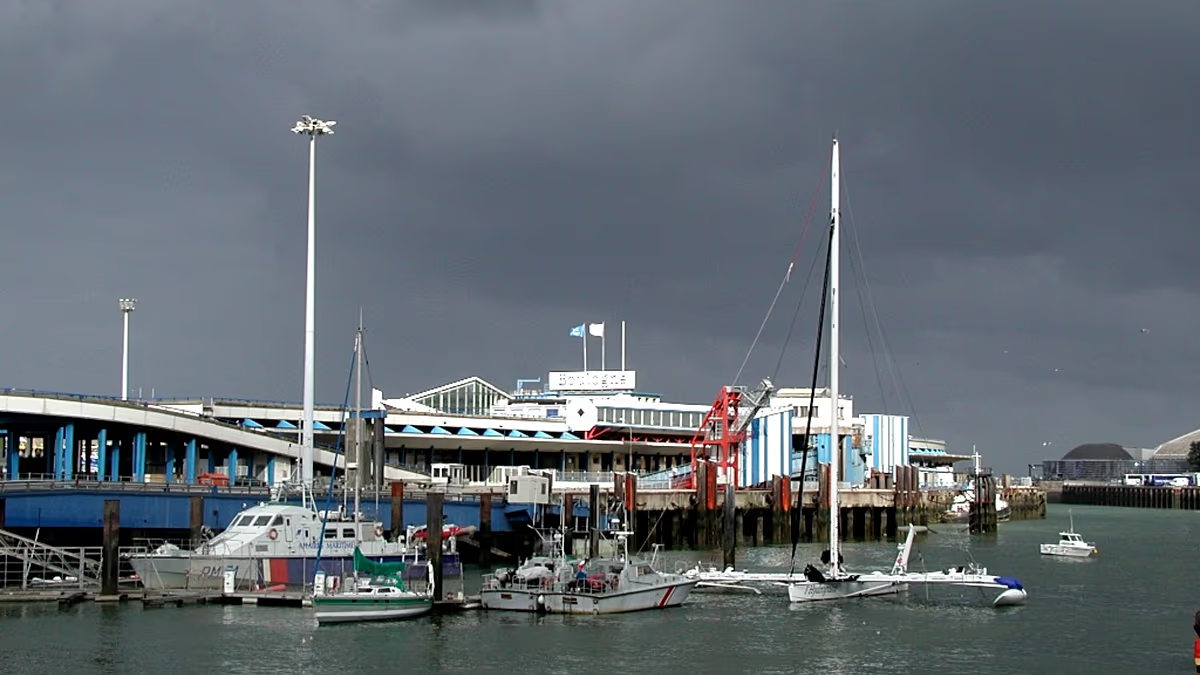
On a bright Friday in June, a significant new chapter began for cross-Channel travel as the first ferry in fifteen years departed Boulogne-sur-Mer, France, bound for Cork, Ireland. This new overnight service, operated by Hibernia Line, does more than just reconnect two historic ports; it weaves a fresh thread into the fabric of European travel and trade. For the first time in a generation, passengers and freight can move directly between continental Europe and Ireland without transiting through the United Kingdom. The resumption of international passenger services from Boulogne is a moment of palpable pride for the community, with Mayor Frédéric Cuvillier calling it the “culmination of years of work,” a deeply moving achievement for all who believed in the port’s potential.
The service promises practical convenience alongside symbolic importance. Sailing six days a week, the ferries St Patrick and Akka will embark on a roughly 21-hour journey across the Celtic Sea. Departures are timed for the evening, with vessels leaving Cork at 21:00 GMT and Boulogne at 22:00 GMT, allowing travelers to settle into their cabins and wake up approaching a new country. Initially accommodating cars and freight, the service will expand to welcome foot passengers starting in July, broadening its appeal. Each ship can carry 600 passengers and 130 units of freight, a capacity designed to strengthen vital tourism and commercial links between the two nations.
This new route arrives at a time when direct connections between Ireland and continental Europe are increasingly valuable. Since the UK’s departure from the European Union, logistical and customs complexities have made bypassing Britain an attractive option for many freight operators. While established companies like Brittany Ferries, Irish Ferries, and DFDS already serve the France-Ireland corridor, Hibernia Line’s new link provides additional capacity and choice. It offers travelers a valuable alternative to air travel and the often-congested UK land bridge, contributing to a more resilient and diversified network of connections for Ireland.
For Boulogne-sur-Mer, the return of an international ferry service is a major economic and symbolic boost. The port, with its rich maritime history, had been without such a link for a decade and a half. Mayor Cuvillier’s heartfelt statement, “I love people who believe in Boulogne,” underscores the local significance of this venture. It represents renewed confidence in the city as a gateway, promising to bring visitors, business, and vibrancy back to its docks. This is more than a transportation link; it’s a project rooted in community belief and years of diligent planning, finally coming to fruition.
Travelers should note an important administrative detail for their journey. While both France and Ireland are members of the European Union, Ireland is not part of the Schengen Area, which allows for passport-free movement across most of mainland Europe. Consequently, non-EU citizens arriving in Boulogne-sur-Mer on this ferry will be subject to the EU’s Entry/Exit System (EES) requirements. This automated process registers a traveler’s name, biometric data, and date of entry, so passengers should be prepared for this border check upon arrival in France.
In essence, the launch of the Boulogne-sur-Mer to Cork ferry is a multifaceted development. It is a practical response to contemporary travel and trade needs, a strategic bypass of post-Brexit complexities, and a heartening story of local revival. By re-establishing a direct maritime corridor, Hibernia Line is not only providing a new voyage across the sea but also fostering closer ties between two nations, proving that belief and perseverance can indeed restore a vital link that many thought was lost.