


Of all the ingredients for a perfect vacation, disappointment is the one we never plan for. We save our money, build our anticipation, and set out for landmarks and theme parks that promise unforgettable memories. Yet, new research confirms a common, though rarely discussed, travel truth: some of the world’s most famous attractions frequently fail to live up to the hype. By analyzing nearly 100,000 visitor reviews, the luggage storage network Radical Storage has identified the destinations most likely to leave travelers feeling let down. For the second consecutive year, the dubious honor of the world’s most disappointing attraction goes to a major British theme park, highlighting a global pattern where iconic sites become victims of their own popularity, plagued by crowds, high costs, and experiences that simply don’t match their gleaming brochures.
The study, which focused on attractions in 50 of the world’s most visited countries, employed a meticulous method. Researchers sifted through reviews, identifying keywords like “boring,” “overcrowded,” “overrated,” and “poor value” to gauge visitor sentiment. The results paint a picture of frustrated expectations. On average, 5.2% of reviews for major attractions were negative, but for the sites at the top of the list, that figure soared dramatically. Furthermore, the data reveals broader trends: the United Kingdom and Canada tied as the countries with the highest rate of disappointing attractions (7.9%), followed by the United States (7.5%). Cities like Seattle, Budapest, London, and Bangkok emerged as particular hotspots for letdowns, while six of the top ten most disappointing individual attractions are located in North America.
Topping the global list is Alton Towers in Staffordshire, England. Despite being the UK’s largest theme park, a staggering 38.2% of its reviews express disappointment. The primary culprits are not the rollercoasters themselves, but the experience surrounding them. Visitors consistently complain about exorbitant costs, citing misleading ticket information and expensive add-ons for food, drink, and park access. Coupled with frequent criticisms of poor customer service and overwhelming crowds, the magic of the day out is often lost. There is a slight silver lining: this year’s negative review percentage is a significant improvement from last year’s 49.4%, suggesting management may be responding to feedback, though it remains the most criticized attraction by a wide margin.
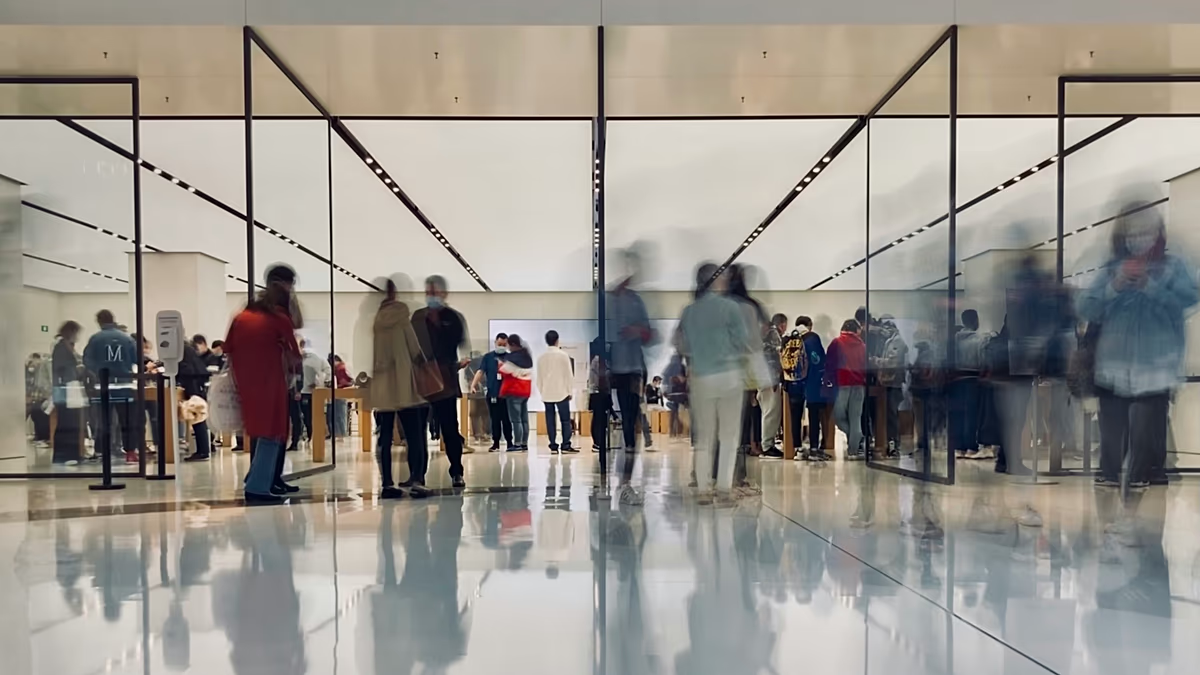
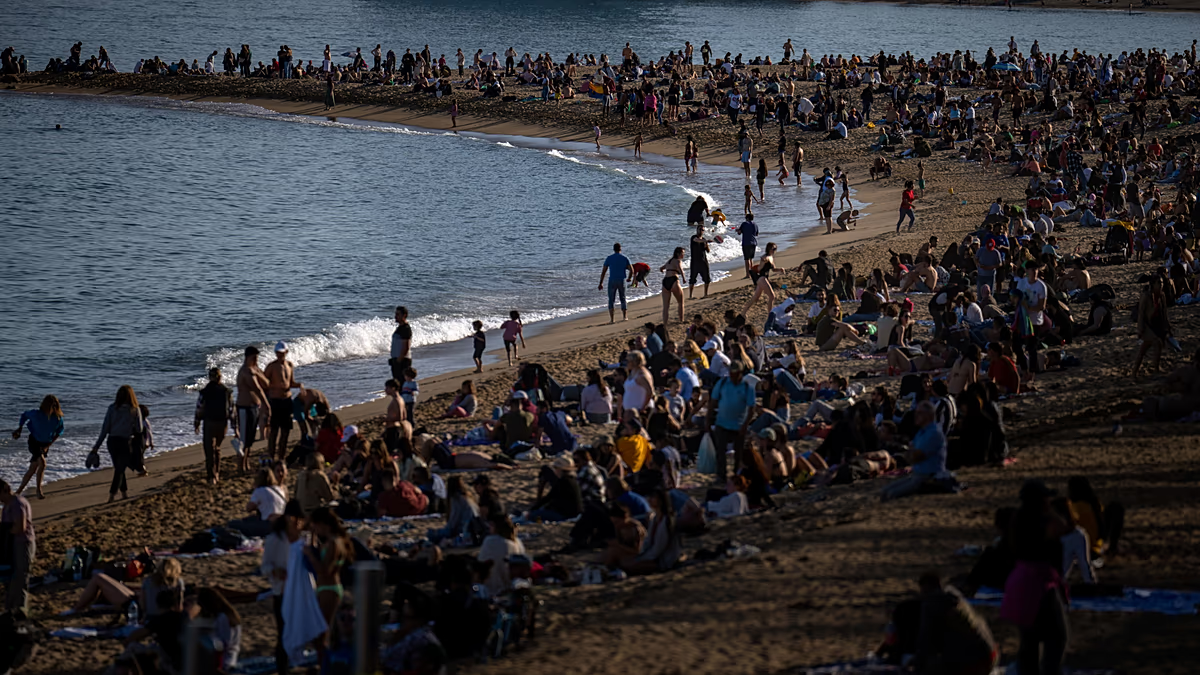
The disappointment is not confined to theme parks. In second place is the Georgia Aquarium in Atlanta, where 19.6% of reviewers reported a negative experience. As one of the world’s largest aquariums, it draws huge crowds, which becomes its own downfall; 10% of reviews specifically mention overcrowding and accessibility issues, turning a serene underwater journey into a stressful shuffle. Similarly, the historic Széchenyi Baths in Budapest (16.6% negative reviews) and Ripley’s Aquarium of Canada in Toronto (16% negative reviews) struggle with the same paradox. These are beautiful, unique destinations that find their ambiance shattered by sheer volume of people, with review rates for crowding issues triple the study’s average. It’s a poignant reminder that an attraction’s popularity can actively degrade the very experience people come to enjoy.
Beyond crowds, the gap between expectation and reality is a common thread. The Horseshoe Casino in Louisiana (18.6% negative reviews) faced descriptors like “boring” and “needs restoration,” suggesting a veneer of glamour that has worn thin. Even the enchanting Fushimi Inari-taisha Shrine in Kyoto, with its famed thousand vermilion gates, made the list (12% negative reviews), likely due to the challenge of finding spiritual serenity amid a river of tourists. This list also includes heavy-hitters like Universal’s Islands of Adventure in Orlando and Graceland in Memphis, proving that no genre—be it theme park, cultural shrine, or celebrity pilgrimage site—is immune. The common theme is a mismatch: between the marketed dream and the logistical reality, between the price paid and the value received.
Ultimately, this research is less a warning to avoid these places and more a guide for tempering expectations and planning smarter. It highlights that in our interconnected world, fame often comes with a cost of long lines, commercialization, and strained infrastructure. For travelers, the lesson is to seek off-peak times, research beyond the official marketing, and perhaps balance iconic bucket-list stops with more hidden gems. For the attractions themselves, the data is a clear call to action: to manage capacity more effectively, ensure transparency in pricing, and protect the core experience that made them famous in the first place. A landmark’s true test is not just drawing visitors, but leaving them genuinely enriched, not regretful, when they finally return home.