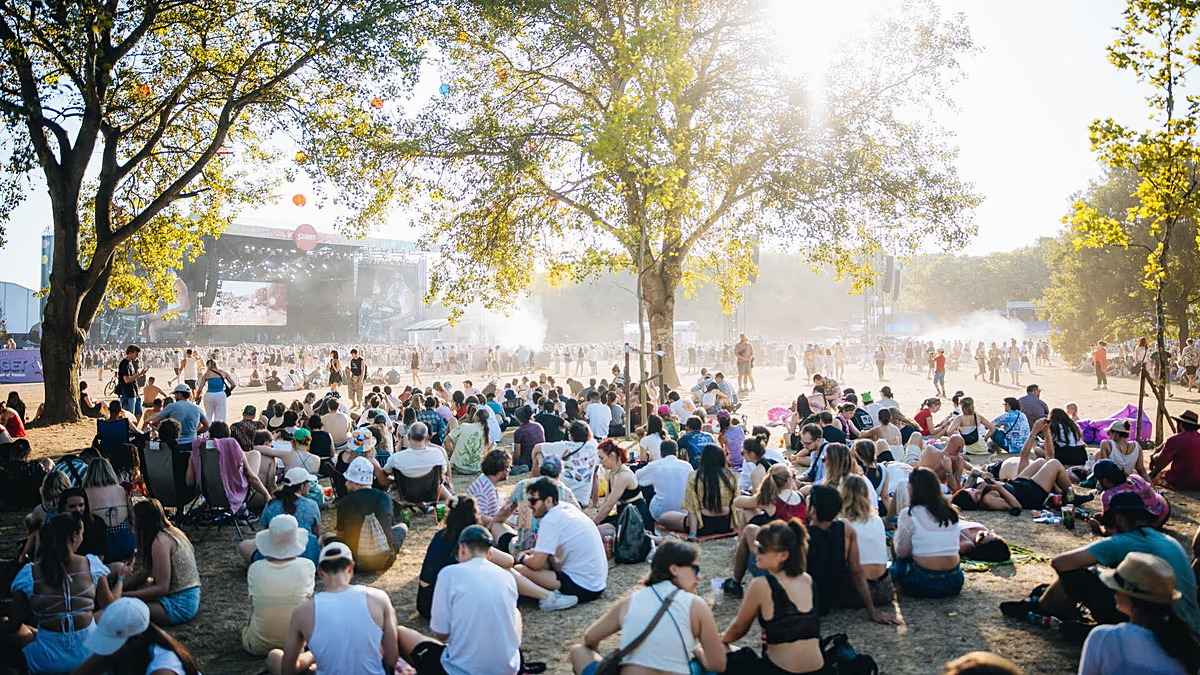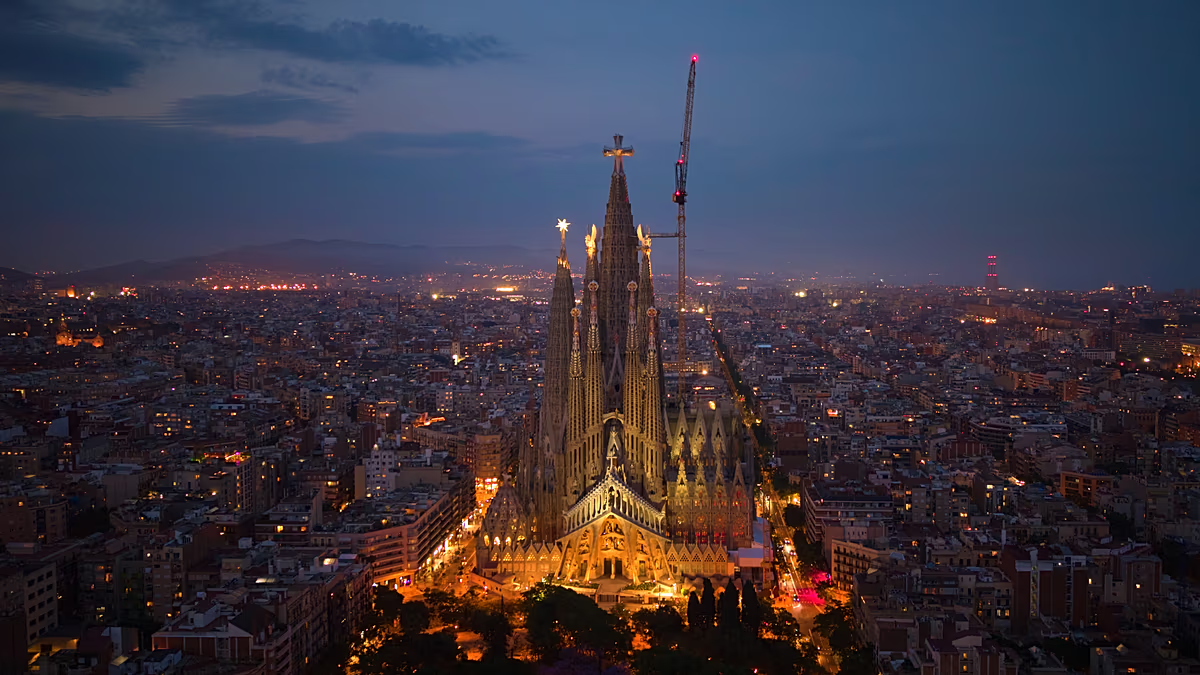



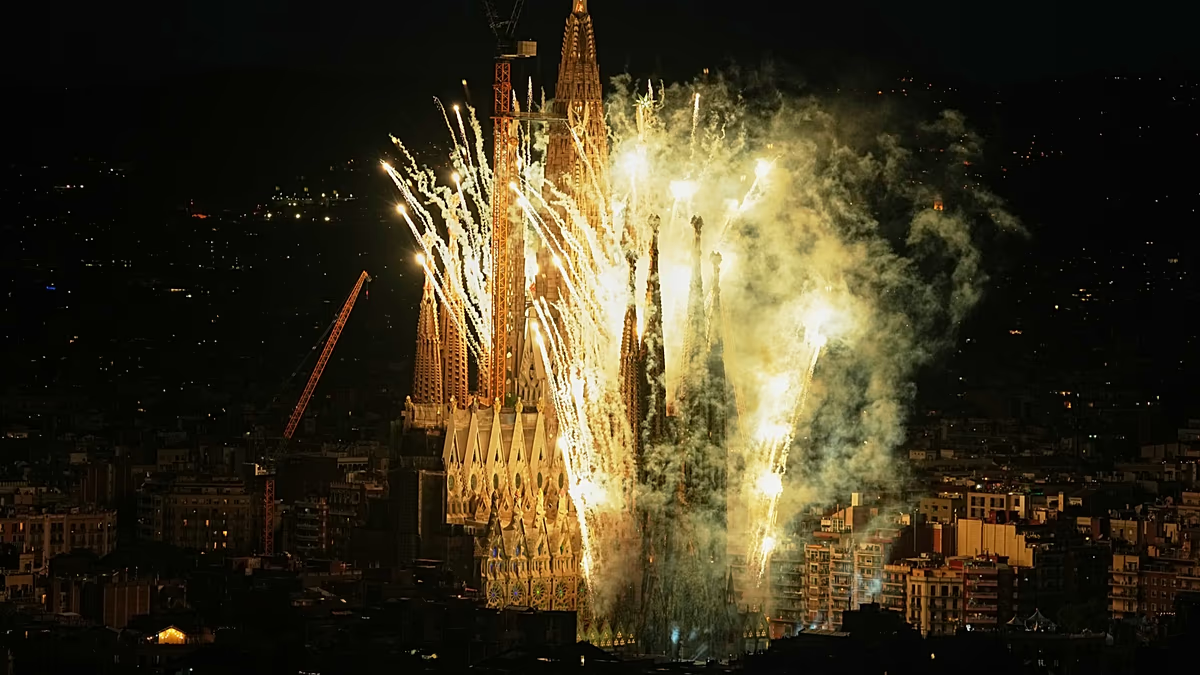
On a warm evening in June of 2026, the heart of Barcelona beat in unison with history. Thousands upon thousands of citizens and admirers from across the globe transformed the streets surrounding the Sagrada Família into a living tapestry of anticipation. They had come to witness a moment many had dreamed of but never truly believed they would see: the inauguration of the basilica’s final and greatest tower. The air buzzed with a festive, almost reverent energy, as all eyes turned toward the architectural mountain of stone, soon to be crowned. The ceremony that unfolded was a breathtaking symphony of human devotion and technological wonder, featuring a soaring drone ballet, a cascade of orchestral music, and a final, triumphant eruption of light and fireworks that painted the night sky. It was more than an unveiling; it was a collective exhale for a city and a world that has watched this dream rise, brick by brick, for generations.
The significance of the event was embodied in the distinguished figures who gathered for the occasion. Presiding over the ceremonies was Pope Leo XIV, whose presence linked the monumental世俗 achievement to its profound spiritual roots. Inside the basilica, before a select assembly that included King Felipe VI, Queen Letizia, and Prime Minister Pedro Sánchez, the Pontiff celebrated a special Mass marking the centenary of Antoni Gaudí’s death. He honored the architect’s lifetime of devotion, a four-decade-long prayer rendered in stone and mortar. Following the service, the Pope emerged before the massive crowd to perform the central act of the night: blessing the immense, illuminated ceramic cross that now sits 172.5 meters above the city. As a children’s choir lifted their voices, the very façade of the basilica seemed to come alive. The famous stained-glass windows, acting as colossal lanterns, transformed into a radiant mosaic of color, proving that Gaudí’s masterpiece is as much about light as it is about stone.
In his homily, Pope Leo XIV captured the essence of what the Sagrada Família represents, calling it a masterpiece of “stone, colour and light.” He saw it not merely as a Barcelona landmark, but as “a sign of unity and harmony for the whole of Spain.” His words resonated deeply on a night that felt like a national reconciliation with a complex past. With the completion of the Tower of Jesus Christ, the basilica’s silhouette reached its destined form, becoming the tallest church in the world. This final spire is the central figure in a symbolic forest of eighteen towers: twelve for the apostles, four for the evangelists, one for the Virgin Mary, and this greatest one for Christ. It is a stunning completion of Gaudí’s visionary geometry, a new and permanent star in Barcelona’s skyline. Yet, in a testament to the project’s enduring narrative, the work is not fully done. The interior and secondary structures will continue towards their final completion in the coming decade, a reminder that this is a living, breathing project that refuses to be rushed.
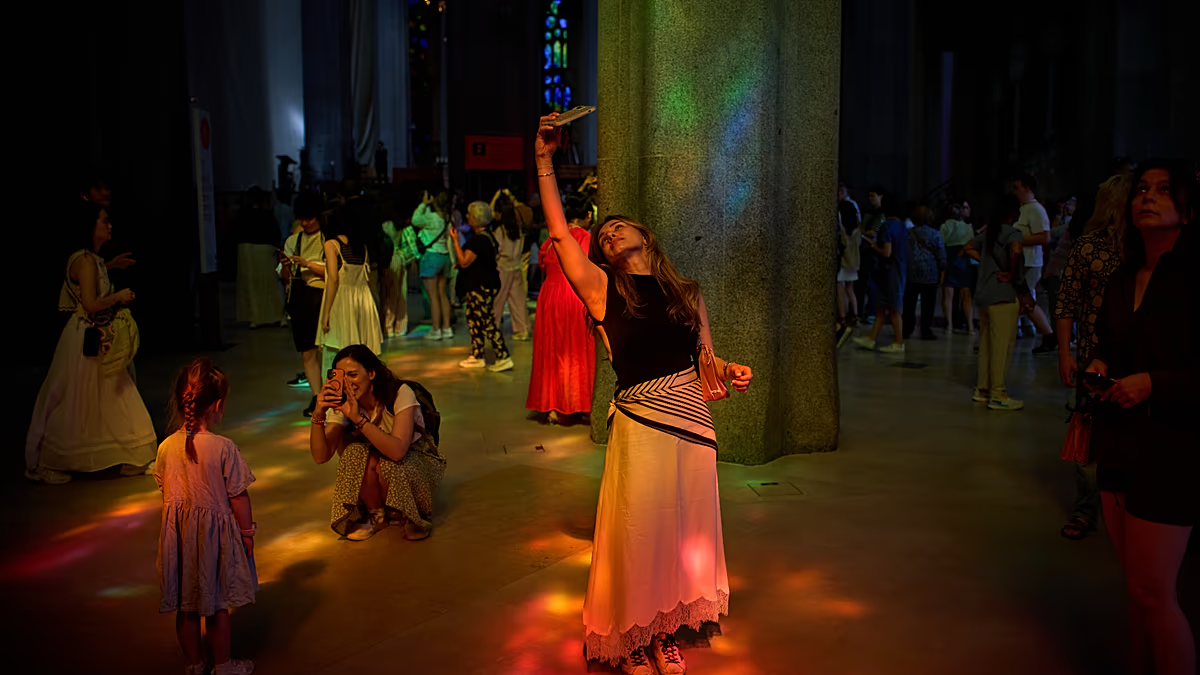
To step inside the Sagrada Família is to understand Gaudí’s genius on a visceral level. It is not a conventional church but an immersive ecosystem of faith and nature. Soaring columns, branching out like ancient trees, support a canopy of vaults that dapple the space below with light, creating the unmistakable sensation of standing in a sacred forest. This is architecture as an act of biomimicry, where stone seems to grow and breathe. Light itself is a primary building material here. Each morning, the eastern windows, filtered through cool blues and greens, bathe the Nativity Façade in a gentle, dawn-like glow. As the day wanes, the western Passion Façade is set ablaze with the fiery reds and oranges of a dying sun. Behind the altar, a golden warmth suggests a divine and eternal presence. Gaudí’s own credo, “Nature is my teacher,” echoes in every curve and shaft of light, creating a space that feels both profoundly ancient and miraculously new.
The journey to this night was anything but straightforward. Gaudí’s death in 1926 left the project as a complex, incomplete puzzle, with only a fraction of his plans and models to guide future architects. Its construction has spanned three centuries, surviving civil war, vandalism, funding crises, and endless debates. Each decade added its own layer to the story, with modern engineers and artists interpreting Gaudí’s vision through contemporary technology, from computer-aided design to the very drones that danced in celebration at its inauguration. The basilica’s protracted birth has made it a mirror for Barcelona itself—resilient, artistic, and stubbornly hopeful. It stands as a monument not to a single man’s ego, but to the persistent faith and collective will of a community that kept the dream alive against all odds, generation after generation.
As the last fireworks faded over the gleaming cross, the event transcended a mere architectural milestone. It was a celebration of human perseverance, artistic vision, and the enduring power of a shared dream. The Sagrada Família is no longer a building site of perpetual promise; it is now, definitively, a completed testament in the sky. Yet, its story continues. It will remain a place of pilgrimage, not just for the faithful, but for anyone who seeks beauty and wonder. A century after his death, Gaudí’s forest of stone continues to grow in spirit and meaning, welcoming millions to walk beneath its luminous canopy and look up, in awe, at a dream finally touched by the sky. The final stone may soon be laid, but the inspiration it offers the world is only just beginning.