



As Haiti prepares for its first World Cup appearance in 54 years, a profound wave of hope and national unity is sweeping across the troubled nation. This historic achievement transcends the sport itself, becoming a rare beacon of shared pride in a country grappling with extreme insecurity and political instability. The qualification of the national team, known as the Grenadiers, was a triumph of resilience; forced to play their official home matches on the island of Curaçao due to the dangers in Port-au-Prince, they defied the odds to secure their spot. As the squad readies to face Scotland in its opening Group C match on June 13th, Haitians both on the island and throughout the vast diaspora are rallying behind their team, seeing in them a reflection of their own enduring spirit. This moment is more than a sporting milestone; it is a collective breath of fresh air, a chance to celebrate a positive Haitian identity on the world’s grandest stage.
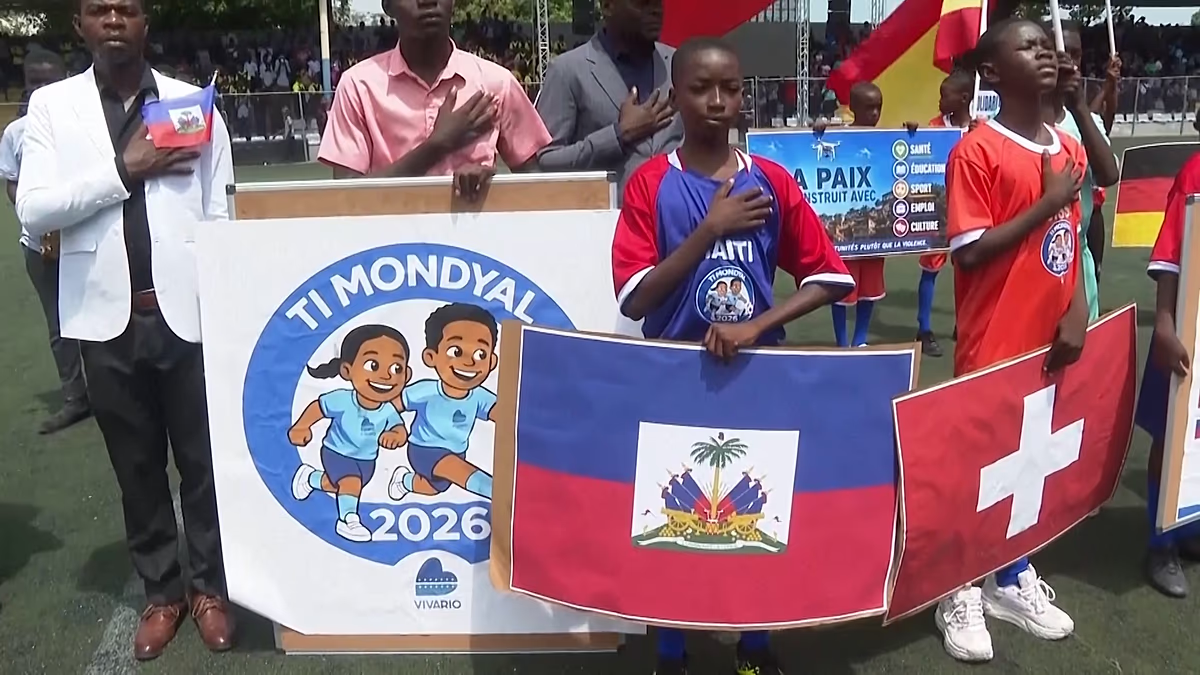
Echoing this national spirit at the grassroots level, a remarkable initiative is harnessing the power of football to foster peace among the youngest generation. Organized by the United Nations Bureau in Haiti and the NGO Viva Rio, the “Ti Mondial 2026” (Little World Cup) tournament has brought together 48 schools from across the country. Each school proudly represents one of the 48 nations qualified for the actual World Cup. The competition opened with children gathering beneath the flags of their assigned countries, from Brazil to Belgium, in a colorful display of global camaraderie. The event’s core mission is to use the universal language of sport to build bridges, encourage trust, and plant seeds of unity in a society where violence has too often fractured communities. As Viva Rio education coordinator Delynoi Christel simply urged, “Let’s play for peace.”
This children’s tournament is a microcosm of the change many Haitians wish to see. In a nation where gang violence controls swathes of the capital and basic public services are faltering, these schoolyards become sanctuaries. Here, the focus shifts from survival to teamwork, from fear to friendly competition. The act of children playing under another country’s flag is a powerful, symbolic lesson in looking beyond oneself and appreciating a wider world. Organizers see football’s structured rules and collective goals as a framework for teaching conflict resolution, mutual respect, and shared purpose—values desperately needed in Haiti’s current landscape. The Ti Mondial is not just about discovering young athletic talent; it is a deliberate, hopeful project to shape a more peaceful future, one game at a time.
The connection between the national team’s journey and these schoolyard pitches is deeply emotional. The Grenadiers’ qualification has shown the country what is possible through perseverance and collective effort. Their story provides a tangible source of inspiration for the children in the Ti Mondial, proving that Haitian determination can overcome immense obstacles. When the national team takes the field in June, those young players will see their own dreams reflected on the global screen. This synergy creates a powerful feedback loop: the professional athletes inspire the youth, and the hopeful, peaceful engagement of the youth represents the future for which the athletes are fighting. It is a rare moment where every level of Haitian society, from the elite players abroad to the schoolchildren at home, is united by the same ball, the same flag, and the same aspiration.
For the Haitian diaspora, scattered from Miami to Montreal, this World Cup appearance is a moment of immense cultural significance and nostalgic pride. It offers a chance to celebrate their heritage in a positive, unifying context, shifting the international conversation away from crisis and toward achievement. Gatherings in homes and community centers will undoubtedly be electric during the matches, connecting generations through sport. This global support network not only cheers for goals but also for the symbolic victory of Haiti’s presence on such a prestigious platform. The team carries the hopes of a nation fragmented by geography but united in spirit, acting as ambassadors for a Haiti that is more than its headlines.
As the opening match against Scotland approaches, the sentiment in Haiti is one of defiant celebration. The Ti Mondial tournament exemplifies how this World Cup journey is already yielding positive impacts, channeling excitement into constructive community action. While the challenges facing the nation remain daunting and unresolved, football has provided a temporary common ground, a story of success, and a tool for peacebuilding. Whether the Grenadiers advance on the pitch or not, their qualification has already scored a profound victory for national morale. In the schools, the streets, and in homes worldwide, Haiti is remembering its strength, proving that even in the darkest times, joy and unity can find a way through—often with a ball at its feet.