



Tensions in the Persian Gulf have escalated dramatically, with the United States and Iran exchanging military strikes for a second consecutive day. The conflict is unfolding against a backdrop of stalled diplomatic negotiations aimed at ending a three-month-old war. U.S. leaders have grown increasingly frustrated, accusing Iran of deliberately prolonging talks. President Donald Trump, who had previously expressed optimism that a deal was within reach, voiced his exasperation, stating that Iran keeps “playing us for suckers” and will now “have to pay the price.” This rhetoric was matched by Secretary of Defence Pete Hegseth’s stark declaration that if required, “we’ll negotiate with bombs, and we’re very good at it,” signaling a severe shift from the conference table to the battlefield.
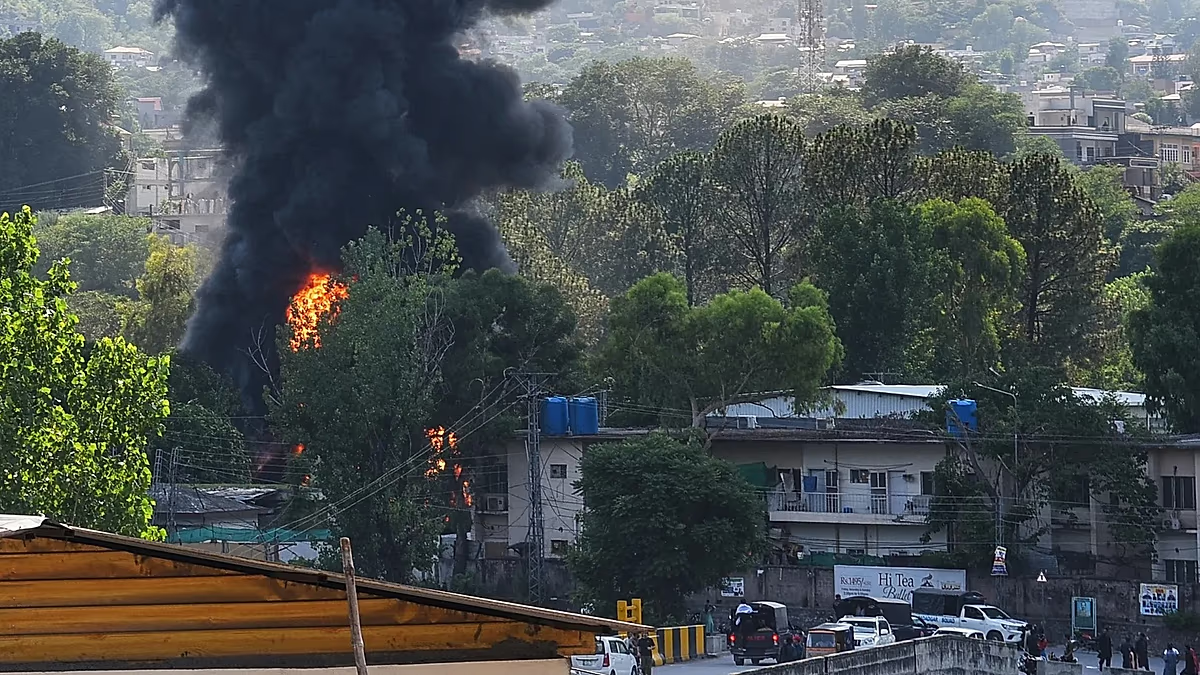
The latest round of violence began with American strikes targeting Iranian military infrastructure. U.S. Central Command (CENTCOM) stated it had “completed” strikes against “Iranian military surveillance capabilities, communication systems, and air defense sites.” According to CENTCOM, these were precision attacks on targets that posed a direct threat to U.S. forces and to international commercial shipping in the region. Iranian media reported explosions in several southern locations near the strategic Strait of Hormuz, including Bandar Abbas, Qeshm, and Minab, with local sources describing hits from “enemy projectiles.” These strikes represent a calculated effort by the U.S. to degrade Iran’s ability to monitor and control the vital maritime corridor.
Iran responded swiftly and forcefully to the American attacks. Its military launched retaliatory strikes targeting U.S. bases in Bahrain and Kuwait, triggering air raid alerts and sending residents in Bahrain scrambling for safety. Kuwait temporarily closed its airspace as its defense systems engaged what they called “hostile aerial targets.” Iranian media specified that drone strikes were aimed at communications and radar facilities associated with the U.S. Navy’s Fifth Fleet in Bahrain. In a more direct threat to global commerce, the Iranian navy announced it had struck two vessels attempting to transit the Strait of Hormuz and declared the waterway “completely closed,” vowing to target any further maritime traffic. A senior Iranian military official warned, “Are you making the sacred Strait of Hormuz unsafe?! We will make the region hell for you.”
The Iranian closure claim was immediately contested by CENTCOM, which asserted that “commercial ships are continuing to transit in and out of the Strait of Hormuz tonight.” However, the mere threat has sent shockwaves through global energy markets. The international benchmark price for crude oil surged above $93 a barrel, marking a staggering increase of more than 25% since the conflict began three months ago. President Trump added to the confusion and high stakes by claiming the U.S. military had covertly facilitated the passage of 100 million barrels of oil through the strait. This volatile mix of military action, public threats, and economic brinkmanship underscores how quickly a regional conflict can threaten global economic stability.
At the heart of this dangerous escalation is a diplomatic process that appears to have broken down entirely. President Trump oscillated between expressing hope that a deal could be reached within days and complaining that Iranian negotiators were intentionally delaying progress. “We were really close to a deal, but they keep tapping us along,” he lamented. This perception in Washington—that Iran is negotiating in bad faith—seems to have triggered the decision to adopt a punitive military strategy. The U.S. strikes are presented not just as tactical responses to immediate threats, but as a form of forceful coercion to bring Iran back to the table on American terms. Secretary Hegseth hinted that this pressure campaign would continue, promising that any further strikes would be “strong” and “clear.”
The situation remains perilously fluid, with both sides digging in and the risk of miscalculation soaring. The exchange of strikes over two days has expanded the geographic scope of the conflict, drawing in U.S. allies in the Gulf and directly threatening one of the world’s most critical shipping lanes. The diplomatic channels, strained for months, now seem utterly overwhelmed by the language of missiles and drones. As the world watches, the path forward seems to narrow to two grim possibilities: an escalation that risks a wider regional war, or a retreat to negotiations under the shadow of ongoing violence. For now, the people of the region and the global economy are held hostage to the outcome of this dangerous confrontation, where every statement and every strike pushes the possibility of peace further away.