



Paragraph 1: A Night of Unspeakable Violence
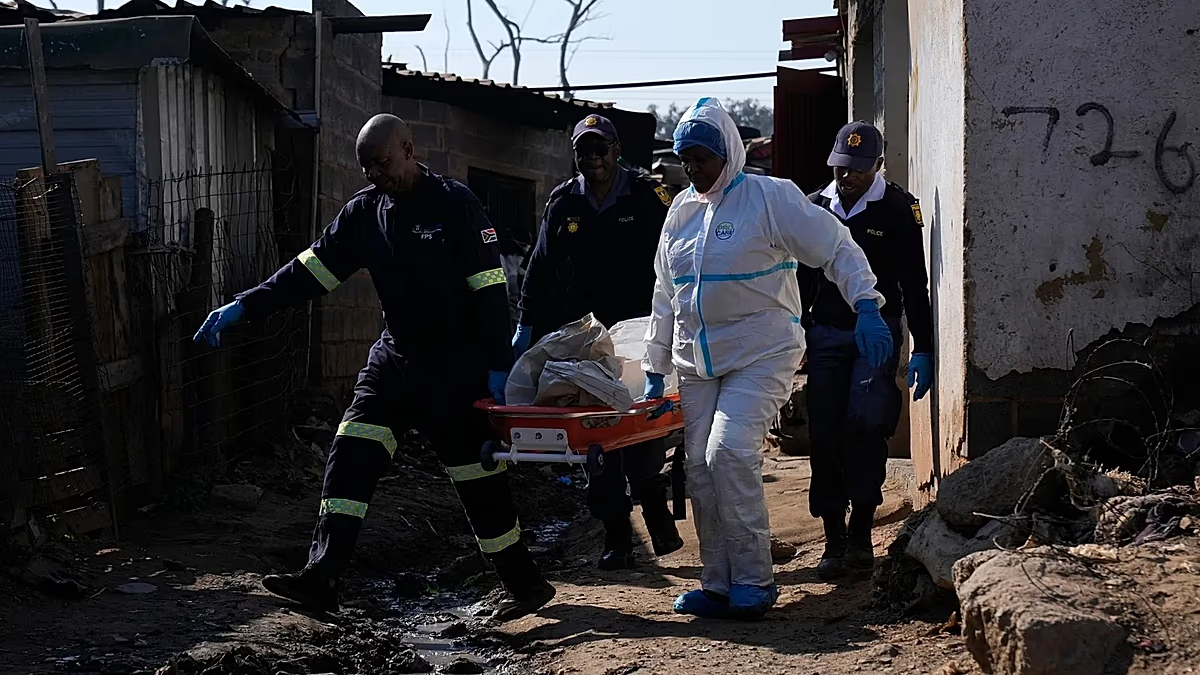
In the deep night hours of Tuesday, a quiet, impoverished settlement on the fringes of Johannesburg was shattered by an act of brutal, calculated violence. Armed with firearms, a group of approximately ten assailants descended upon the Jumpers informal settlement, a community of metal and wooden shacks. Moving methodically through the area, they entered from multiple points and unleashed a hail of gunfire upon residents in various locations before fleeing as they had arrived. When the echoes of gunshots faded, the devastating human toll was laid bare: twelve people were killed. Eight men and three women were pronounced dead at the scene, their lives ended amidst the dusty paths of their own community, while a twelfth victim later succumbed to injuries in a hospital. This massacre stands as the latest and one of the most chilling incidents in a relentless series of mass shootings plaguing South Africa.
Paragraph 2: The Shadow of “Zama Zamas” and Unanswered Questions
The attack occurred in a landscape scarred by South Africa’s mining history, just kilometers from Johannesburg’s city center and adjacent to labyrinthine networks of abandoned gold mines. While police officials stated that a definitive motive remains unclear and no arrests have been made, the location immediately pointed toward the violent, clandestine world of illegal mining. Provincial Police Commissioner Lieutenant General Tommy Mthombeni voiced the prevailing suspicion, directly linking the bloodshed to competition over these illicit operations. He condemned the attack as “insane,” “heartless,” and “barbaric,” words that resonate with a public increasingly numbed by such violence. The incident underscores how the desperation for resources in a nation grappling with extreme poverty and unemployment can fuel cycles of extreme brutality.
Paragraph 3: A Community Caught in the Crossfire
The Jumpers settlement, like many such communities, is a precarious home to those seeking opportunity or simply survival. Reports indicate that some residents are migrants from neighbouring Lesotho, often drawn by the slim chance of work. Early accounts from the scene, including from a local councillor, suggest the attack was neither random nor indiscriminate but a “well-planned ambush.” Gunmen reportedly first targeted a shack positioned over an informal mine shaft before turning their weapons on nearby taverns. This pattern indicates the violence was deeply entangled with the governance and control of illegal mining pits. In the aftermath, as the community reeled from loss, authorities were seen removing equipment associated with these clandestine digs, a tangible reminder of the economic activity that simmers beneath the surface of such tragedies.
Paragraph 4: The Entrenched Economy of Illegal Mining
The perpetrators and victims of this violence are likely actors within the vast and dangerous ecosystem of illegal mining, dominated by so-called zama zamas – a Zulu term meaning “those who try.” These individuals, driven by a lack of formal employment, risk their lives daily to descend into unstable, abandoned shafts in search of residual gold deposits. What begins as an act of individual desperation has, over time, morphed into a sophisticated, transnational web controlled by organized criminal syndicates. This shadow economy is notorious for its links to gunrunning, extortion, and targeted assassinations, transforming mineral-rich areas around Johannesburg into hotspots of lawlessness. The Jumpers massacre is not an isolated event; it is a symptom of this entrenched crisis, reminiscent of a December attack in Bekkersdal where nine people were killed in a bar, an incident also attributed to rivalries between illegal mining gangs.
Paragraph 5: A Nation Swimming in Firearms
This tragedy also casts a stark light on another endemic crisis: South Africa’s proliferation of both legal and illegal firearms. The country is awash with guns, which readily fuel conflicts ranging from personal disputes and gang rivalries to competition between informal businesses like the zama zama operations. The easy availability of lethal weaponry transforms local conflicts into catastrophic events. Commissioner Mthombeni revealed that just three weeks prior to the shooting, police had conducted operations in the same area, confiscating weapons including AK-47 ammunition and making arrests. This detail highlights a frustrating and tragic pattern—law enforcement efforts, however sincere, are constantly overwhelmed by the scale of weapon circulation and the deep-rooted social and economic problems that drive violence.
Paragraph 6: The Persistent Challenge of Safety and Governance
The bloodshed in Jumpers settlement amplifies a national alarm that has reached the highest levels of government. President Cyril Ramaphosa has explicitly identified rampant crime as one of the most severe threats facing South Africa. The situation has become so dire that earlier this year, the government deployed soldiers to certain Johannesburg violence hotspots to bolster police efforts—a military response that speaks to the perceived severity of the crisis. Yet, as this attack demonstrates, these measures confront a hydra-headed challenge. Lasting safety cannot be achieved through policing and soldiers alone. It requires addressing the profound inequalities, lack of opportunity, and governance vacuums that allow illegal economies to thrive and that leave communities like Jumpers vulnerable to the whims of armed, ruthless actors. Each life lost is a testament to the long and difficult path ahead in building a South Africa where such “barbaric” violence is not a recurring headline.