



The Timeless Dance of Amaterasu: A Bridge Between Nations
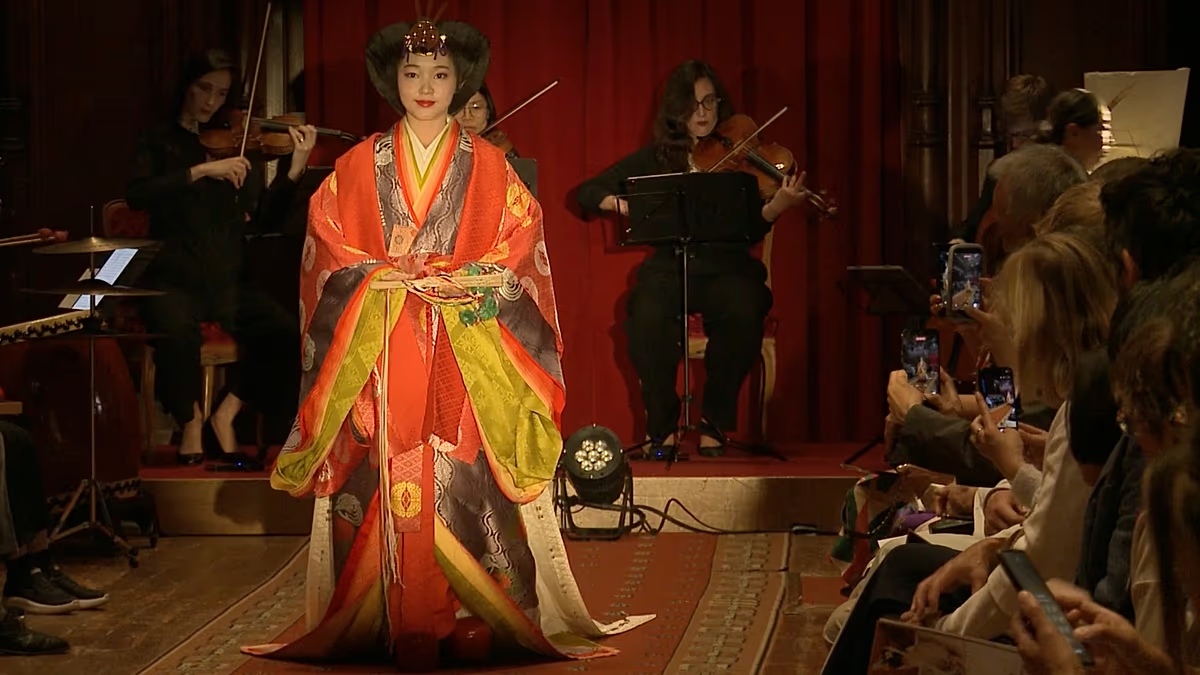
In the grand and historic Brussels Town Hall, a profound celebration unfolded, marking a significant milestone: one hundred and sixty years of diplomatic and cultural friendship between Belgium and Japan. This was not merely a diplomatic formality, but a living, breathing tribute to the deep and enduring connections that have grown between these two nations since 1866. The occasion was graced by a performance of exquisite beauty and spiritual depth: the Japanese stage production Amaterasu. Organised by the cultural association Be-Japon, and supported by the Japanese Embassy in Belgium and the City of Brussels, the event transformed a political space into a realm of myth and artistic transcendence. It served as a powerful reminder that beyond treaties and trade agreements, the true soul of international relationship lies in the shared experience of art and heritage.
The choice of Amaterasu as the centerpiece was profoundly symbolic. In Japanese Shinto belief, Amaterasu is the radiant sun goddess, the divine ancestor of the Imperial line, and a foundational figure in Japan’s creation myths. Her story is one of light emerging from profound darkness; after retreating into a cave in sorrow, plunging the world into night, she is lured out by the joyous dances and laughter of other deities, restoring warmth and life to the earth. To present this narrative on Belgian soil was to offer a gift of the most cherished kind: the sharing of a nation’s foundational story. It was an act of cultural intimacy, inviting the Belgian audience to witness not just a performance, but a sacred legend that has shaped the Japanese understanding of the world, nature, and resilience for millennia.
The production itself was likely a masterful synthesis of traditional Japanese performing arts. One could imagine the haunting melodies of the shakuhachi flute or the resonant plucks of the koto setting the atmospheric tone. The movement, whether in the form of classical Noh or the more fluid Buyō dance, would have been one of deliberate, symbolic grace, where a single gesture of a sleeve or a turn of the head could convey volumes of emotion. The costumes, rich silks and intricate embroidery, would have been visual poetry in motion, while masks or highly stylized makeup might have been used to represent the divine characters. This was not Western-style theatre with linear plots and psychological realism, but a holistic art form engaging myth, music, dance, and visual splendor to evoke a state of contemplative wonder in the audience.
For the Brussels audience, this performance offered a unique and immersive journey. The Town Hall, a masterpiece of Gothic architecture representing the heart of European civic life, provided a striking contrast to the ethereal, nature-inspired aesthetics of the Japanese tale. This juxtaposition itself was a beautiful metaphor for the Belgium-Japan relationship: two distinct worlds finding harmony and mutual respect. Attendees were transported from the heart of Europe to the sacred plains of ancient Japan. They were not passive observers but witnesses to a ritual, learning through art about the values of harmony (wa), the reverence for nature, and the cyclical return of light after darkness—themes that resonate universally, transcending cultural boundaries and speaking directly to the human condition.
The broader context of this anniversary cannot be overstated. Sixteen decades of relations have seen the exchange of ideas, technology, art, and friendship flourish. Belgium, with its own rich tapestry of artistic innovation from the Flemish Masters to Art Nouveau, has long held a fascination with Japanese aesthetics, an influence famously seen in the Japonism movement. This performance was therefore a contemporary continuation of a centuries-old dialogue. It reinforced that cultural diplomacy—the soft power of shared stories and artistic excellence—is the most enduring glue between nations. In a world often focused on divisions, the story of Amaterasu’s return to bring light served as a poignant allegory for the power of coming together, of using shared curiosity and joy to bridge any distance.
In conclusion, the staging of Amaterasu in Brussels was far more than a commemorative event; it was a luminous act of cultural communion. It honored the past 160 years not by listing achievements, but by embodying the spirit of exchange that made those achievements possible. By gifting the story of their sun goddess, Japan offered a piece of its soul. By receiving it with open hearts in their historic Town Hall, Belgium reciprocated with deep respect and fellowship. Together, in that shared space, the ancient myth came alive, reminding everyone present that the light of understanding, much like the sun, is something we must continually welcome and celebrate. It is through such profound artistic exchanges that the next 160 years of friendship are warmly illuminated.