



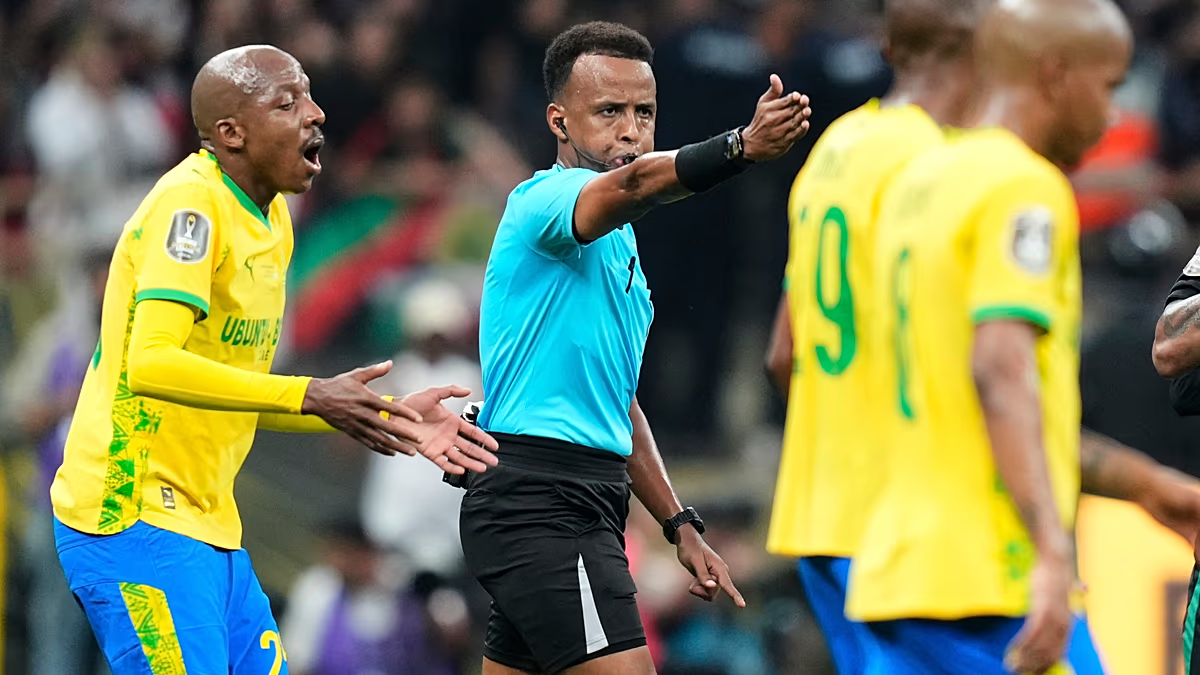
Omar Artan’s journey was supposed to be a historic triumph, not just for him, but for his entire nation. As one of the world’s top-rated football referees, he was on the cusp of becoming the first Somali official to ever take charge of a FIFA World Cup match. This was more than a personal achievement; it was a beacon of pride for Somalia, a chance to showcase its talent on sport’s grandest stage. However, that dream was abruptly extinguished at Miami International Airport last week. After an eleven-hour interrogation by U.S. border officials, which Artan described as a grueling ordeal ending in a holding cell, he was declared inadmissible and flown to Istanbul. His confusion and heartbreak were palpable when he spoke to The New York Times, insisting he possessed the “right papers” and the “right visa,” and was simply “a referee who’s trying to live his dream.”
The official explanation from U.S. Customs and Border Protection (CBP) was characteristically vague, citing “vetting concerns” discovered during a “routine inspection.” This decision was placed within the broader context of heightened border security measures under the reinstated administration of President Donald Trump, which has reinvigorated travel bans affecting several nations, including Somalia. Andrew Giuliani, leading the White House task force for the World Cup, publicly supported the denial, stating it was for a “very good reason,” though he provided no specifics. This incident was not isolated, as the 2026 tournament has been shadowed by numerous visa issues and stringent security checks for various national teams, suggesting a systemic tension between global sporting unity and national immigration policies.
The fallout from Artan’s exclusion was immediate and fierce, transcending the world of sport. Football icons like England’s Ian Wright voiced profound dismay, questioning whether the action honored the “spirit of football” and labeling the unfolding situation a “World Cup of chaos.” He expressed empathy for American fans who might feel embarrassed by their government’s decision. Even figures from beyond sports, such as Dr. Tedros Adhanom Ghebreyesus, Director-General of the World Health Organization, offered public support, assuring Artan that “this won’t be the end of your story on the world stage.” This widespread condemnation highlighted how the incident was perceived as a political obstruction undermining the inclusive, celebratory ideals of international competition.
When Artan finally returned home to Mogadishu, the scene was one of bittersweet celebration. Swarmed by fans and reporters at Aden Adde International Airport, he was met not with pity, but with a defiant display of national pride. Crowds waved Somali flags and brandished posters, transforming his arrival into a powerful statement of resilience. In that moment, he was no longer just a referee denied a flight; he became a symbol of dignified perseverance. The welcoming committee sent a clear message: while a door had been shut in one part of the world, his community’s respect and admiration for his achievements remained wide open, offering a profound consolation that no border official could revoke.
This episode forces us to confront a critical question about the nature of global events like the World Cup. They are designed to be a melting pot of humanity, where talent and passion are the only valid passports. When figures like Artan—vetted and approved by the sport’s own global governing body—are barred entry due to opaque bureaucratic decisions, it strikes at the very heart of that promise. The tournament risks becoming a spectacle available only to those from geopolitically favorable nations, eroding the foundational principle that athletic excellence should be the ultimate criterion for participation. The “beautiful game” is tarnished when its stage becomes inaccessible.
Ultimately, Omar Artan’s story is one of profound duality. It is a narrative of a dream deferred by impersonal geopolitics, a personal and professional setback with deep symbolic resonance. Yet, it is equally a story of unwavering support and the enduring human spirit. The roaring welcome in Mogadishu served as a powerful counterpoint to the cold rejection in Miami. While his whistle will not sound on the World Cup pitches of 2026, his experience has sounded an alarm about the barriers that can fragment our shared global arenas. His legacy may well become a catalyst for broader conversations about ensuring that the world’s game truly remains open to the entire world.