


A Tense Morning in the Gulf
On a seemingly ordinary Wednesday morning, the skies over Kuwait became the stage for a dangerous and escalating international crisis. The Kuwaiti military issued a stark announcement via social media, stating that its air defense systems were actively engaging “hostile aerial targets” within its borders. While the origin of these targets was not explicitly stated, the context was clear: this was part of a rapidly unfolding chain of events involving the United States and Iran. The simple, procedural language of the Kuwaiti statement belied the grave reality of missiles or drones potentially streaking across its territory, forcing a nation often caught in the crossfire of regional tensions to activate its defenses.
The Spark: A Downed Helicopter and a Vowed Response
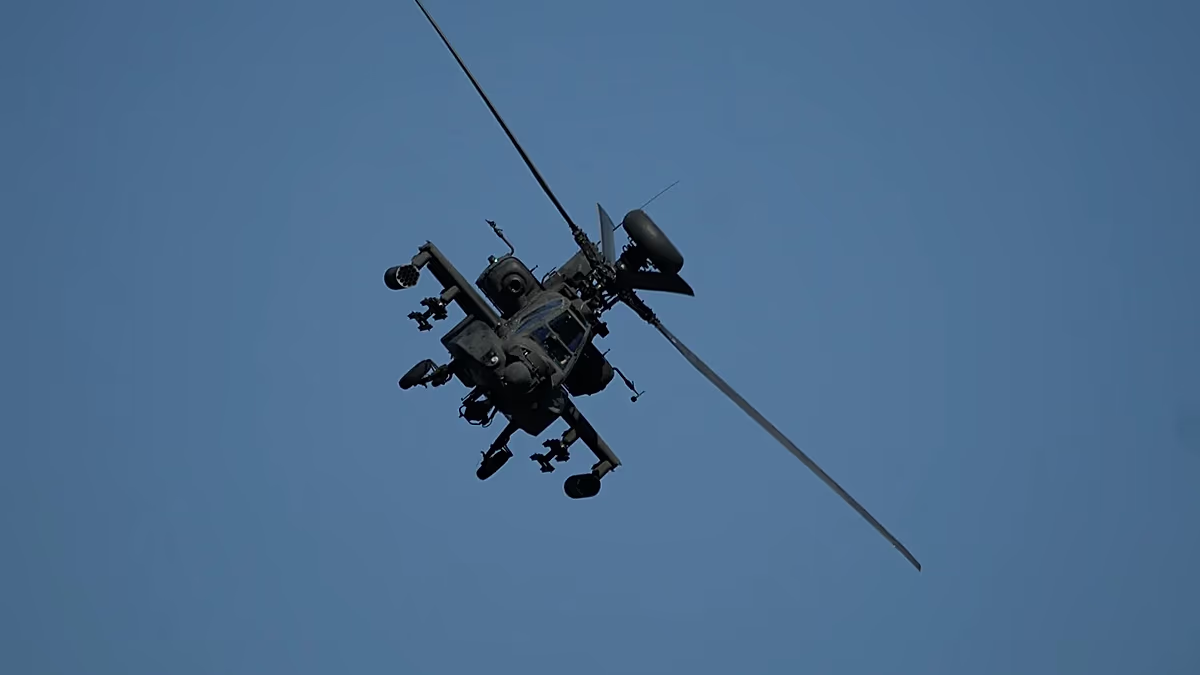
The immediate trigger for this escalation was the crash of an American Apache attack helicopter near the strategic Strait of Hormuz. The United States, through a statement from former President Donald Trump, accused Iran of shooting down the aircraft while it was on patrol. Iran vowed a retaliatory response to this incident, setting the stage for a direct confrontation. This event shattered a fragile two-month ceasefire that had momentarily quieted the region, a truce already strained just a day earlier by an exchange of fire between Iran and Israel. The downing of the helicopter was not just a tactical loss; it became a symbolic flashpoint, igniting long-simmering hostilities.
The U.S. Retaliation: “Proportional” Strikes
In response, U.S. Central Command (CENTCOM) launched what it termed “self-defense strikes.” American fighter jets from the Air Force and Navy targeted Iranian military infrastructure with precision munitions, focusing on air defense systems, ground control stations, and surveillance radar sites located near the Strait of Hormuz. CENTCOM framed this operation as a “proportional response” to recent attacks on U.S. forces and international commercial ships navigating the volatile waters of the region. This action represented a shift from diplomatic channels to kinetic military force, as the U.S. sought to directly punish Iran and deter further aggression, following a cycle of attack and counter-attack.
Iran’s Counter-Blast: Expanding the Conflict
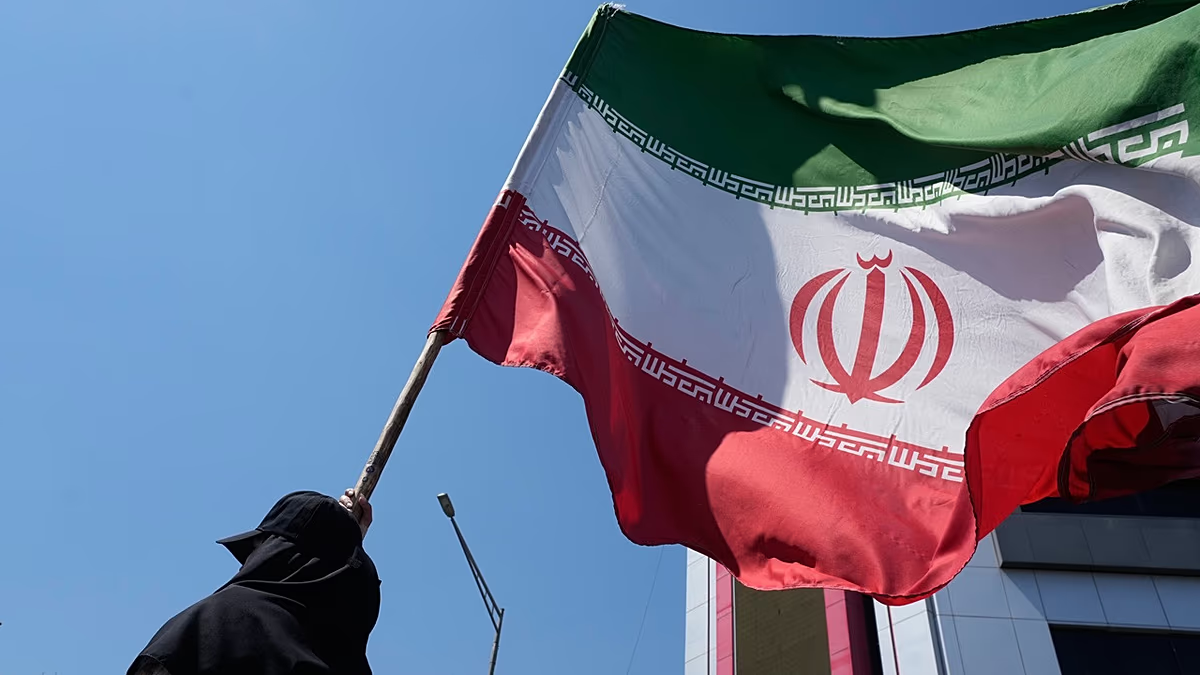
Iran did not absorb these strikes passively. Tehran explicitly stated that it was targeting Kuwait as retaliation for the American airstrikes that had occurred earlier that same morning. Furthermore, Iranian authorities claimed they were launching attacks against Bahrain and Jordan as well, dramatically expanding the geographical scope of the conflict. Iranian media reported multiple explosions along the country’s southern coast, near the Strait of Hormuz, indicating the tangible impacts of the U.S. bombardment. The Iranian Foreign Minister, Abbas Araghchi, issued a defiant warning on social media, declaring that Iranian forces “will leave no attack or threat unanswered” and bluntly telling adversaries, “Leave our region if you want to be safe.”
The Human and Political Landscape Behind the Alerts
Behind the military jargon of “hostile aerial targets” and “proportional responses” lies a deeply human and political drama. For the residents of Kuwait, Bahrain, and Jordan, these official alerts translated into the fear of incoming projectiles and the disruption of daily life. For the sailors navigating the Strait of Hormuz, a vital corridor for global oil supplies, the conflict meant heightened peril. Politically, the events exposed the brittle nature of regional diplomacy. Notably, even amidst this eruption of violence, there were glimpses of complexity; Trump had, just prior to the helicopter incident, expressed unexplained optimism about negotiations with Iran, highlighting the unpredictable and often contradictory nature of international relations in the Middle East.
A Region on the Edge
This series of events—from the downed helicopter to the reciprocal strikes and the activation of Kuwait’s air defenses—paints a picture of a region perpetually on the edge of wider conflict. The rapid collapse of a ceasefire, the expansion of attacks across multiple nations’ skies, and the stark, public threats exchanged between leaders underscore a volatile environment where isolated incidents can quickly spiral into broader confrontations. The statements from military commands and foreign ministers, amplified through social media, not only report events but also become instruments of psychological and political warfare. As the dust settles from this particular Wednesday’s engagements, the fundamental tensions remain, leaving the Gulf and its people in a state of uneasy anticipation, knowing that the next alert could sound at any moment.