


Germany’s energy transition is at a critical crossroads. Having phased out nuclear power, the nation placed a heavy bet on renewable sources, yet its offshore wind expansion—particularly in the Baltic Sea—progresses at a hesitant pace. This reluctance comes at a time of profound vulnerability. With Russia’s war against Ukraine severing a major energy relationship and instability in the Middle East threatening global supply chains, Germany’s historic dependence on imported fossil fuels has left its economy exposed. The urgency for energy sovereignty has never been greater, and as a recent forum in Berlin highlighted, a key part of the solution lies not in going it alone, but in deepening partnership with its neighbor, Poland.
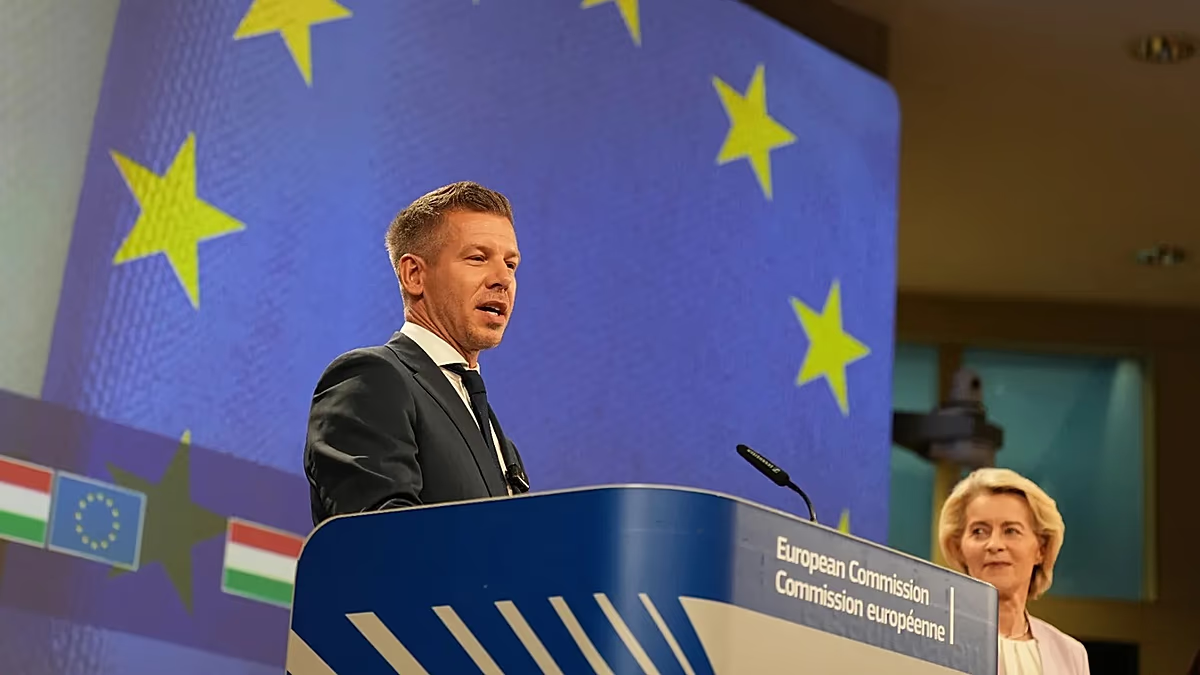
Polish Ambassador to Germany Jan Tombiński set the tone for this dialogue by invoking the adage that a good crisis should not be wasted. At the 4th German-Polish Energy Transition Forum, officials and business leaders from both countries converged on a central idea: closer cooperation, especially in offshore wind, is essential for strengthening Europe’s collective energy independence. Tombiński noted that Poland has now become an even more important economic partner for Germany than the United States, underscoring the deep interconnection of their economies. The Baltic Sea, rich with untapped potential, is the logical focal point for this collaboration. However, Germany’s cautious approach stands in stark contrast to Poland’s dynamic strategy, potentially causing Berlin to miss a pivotal opportunity.
Poland, having also recognized the perils of import dependency, is charging ahead with a clear and diversified energy strategy. As articulated by Jacek Kostrzewa of Poland’s National Energy Conservation Agency, the nation is determined to extract itself from a position of vulnerability. The numbers speak volumes: Poland’s economy continues to outpace the EU average, with robust growth forecasted, and its onshore wind capacity has skyrocketed from 2 to over 11 gigawatts in recent years. State Secretary Konrad Wojnarowski explained that with Russia deemed unreliable and the Middle East in turmoil, Poland’s plan rests on diversifying sources, accelerating renewables, investing in nuclear power, and building storage infrastructure. The cost of inaction, he warned, is unthinkable—a nationwide blackout could cost €9.5 billion daily. Poland’s first offshore wind farm is already under construction and slated for operation by late 2026, symbolizing its proactive stance.
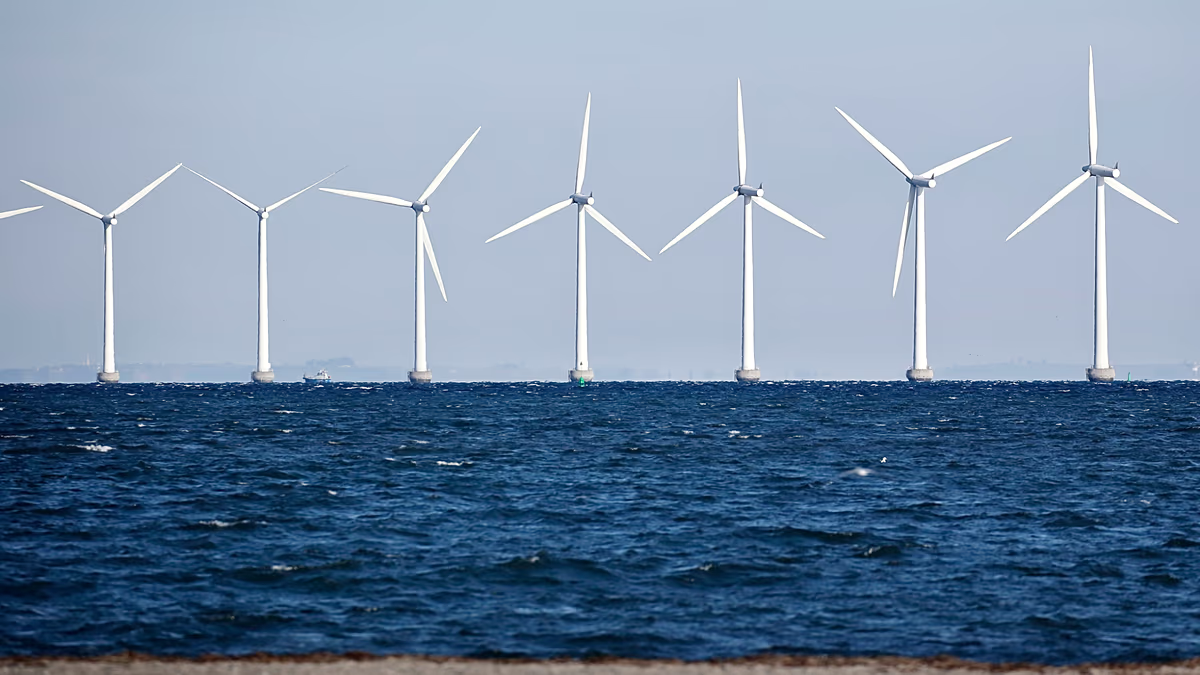
The differing trajectories of the two neighbors raise a fundamental question about Europe’s energy future. While Germany’s offshore wind activity remains concentrated and more modest in the Baltic Sea compared to its North Sea projects, Poland is rapidly developing multiple Baltic projects like Baltic Power, Baltic 3, and Baltic 9+, with German companies increasingly participating as suppliers. This disparity was openly acknowledged at the forum. Dr. Elmar Stracke of the German Association of Energy and Water Industries noted that “things are moving better in Poland,” citing Germany’s need for more efficient planning processes to meet its offshore targets. He presented a unifying vision: the future lies “offshore—in the Baltic Sea and the North Sea.” The sea itself, not the individual coastlines, is the shared space that matters, but realizing this vision requires massive investment in resilient, cross-border infrastructure.
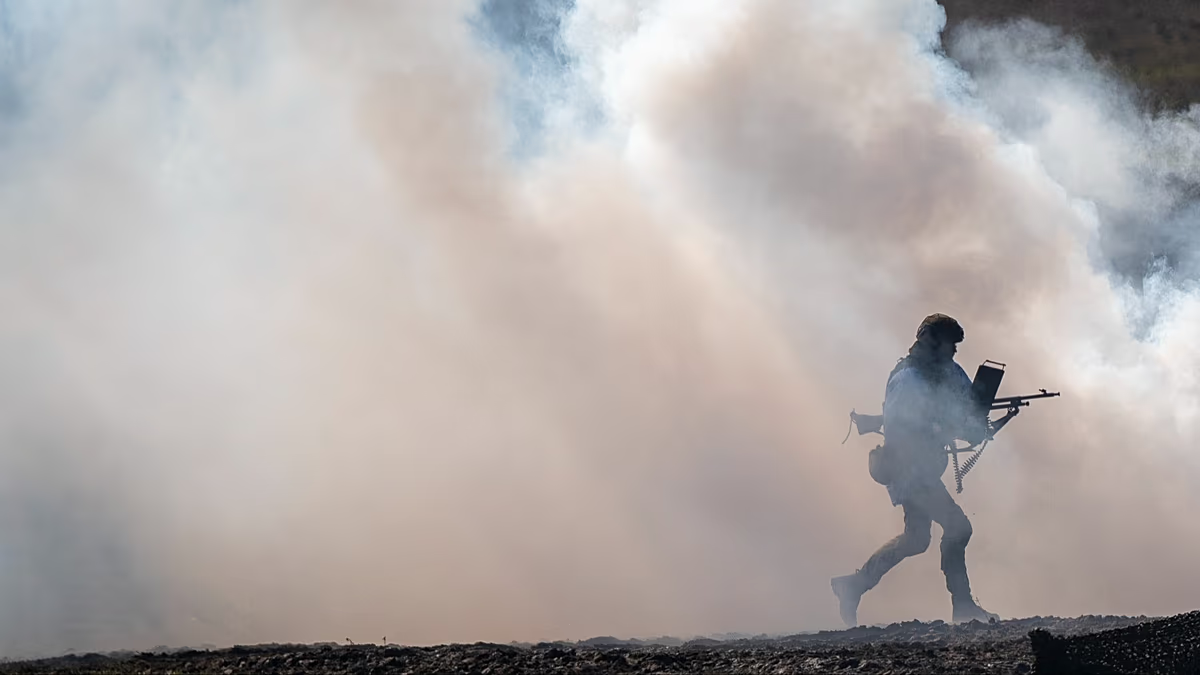
This cooperation must be forged in a context of heightened security risks. The Baltic Sea region has become a theater for hybrid threats, with Russia engaging in signal interference, sabotage, and provocations targeting critical underwater infrastructure like cables and pipelines. These actions aim to destabilize and exert political pressure on Ukraine’s European allies. In response, Wojnarowski asserted that Europe must assume greater responsibility from both military and energy-security perspectives. Poland, as the largest recipient of the European SAFE defence program, is modernizing its forces and strengthening its domestic defence industry, which contributes directly to securing the Baltic Sea—a prerequisite for any ambitious energy projects.
Despite the challenges, there is significant momentum for joint action. Dr. Dirk Biermann of the German transmission system operator 50Hertz emphasized his company’s commitment to unlocking the Baltic Sea’lls potential, which the European Commission estimates at over 90 gigawatts. Several concrete projects are already on the drawing board to advance this vision. The Bornholm Energy Island concept aims to create a central offshore energy hub, while plans for cross-border subsea cables would link wind farms to grids in Germany, Denmark, Poland, and the Baltic states. Another promising proposal is the Baltic-German PowerLink, a joint interconnector between Lithuania, Latvia, and Germany designed to integrate up to 2 gigawatts of offshore wind. As the 35th anniversary of the German-Polish Treaty of Good Neighbourship approaches, the path forward is clear: through diversification, resilience, and deeper interconnection, both nations can transform the Baltic Sea from a zone of risk into a powerhouse of shared European energy sovereignty.