


The digital age has ushered in an era of unprecedented information sharing, but alongside this has come a sophisticated wave of disinformation designed to exploit our attention and preconceptions. A stark example of this phenomenon recently swirled around two of France’s most iconic figures: football superstar Kylian Mbappé and President Emmanuel Macron. A startling claim began to proliferate on social media platforms, particularly X (formerly Twitter), alleging that Mbappé had publicly accused President Macron of sexual harassment. According to these posts, the footballer cited this “inappropriate behaviour,” which supposedly included unwanted touching and suggestive comments, as a primary reason for his much-publicized transfer from Paris Saint-Germain to Real Madrid in 2024. The allegation, presented with the shocking gravity of a major news scoop, was enough to give any reader pause and trigger a viral reaction.
However, a closer examination reveals a meticulously crafted hoax. The source of the claim was not a legitimate news organization but a counterfeit website designed to deceive. The article appeared on a site using the address “euro-sport.fr,” a clever imitation of the authentic sports news outlet Eurosport, which uses “eurosport.fr.” This subtle dash, combined with a stolen visual identity mimicking the real site’s logo and layout, created a convincing facade. The supporting video further employed digital trickery, featuring an AI-generated voiceover with a slow, robotic tone and an unnatural, emotionless imitation of Mbappé’s voice. Any attempt to click beyond the fabricated article led directly to the genuine Eurosport page, exposing the ruse. This case is a textbook example of how bad actors use domain spoofing and AI tools to lend false credibility to outrageous claims, banking on users sharing first and verifying later.
This fabrication did not emerge in a vacuum; it was seeded in the fertile ground of pre-existing online narratives and memes. For years, the relationship between President Macron and Mbappé has been a subject of public fascination and gentle humor, often portraying Macron as an overly enthusiastic fan. Media reports have highlighted instances like Macron’s denied attempts to persuade Mbappé to stay at PSG, and most notably, the poignant footage from the 2022 FIFA World Cup final where a determined Macron consoled a devastated Mbappé on the pitch. This moment, in particular, was interpreted in various ways, with some observers noting Mbappé’s apparent desire for solitude amid his disappointment. These real interactions fueled a meme ecosystem that alternately painted Macron as desperately seeking the footballer’s approval or jokingly anointed Mbappé as the “true leader” of France due to his national hero status.
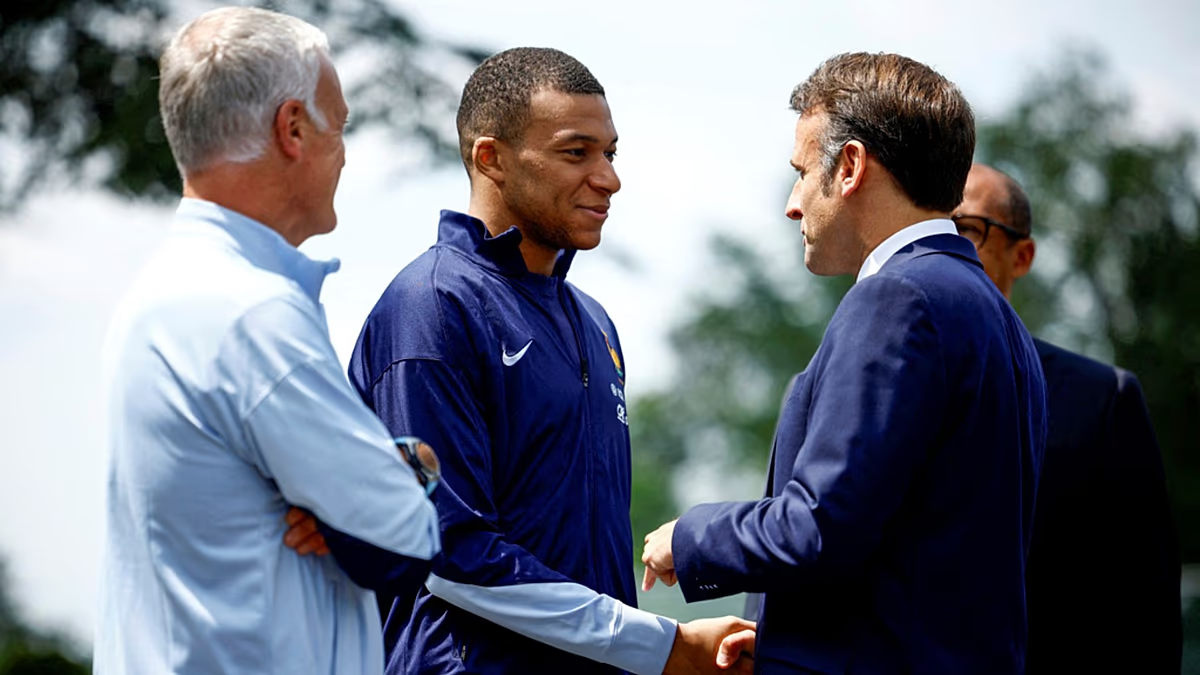
The fake story weaponized these existing perceptions, twisting benign fan culture into a sinister narrative. It repurposed genuine, if awkward, moments of physical contact—such as a team photo where Macron pulled Mbappé close—and recontextualized them as “evidence” for a fictional scandal. By grafting a serious allegation onto a well-known dynamic, the disinformation campaign created a perverse sense of plausibility for those already immersed in the joking narrative. This tactic is a common and dangerous feature of modern misinformation: it takes a kernel of recognizable truth or a widespread cultural joke and corrupts it, making the falsehood easier to accept and more difficult to dismiss outright.
The consequences of such fabricated stories extend beyond mere confusion. They represent a deliberate attack on public discourse, eroding trust in institutions, media, and even the reputations of individuals. For a public figure like President Macron, false accusations of criminal behaviour can damage credibility and sow unnecessary political discord. For Kylian Mbappé, it transforms his professional decisions and personal life into fodder for malicious fiction. Furthermore, these stories distract from legitimate issues and consume the oxygen of public attention. They also condition people to be cynical, making them potentially skeptical of real news reports when they emerge—a phenomenon sometimes called the “liar’s dividend.”
As global events like the FIFA World Cup captivate billions, they become prime targets for such disinformation campaigns, designed to go viral by attaching themselves to trending topics. This incident serves as a crucial reminder for all digital citizens. The defense against this is a combination of healthy skepticism and proactive verification. We must pause before sharing sensational headlines, check URLs for slight discrepancies, question the tone and sourcing of videos, and consult reputable news outlets. Enjoying the spectacle of sport and the narratives around our public figures is part of modern life, but as this case illustrates, we must do so with our critical faculties firmly engaged. In an online world where seeing is no longer believing, our most valuable tool is a willingness to look deeper.