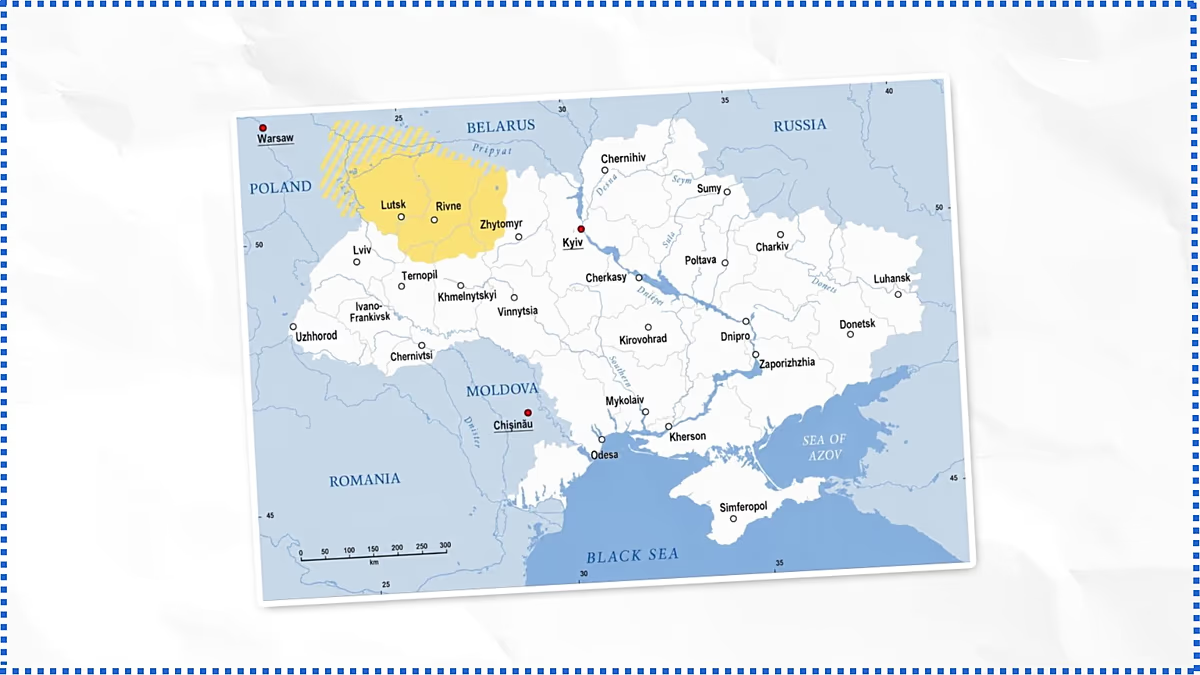





The brutal murder of an 11-year-old French girl has plunged the nation into a profound and painful examination of its justice system, revealing catastrophic failures that allowed a suspected predator to remain free. Lyhanna, whose name has become a symbol of systemic neglect, disappeared near the town of Fleurance on May 29th after being seen entering a man’s car. After a desperate week-long search, her body was discovered on June 4th in an abandoned silo in the nearby village of Puycasquier. The arrest of a 41-year-old man, a father whose own daughter was Lyhanna’s school friend, sent a further wave of horror through the community. Most devastating of all was the revelation that this suspect had been named in four separate cases involving allegations of sexual abuse against young girls in recent years, none of which were ever fully or properly investigated. This grievous oversight has triggered a national outcry, with President Emmanuel Macron himself condemning the “unacceptable” lapses that potentially allowed a preventable tragedy to occur.
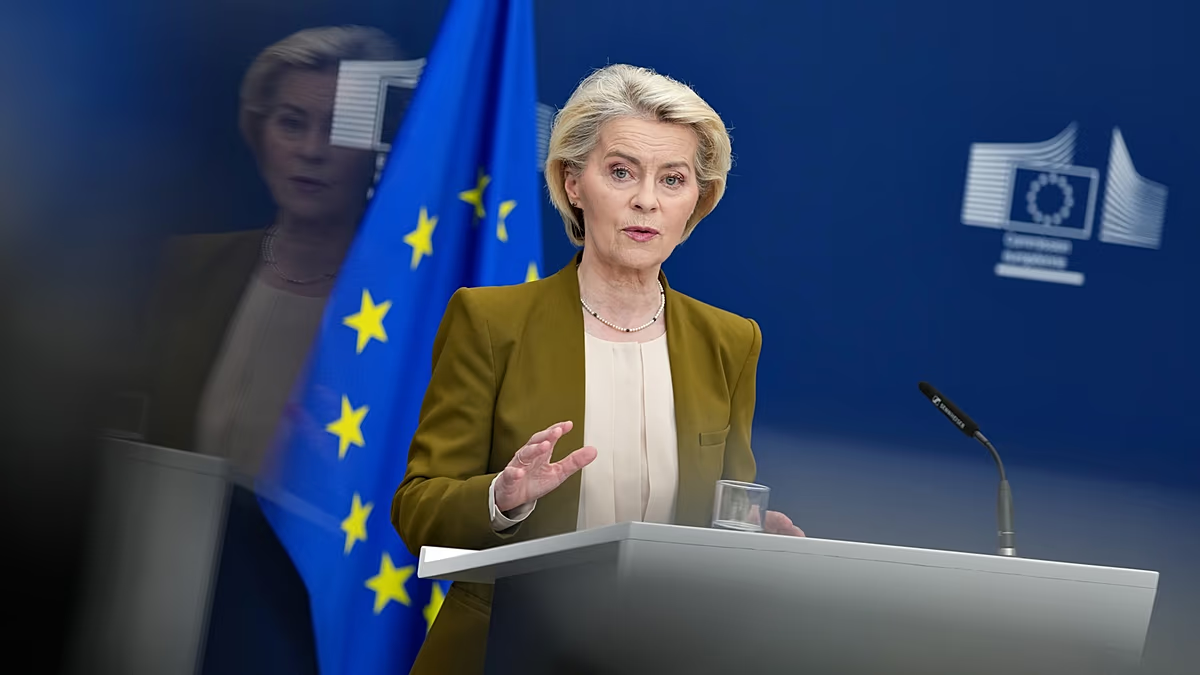
The public fury swiftly evolved from grief into a pointed critique of a judiciary crippled by chronic underinvestment and a dire lack of resources. Statistics underscore the crisis: according to the Council of Europe, France had approximately 11 professional judges per 100,000 people in 2022, a figure starkly below the European average of 22. This shortfall is not merely a bureaucratic concern; it translates into overworked prosecutors, understaffed courts, and cases—particularly complex, sensitive ones involving child victims—that languish or are deprioritized. In direct response to Lyhanna’s death, Justice Minister Gérald Darmanin issued an emergency directive, ordering all state prosecutors to review 70,000 ongoing cases of violence against minors by mid-July and treat them as an “absolute priority.” While this action acknowledges the scale of the problem, it also highlights the immense backlog and the reactive, rather than proactive, nature of a system in distress.
To understand France’s position, it is instructive to examine the wider European landscape, where the number of judges per capita varies dramatically based on legal tradition and judicial organization. Countries with legal systems heavily influenced by Germanic law, such as Croatia, Slovenia, and Montenegro, typically have very high numbers of professional judges—sometimes over 40 per 100,000 inhabitants. This is because their inquisitorial systems require judges to actively direct investigations, question witnesses, and order evidence, a process that demands significant judicial manpower. Furthermore, these countries often maintain hyper-specialized courts with panels of judges presiding over cases, adding to the need for a larger bench.
In contrast, nations in Western and Southern Europe, including France, operate under different legal traditions like Napoleonic or common law, which generally require fewer judges. While Napoleonic systems are also inquisitorial, they are typically less segmented than Germanic courts. Meanwhile, common law countries like the United Kingdom and Ireland employ an adversarial system where judges act more as impartial arbiters, overseeing proceedings led by prosecuting and defense attorneys rather than directing investigations themselves. This model, coupled with the use of lay magistrates in the UK to handle vast numbers of lesser cases, results in some of the lowest ratios of professional judges in Europe—fewer than three per 100,000 inhabitants in England and Wales.
The disparity across Europe is therefore not simply a matter of funding or efficiency, but is deeply rooted in historical legal structures. However, a common thread of strain runs through the continent. Eurostat figures show an almost 12% decrease in the number of professional judges across the EU between 2019 and 2024. In the face of this decline and increasing workloads, countries like Austria, Germany, and Portugal have begun implementing measures to attract and retain judicial staff, such as raising salaries and improving working conditions. These steps recognize that a robust justice system depends on a supported and sustainable workforce.
The tragedy of Lyhanna is, ultimately, a story of multiple failures: of individual cases falling through the cracks, of a system stretched beyond its capacity, and of the vulnerable paying the highest price. The comparative European data reveals that France’s judge shortage is acute, but it is part of a broader continental challenge. The urgent case review now underway is a necessary triage measure, but true reform will require a sustained commitment—more than a political directive with a deadline. It demands a fundamental reassessment of resources, training for handling child victims, and inter-agency coordination to ensure alarms are not just heard, but acted upon. Lyhanna’s name has become a rallying cry for a nation demanding that its institutions fulfill their most basic duty: to protect the innocent.