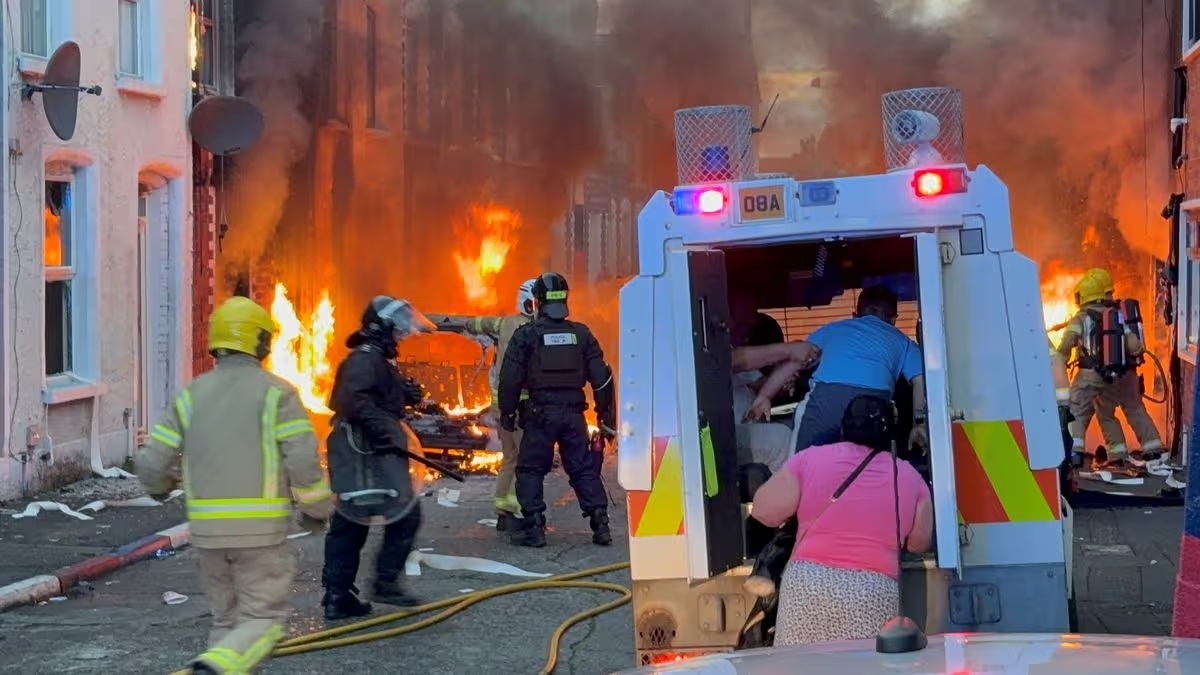


In the wake of recent violent unrest, the message from Northern Ireland’s top police officer is one of stark warning, tempered with an appeal for communal responsibility. PSNI Chief Constable Jon Boutcher has made it unequivocally clear that there will be serious legal consequences for those who participated in the disorder. He stated plainly that police will pursue, arrest, and prosecute all individuals involved, emphasizing that such actions irrevocably alter the course of a young person’s life. Boutcher painted a vivid picture of the future these individuals risk: damaged prospects, closed doors to desired careers, and a permanent stain on their records, consequences he believes many in the heat of the moment simply fail to comprehend. This firm stance underscores a zero-tolerance approach to violence, framing it not as a momentary rebellion but as a catastrophic personal decision with lifelong repercussions.
The Chief Constable’s comments also served to acknowledge and commend the extensive efforts made by community and political figures to de-escalate the situation. When questioned on whether politicians could have done more to prevent the protests, Boutcher offered a constructive perspective, noting that the response from all political quarters following the initial attack had been “really positive.” He highlighted the visible and active role played by local community leaders and MLAs, many of whom were on the streets during the turmoil, actively engaging with young people in an attempt to dissuade them from violence. This recognition creates a crucial context, separating the condemnable acts of a few from the broader community and its representatives, who were actively working to uphold peace and steer youth away from destructive paths.
A central and poignant element of Boutcher’s appeal was his direct address to families across Northern Ireland. Speaking on BBC’s Good Morning Ulster, he issued an urgent plea to parents, grandparents, and guardians, urging them to be acutely aware of the whereabouts and influences on their young relatives. “Your children, your grandchildren, your nieces, your nephews, people that you care about in this community, young lives – please know where they are,” he implored. This call to action shifts part of the responsibility from purely policing into the heart of homes and neighborhoods, emphasizing that prevention is a communal duty. It is a heartfelt request for families to intervene, to communicate, and to ensure that the young people in their care understand the profound futility and danger of the path they might be tempted to follow.
Underpinning this entire address is a profound sense of concern for the young people themselves. Boutcher’s language, while firm on consequences, is not devoid of empathy; it carries a tone of regret for the potential he sees being squandered. His warning that “their lives will be changed forever” and “their futures will be damaged” is delivered not as a mere threat, but as a grim prediction of a stolen future. He positions the police action as an inevitable outcome of their choices, a tragic collision course that community leaders tried to avert. This approach seeks to reframe the narrative from one of adversarial conflict between youth and authority to one of preventable loss, where the true cost is paid by the individual caught in the moment of chaos.
The broader context of this statement touches on the fragile social and political landscape of Northern Ireland. Periods of tension often see the dangerous intersection of political grievance, communal friction, and the impulsive energy of disaffected youth. Boutcher’s dual strategy—of promising unequivocal legal action while lauding cross-community peace efforts—aims to isolate criminal behavior from legitimate political expression. By doing so, he seeks to deny violence any semblance of legitimacy or purpose, framing it instead as a personal and communal catastrophe that benefits no cause and honors no tradition. It is a careful attempt to uphold the rule of law without inflaming wider tensions, acknowledging constructive leadership while drawing an absolute line against disorder.
Ultimately, the Chief Constable’s summarized message is a tapestry woven with threads of deterrent, appreciation, and heartfelt appeal. It serves as a clear roadmap: the PSNI will fulfill its duty to enforce the law without fear or favor, but it cannot act alone. The prevention of future disorder relies on a partnership—a synergy between robust policing, steadfast political and community leadership, and, most essentially, vigilant and engaged families. The plea to “make sure that they understand that this is not the way forward” is the cornerstone. It is an acknowledgment that lasting peace and stability are built not just in courtrooms or police stations, but in living rooms, on street corners, and through the difficult, vital conversations that guide the next generation toward a better, more peaceful future.