

Of course. Here is a humanized summary and expansion of the provided content, structured into six detailed paragraphs.
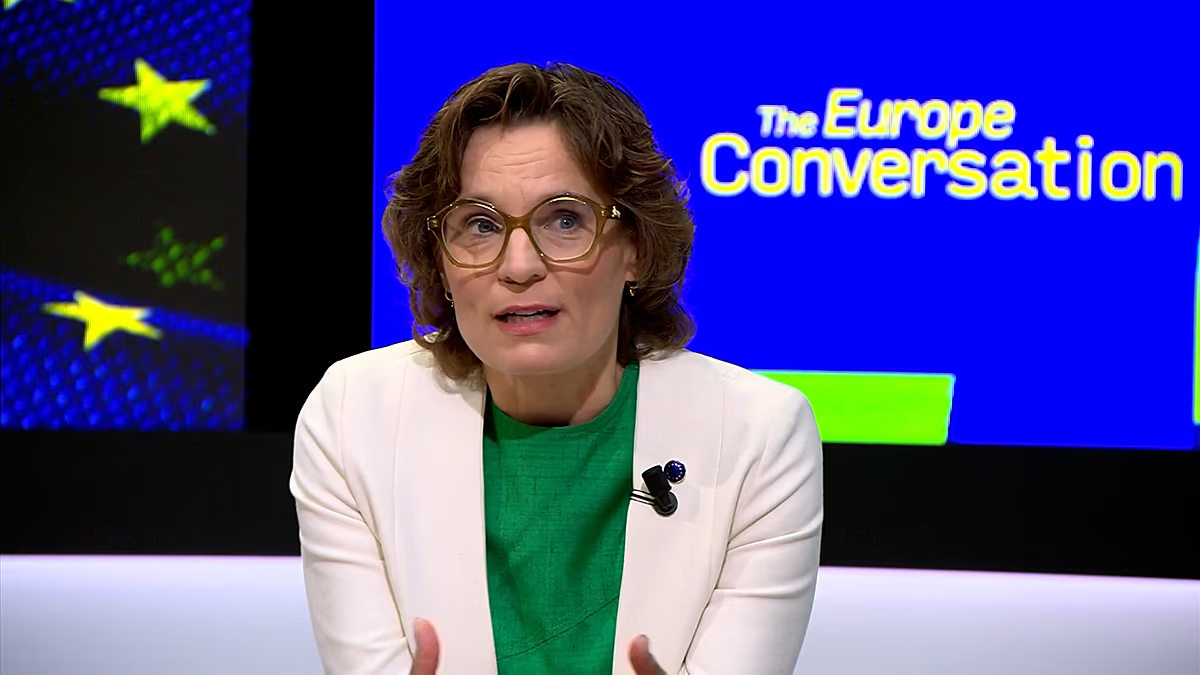
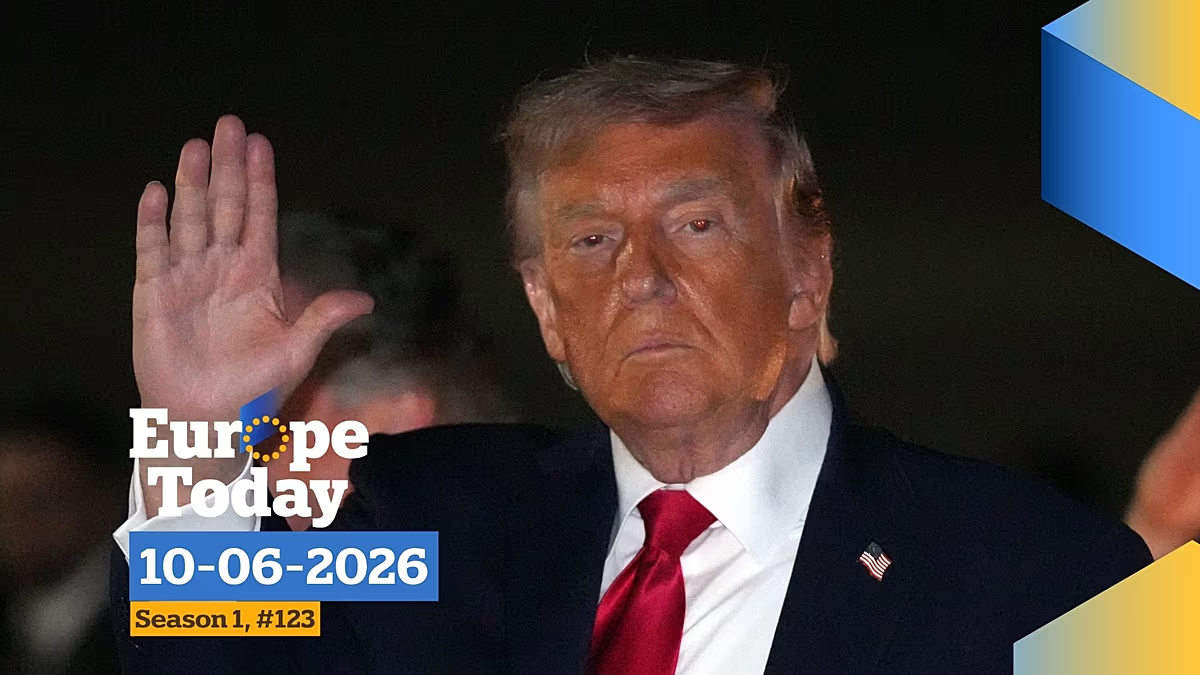
In a world where geopolitical fault lines seem to shift by the hour, the daily task of making sense of Europe’s role and responses becomes both crucial and complex. The program “Europe Today” positions itself as a vital morning briefing for those navigating this landscape, condensing the continent’s most pressing stories into a focused twenty-minute format. Anchored by the experienced Méabh Mc Mahon and EU editor Maria Tadeo, the show promises more than just headlines; it offers the necessary context to understand not just what is happening, but why it matters. Accessible across TV, digital platforms, and as a newsletter and podcast, it is designed for the policymaker, the student, the businessperson, or the engaged citizen who needs to start their day informed about the forces shaping their reality.
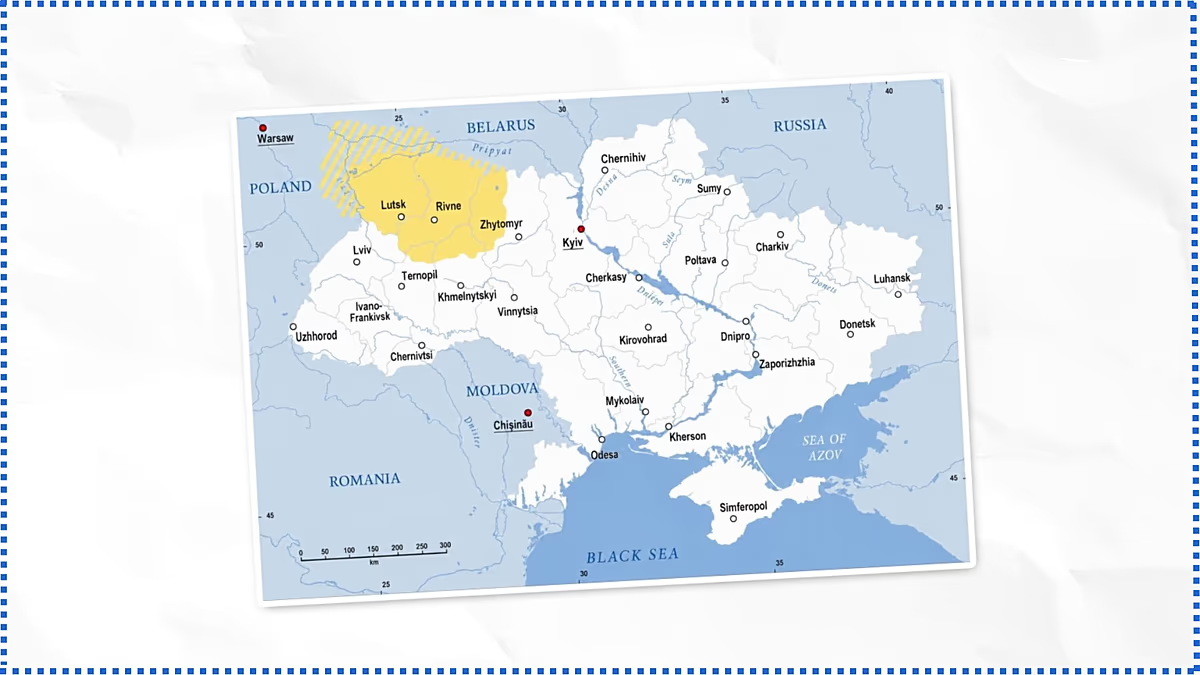
The agenda for this particular broadcast underscores the wide-ranging and interconnected challenges facing Europe. A central theme is the ongoing, brutal conflict in Ukraine and the West’s strategic response. The discussion features an interview with General Dominique Trinquand, a former head of the French military mission to the UN, whose insights would ground the debate in military and diplomatic reality, cutting through the noise of daily battlefield updates. This expert analysis is immediately complemented by reporter Jorge Liboreiro’s breakdown of the EU’s latest political weapon: its 21st sanctions package against Russia. This segment would likely delve into the perpetual cat-and-mouse game of economic pressure, examining whom these new measures target and the ongoing debate about their effectiveness and the resilience of the Russian economy.
Simultaneously, the show highlights that security is not solely defined by external threats, but also by the internal cohesion and capability of European allies. A striking report from Laura Fleischman in Berlin reveals a significant fracture in European defense ambitions: the halting of the joint fighter jet project between Germany and France. This isn’t merely a story of technical delays; it is a parable of political misalignment, industrial rivalry, and competing national visions. The stalling of such a flagship project raises profound questions about the feasibility of European “strategic autonomy” and the continent’s ability to collaboratively develop the next generation of military technology without relying on external partners.
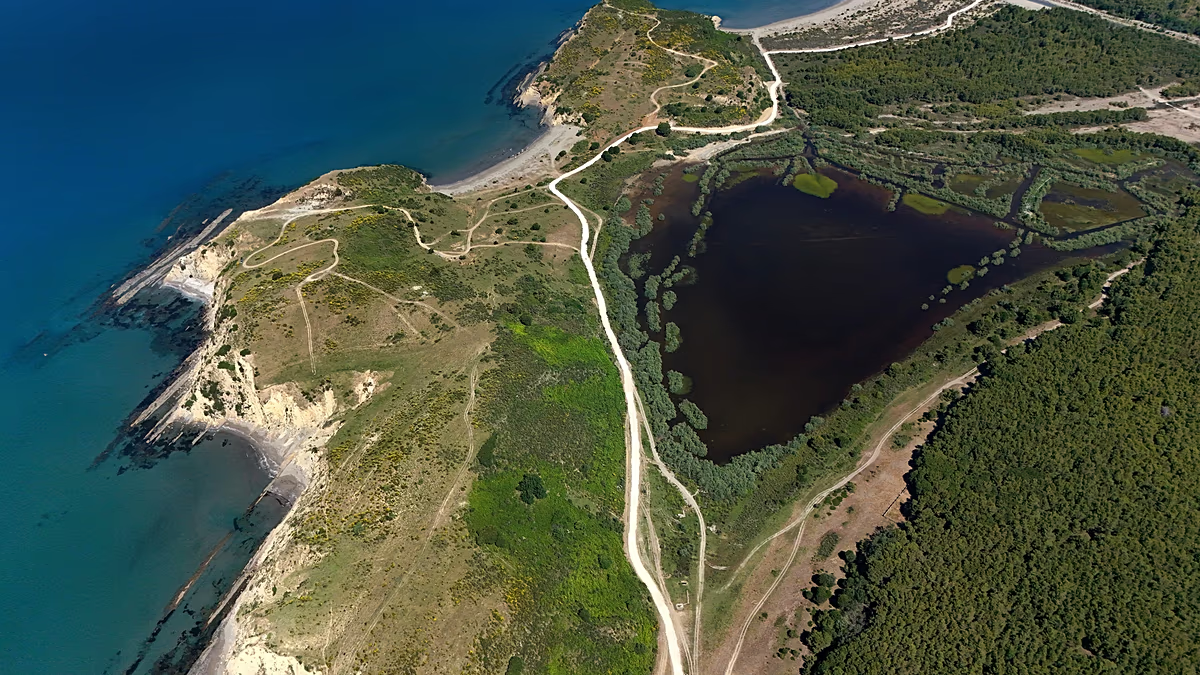
Turning from high politics to grassroots activism, the program then zooms in on a powerful reminder of how global capital and local environmental concerns can collide. Mared Gwyn brings a report from Brussels on the EU’s reaction to street protests in Albania. The cause? A planned, environmentally-sensitive resort linked to Donald Trump’s son-in-law, Jared Kushner. This story connects the dots between transatlantic business dealings, the fragile ecosystems of the Western Balkans, and the democratic right of citizens to protest. The EU’s perspective is key here, as it balances its stated commitment to environmental standards and rule of law with its complex relationships with aspiring member states and their economic development choices.
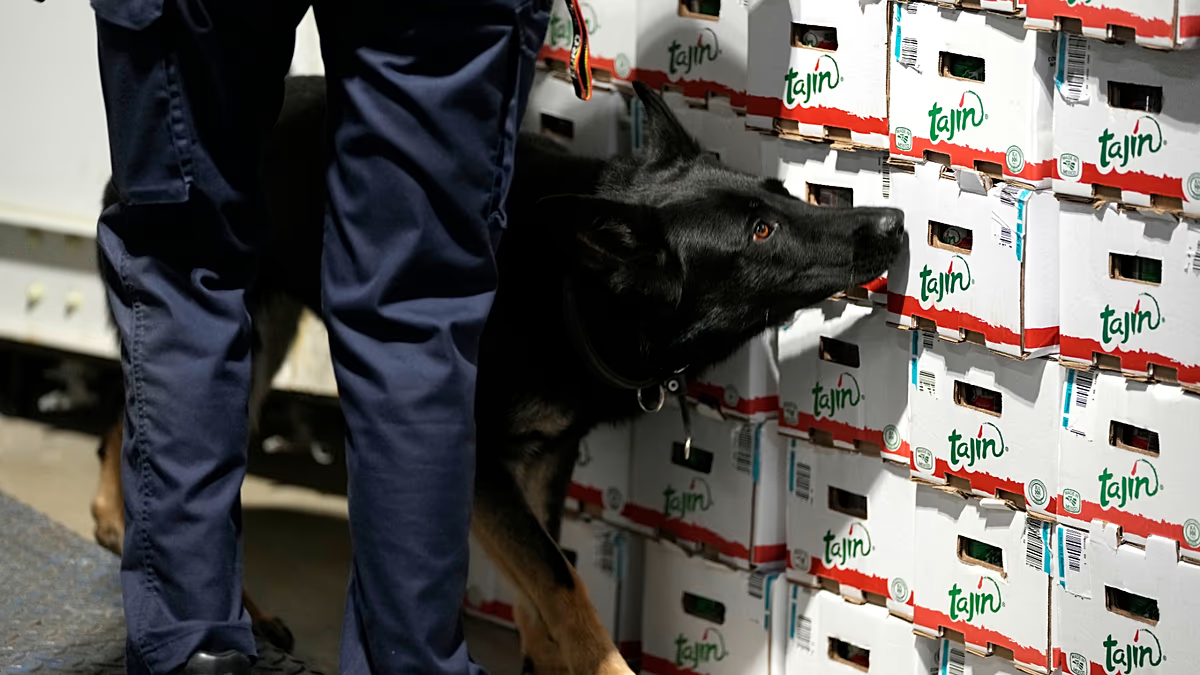
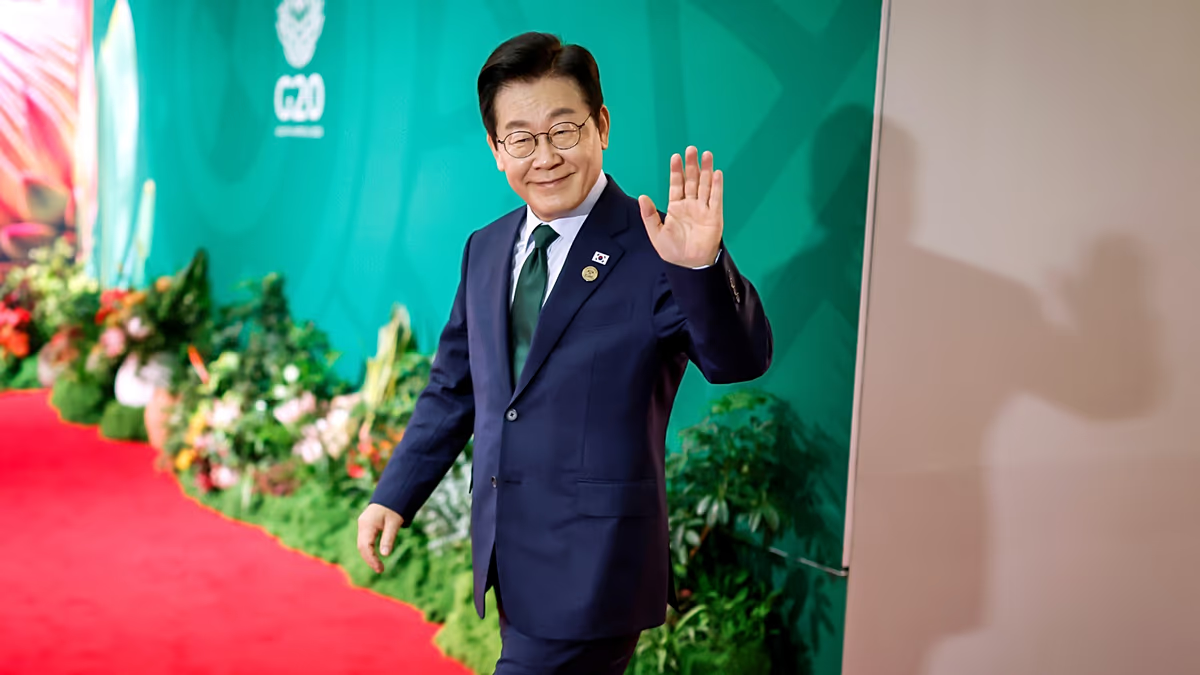
Further complicating the EU’s international posture is a report from Peggy Corlin on an exclusive investigation. It reveals how some Chinese companies are openly advertising methods to bypass EU import duties. This exposes a tangible, gritty front in the broader trade war: the loopholes and logistical ingenuity used to undermine protectionist policies. It speaks to the immense difficulty of regulating global supply chains and the constant vigilance required to enforce economic borders. This story of circumvention contrasts sharply with the formal diplomacy showcased in Jakub Janas’s explainer on the EU-South Korea summit in Brussels. That segment would highlight a more cooperative facet of foreign policy, focusing on aligned values, technology partnerships, and shared security concerns in the Indo-Pacific, illustrating the multifaceted nature of the EU’s global engagement.
Ultimately, this lineup for “Europe Today” paints a portrait of a continent at a crossroads on multiple fronts. It is grappling with war and the mechanisms of response, from sanctions to fractured defense projects. It is witnessing the tension between international investment and local environmental stewardship. It is navigating an economic landscape where formal summits coexist with aggressive trade subterfuge. By weaving together expert analysis, field reporting, and clear explanation, the program seeks to provide its audience with the connective tissue between these disparate stories. In doing so, it underscores that in today’s Europe, a story about a protest in Tirana, a trade loophole in Shanghai, or a stalled contract in Berlin is never just a local issue—it is a piece of a larger puzzle defining Europe’s sovereignty, values, and place in an increasingly contested world.