


In a significant move to bolster the continent’s security architecture, European Union lawmakers have reached a pivotal agreement on a comprehensive package known as the “Defence Readiness Omnibus.” Approved by negotiators from the European Parliament and the European Council, this suite of measures is designed to dramatically accelerate defence investment and enhance the bloc’s ability to respond to mounting security challenges. The deal, struck under the Cypriot presidency of the EU Council, represents a collective recognition that the era of assumed stability has passed. As articulated by Cyprus’s Deputy Minister for European Affairs, Marilena Raouna, the agreement underscores a foundational principle: for a Europe that is strategically autonomous, defence readiness and industrial competitiveness are inextricably linked. This legislative push is not merely procedural; it is a direct and urgent response to a security environment that is deteriorating with alarming speed.
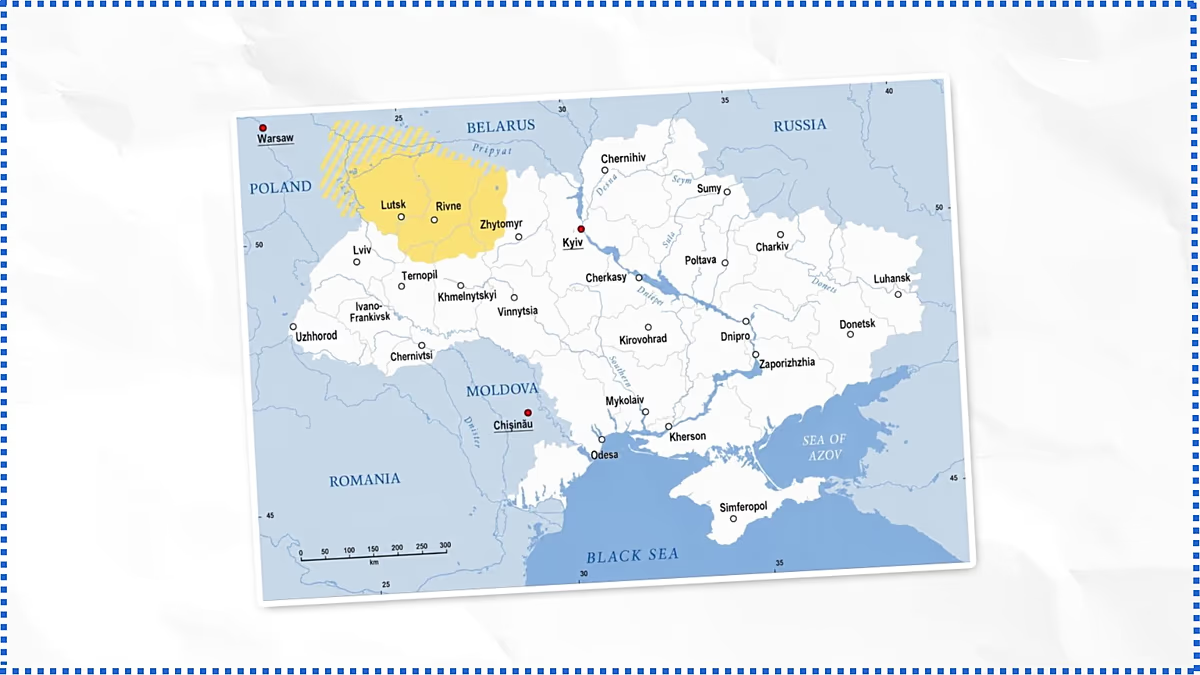
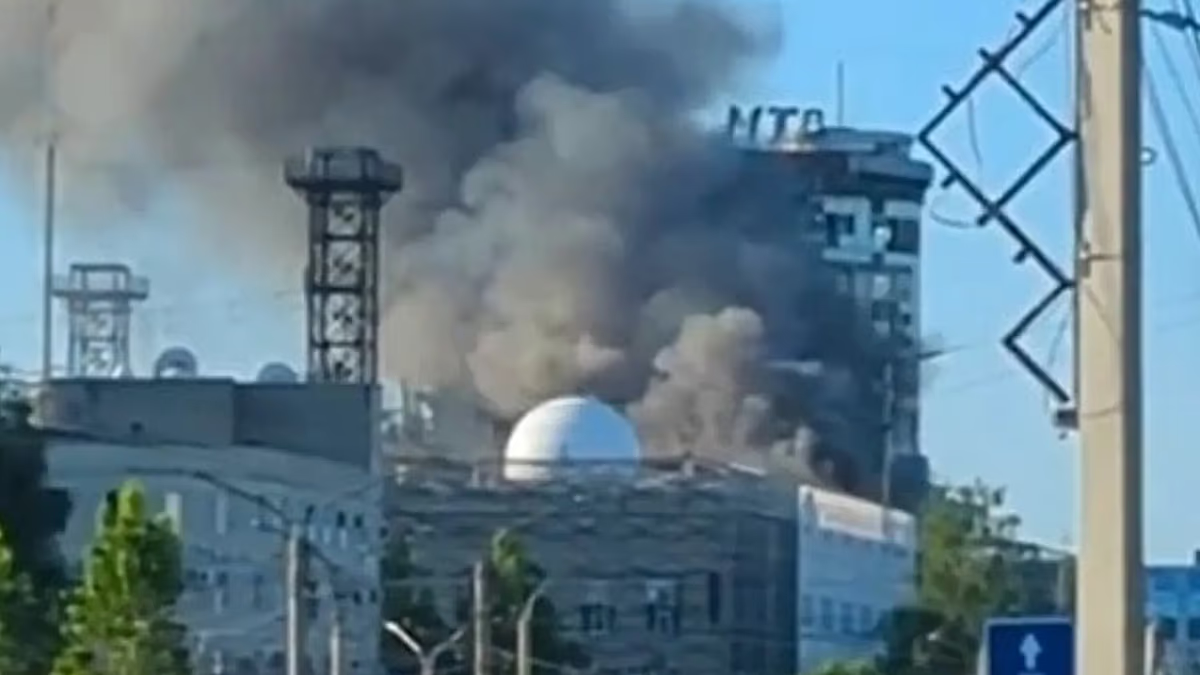
The urgency driving this agreement stems from a confluence of external threats and shifting alliances that have fundamentally altered Europe’s strategic calculus. The most immediate and stark catalyst is Russia’s full-scale invasion of Ukraine, a conflict that increasingly demonstrates a dangerous lack of containment. With errant drones and missiles from the warzone sporadically infringing upon the airspace of neighbouring EU member states, the war’s spillover effects are no longer a theoretical risk but a tangible reality. Compounding this threat is a perceptible retreat by the United States from its traditional role as the guarantor of European security, a role cemented after the Second World War. This dual pressure—of resurgent Russian aggression and potential American withdrawal—has created a stark imperative for the EU. The bloc now faces a historic opportunity, and necessity, to take concrete steps toward meeting its own security needs rather than relying on external protectors.
At its core, the Defence Readiness Omnibus aims to dismantle the bureaucratic and logistical hurdles that have long hampered Europe’s defence industrial base. The new rules introduce stark, binding timelines, mandating that permits for constructing or expanding defence production facilities must be granted within a strict window of 42 working days. Furthermore, the legislation establishes a single point of contact for companies promoting defence projects, streamlining interactions that were previously mired in complexity across multiple national agencies. Perhaps most critically, it obliges EU governments to slash the red tape that stifles the movement of defence products across internal borders. These measures address a chronic problem: Europe’s defence industry has often been fragmented by national regulations, preventing the seamless collaboration and scale needed for rapid production and innovation.
The political momentum behind this agreement is broad and reflects a rare consensus on the gravity of the situation. Key parliamentarians shepherding the legislation have emphasized that bureaucratic inertia is a luxury Europe can no longer afford. Henrik Dahl, a co-rapporteur from the European People’s Party, framed the agreement as a vital first step, stating plainly that “Europe cannot afford bureaucratic paralysis while our security environment deteriorates.” This sentiment was echoed by Anna-Maja Henriksson of the Renew Europe group, who focused on the enduring nature of the threat. She argued that because Russia will remain a persistent danger, the EU must ensure its internal defence procurement and transfers are as swift and smooth as possible. Their statements highlight a shift in thinking—from viewing defence as a dormant national expense to treating it as an active, integrated, and urgent pillar of the Union’s very survival.
While the agreement marks a major political breakthrough, its journey is not yet complete. The provisional deal now requires formal ratification by the European Parliament in a plenary vote and by the 27 heads of state in the European Council. This process, while often seen as a formality, will be the final test of the Union’s collective resolve. The true measure of success, however, will lie in the implementation. Converting these legislative texts into faster factory construction, smoother supply chains, and ultimately, more equipment reaching armed forces will be the arduous task ahead. It will require sustained political will, continued investment, and close cooperation between national governments and the European Commission to ensure the new rules are applied consistently and effectively across all member states.
In conclusion, the Defence Readiness Omnibus is more than a policy adjustment; it is a signal of strategic maturation for the European Union. Born from the harsh realities of war on its doorstep and geopolitical realignment, the package represents a concerted effort to translate the rhetoric of “strategic autonomy” into actionable mechanisms for self-reliance. By targeting the sluggish permitting processes and fragmented market that have long weakened its defence industrial capacity, the EU is laying groundwork for a more resilient, responsive, and unified security posture. The agreement acknowledges that in a world of renewed great-power competition, security is inextricably tied to industrial speed and regulatory agility. The bloc’s future ability to deter aggression and protect its citizens may well depend on how successfully these new foundations are built upon in the critical years to come.