



Paragraph 1
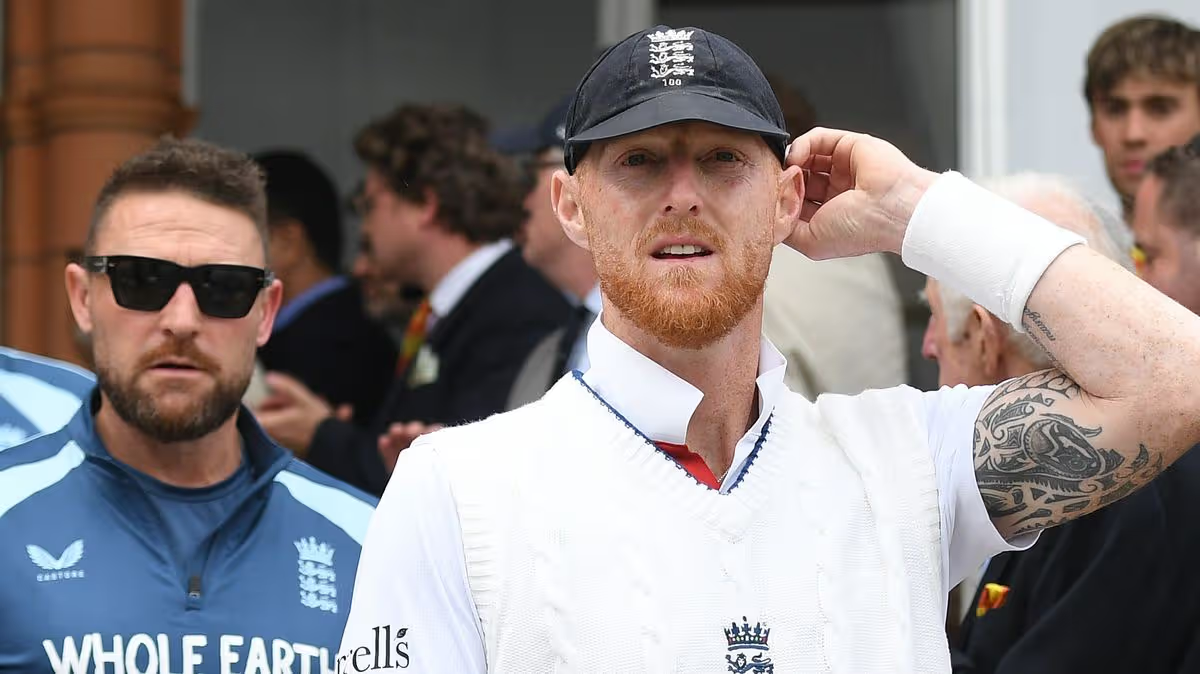
The future of Ben Stokes as England’s Test captain hangs in the balance following a breach of team discipline. Stokes, alongside teammate Gus Atkinson, is under investigation for breaking a post-match midnight curfew after England’s victory over New Zealand at Lord’s. The pair attended a nightclub in Chelsea, where the evening escalated into an incident also involving Saracens rugby union player Totoa Auvaa. Reports suggest a physical altercation occurred, resulting in an England and Wales Cricket Board (ECB) security staff member being struck. This serious lapse in judgment has triggered parallel probes by the ECB, the independent Cricket Regulator, and Saracens, casting a long shadow over England’s preparations for their upcoming Test series and placing immense pressure on the leadership of one of the game’s most influential figures.
Paragraph 2
Amidst the speculation surrounding his position, Stokes has remained publicly silent, adding to the sense of uncertainty. The ECB faces an urgent decision, as the squad for the second Test must be named imminently, with training scheduled to begin at The Oval. There is a strong possibility that Stokes and Atkinson could be temporarily stood down for the next match as a disciplinary measure, even before any final determination on the captaincy is made. Furthermore, with the Women’s T20 World Cup commencing at Edgbaston, there is a desire from the governing body to resolve the very public men’s team drama and provide clarity, allowing the spotlight to shift appropriately to Nat Sciver-Brunt’s defending champions.
Paragraph 3
The debate over Stokes’ fate has drawn commentary from esteemed former captains, with Michael Vaughan offering a nuanced perspective. Writing in The Telegraph, Vaughan argued that while Stokes undoubtedly “made a mistake,” the curfew breach should not, in itself, constitute a “sacking offence.” He pointed to Stokes’ immense “credit in the bank” for his transformational role as a leader and all-rounder, a reserve of goodwill that arguably exceeds that of the current ECB hierarchy in the eyes of many fans. Vaughan suggested the board must act decisively on its own judgment rather than passively hoping Stokes resigns, but his clear stance is that the punishment should not extend to stripping the captaincy, proposing instead a short suspension.
Paragraph 4
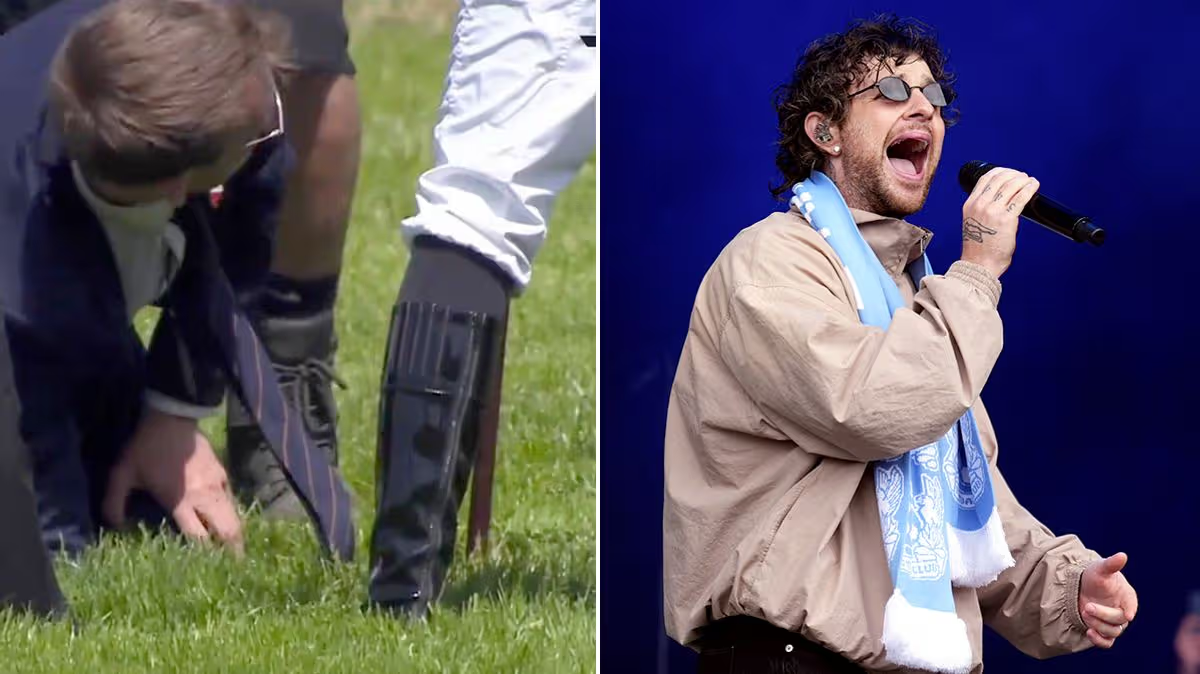
However, Vaughan coupled his defense with a concerning personal observation about Stokes’ recent demeanor, suggesting the nightclub incident may be symptomatic of a wider issue. He revealed he had felt compelled to message contacts within the England setup prior to this episode, expressing concern that Stokes “has not seemed right for a while.” Vaughan cited alleged instances of post-interview aggression during the Ashes tour and a perceived pattern of not shaking hands with respected figures in the game. He also noted Stokes’ puzzling absence from a photograph with other former England captains during the Lord’s 150th-anniversary celebrations, interpreting these acts as a possible disrespect for tradition and for individuals performing their roles within the sport.
Paragraph 5
This context frames the current investigation not as an isolated error but as a potential tipping point in the stewardship of a complex and intensely passionate leader. Stokes’ captaincy has been defined by a relentless, aggressive philosophy and a profound ability to inspire his team, qualities that revived England’s Test fortunes. Yet, the very temperament that fuels such leadership can sometimes spill over, and the reported behaviors Vaughan alludes to suggest a player under immense strain or perhaps becoming increasingly isolated within the established structures of the game. The curfew breach, therefore, forces a dual evaluation: of a specific disciplinary failure and of the overall well-being and conduct of the captain.
Paragraph 6
Ultimately, the ECB’s decision will reverberate far beyond a single team selection. It represents a judgment on the balance between accountability for foundational team rules and the preservation of a unique sporting talent’s leadership. Can the authority of the coaching and management staff be upheld without catastrophically destabilizing the team environment Stokes himself has built? A temporary suspension appears a likely middle ground, serving as a firm rebuke while allowing time for reflection. Yet, the underlying questions about conduct, culture, and Stokes’ relationship with the institution of cricket will persist long after any immediate sanction, defining a critical juncture in both his career and English cricket’s new era.