



A New Chapter in European Skies
A new fighter jet program is emerging from the ashes of a failed European partnership, signaling a decisive shift toward German leadership in continental defense. Following the dramatic collapse of the tri-national Future Combat Air System (FCAS) program involving France, Germany, and Spain, an eight-company consortium led by aerospace titan Airbus is stepping into the void. Dubbed “Team Gen 6,” this alliance is set for a formal launch in Berlin, aiming to develop a next-generation combat aircraft entirely under a German industrial banner. This move underscores a profound pivot in European defense dynamics, moving from complex multinational collaboration to a more centralized, nationally-driven initiative. The abrupt end of FCAS, once a flagship project for European strategic autonomy, has created an urgent need for a clear path forward, which this new consortium seeks to provide.
The consortium’s formation is a direct industrial response to the political and corporate deadlock that doomed FCAS. The former program unraveled after months of escalating tension, primarily between Airbus and the French manufacturer Dassault Aviation, which sought greater control over the project’s direction. This stalemate, frustrating politicians in Berlin and industry leaders alike, culminated in its termination in the summer of 2025. In its place, “Team Gen 6” presents a streamlined, German-centric industrial team. Alongside Airbus, the alliance includes European missile specialist MBDA and a strong roster of German defense champions: sensor experts Hensoldt, weapon systems provider Diehl Defence, engine manufacturer MTU Aero Engines, and technology firms Liebherr, Autoflug, and Rohde & Schwarz. This collective has already presented a vision paper to German Defence Minister Boris Pistorius, advocating for a swift and fully-funded governmental commitment.
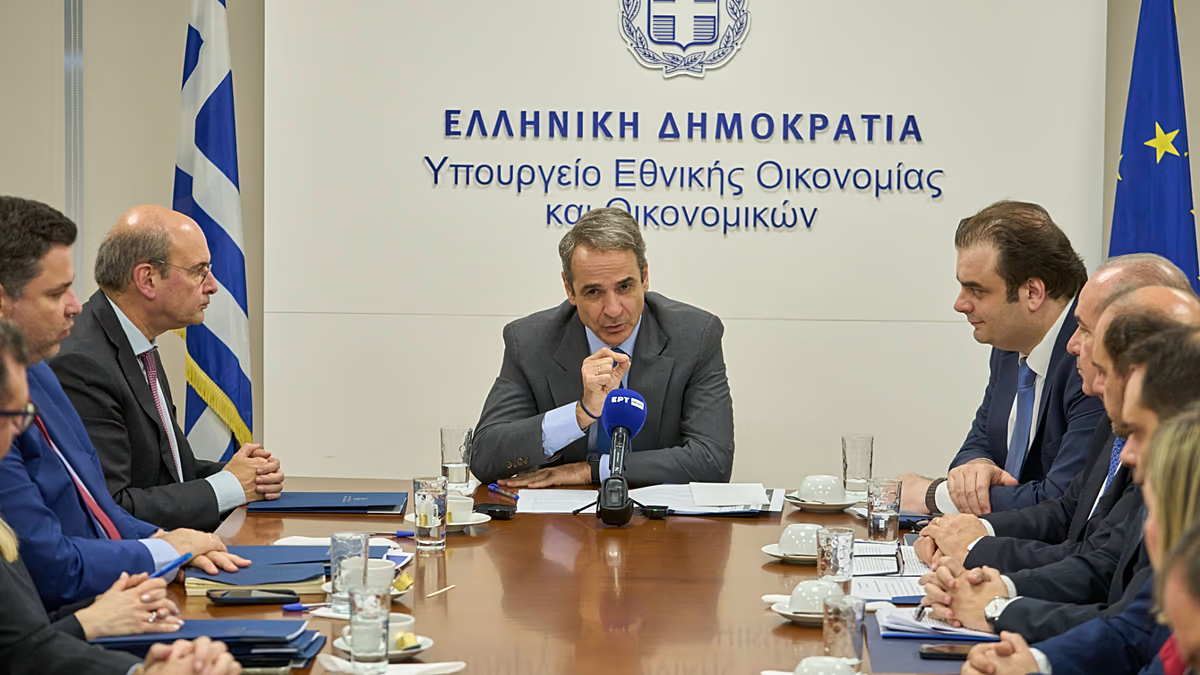
Berlin now stands at a strategic crossroads, weighing this ambitious domestic proposal against other practical alternatives. Defence Minister Pistorius has acknowledged the “Team Gen 6” project as a “conceivable” option but has been careful not to endorse it outright. He confirmed that the government is simultaneously evaluating other paths to modernize its air force, including purchasing additional American-made F-35 stealth fighter jets or potentially joining other international development programs. This cautious stance highlights the significant financial and technological challenges inherent in developing a sixth-generation fighter—a project spanning decades and costing tens of billions of euros. The consortium, aware of these hurdles, is reportedly urging the government to ensure contracts are awarded “fully and on time” by late 2026, seeking the long-term certainty necessary for such a monumental undertaking.
The collapse of FCAS represents more than a failed industrial project; it is a symbolic setback for the European Union’s long-stated goal of achieving greater defense sovereignty and integrated military capability. Launched with great fanfare in 2017, FCAS was envisioned as a cornerstone of a stronger, more self-reliant Europe, especially in the face of rising security threats following Russia’s invasion of Ukraine. Its failure exposes the enduring difficulties of aligning national interests, industrial rivalries, and strategic visions among even the closest of European allies. The fragmentation that followed has led to concerns about duplicated efforts, wasted resources, and a continued over-reliance on non-European defense equipment, ultimately weakening the collective security posture the program was meant to bolster.
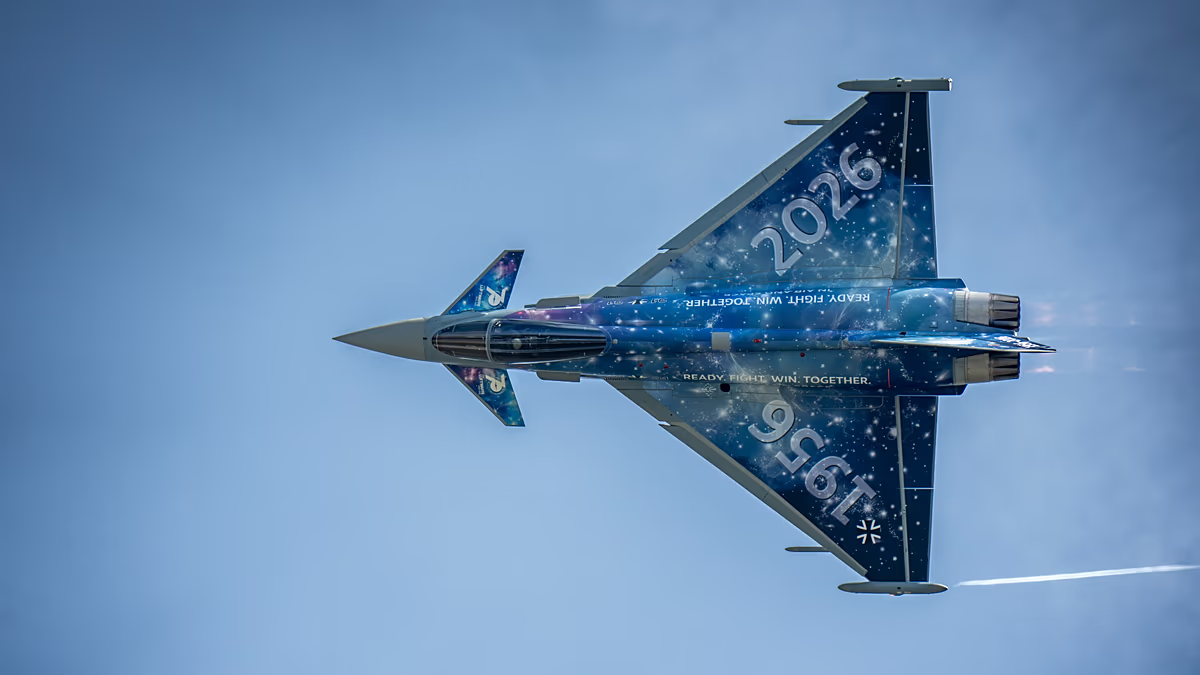
In this context, the rise of “Team Gen 6” can be seen as a pragmatic, if less collectively European, solution. By consolidating leadership and major industrial workshares within Germany, the initiative aims to avoid the management complexities and political friction that plagued FCAS. The focus is on delivering a tangible, advanced technological product—a sixth-generation fighter featuring expected capabilities like enhanced stealth, network-centric warfare systems, and loyal wingman drones—through a more direct chain of command. However, this national approach raises questions about the future of broader European defense collaboration and the specific roles of former partners France and Spain, who are now left to pursue their own aerial combat system ambitions independently.
As the ILA air show in Berlin serves as the backdrop for the consortium’s unveiling, the coming months will be critical in determining the future of Europe’s combat air power. The German government must balance the patriotic appeal and industrial benefits of a national flagship program against the proven capabilities, lower risk, and faster delivery timeline of buying existing aircraft like the F-35. The decision will send a powerful signal about Germany’s commitment to leading European defense industrially and strategically. Whether “Team Gen 6” soars as the nucleus of a new European defense paradigm or becomes a footnote in a story of continued fragmentation will depend on Berlin’s political will, budgetary commitment, and its ability to potentially reintegrate broader European participation under a new, German-led framework in the years to come.