



The Long Road to Justice: A Warehouse of Fakes and a Fifteen-Year Legal Saga
For fifteen years, within a nondescript warehouse in the bustling port city of Le Havre, a silent, staggering stockpile sat awaiting judgment. Nearly 38,000 pairs of counterfeit trainers, arriving from China in 2011, represented not just a cache of illicit goods but one of the most protracted legal battles French customs authorities have ever endured. The case was a monument to the slow, grinding wheels of justice in the complex world of intellectual property crime. Finally, in December 2025, the saga concluded. The French importer was sentenced to a substantial customs fine of 1.56 million euros, an additional 260,000 euros for customs-related money laundering, and three years in prison—two of them suspended. For the customs officers of Le Havre, this ruling allowed them to finally close a massive file and reclaim valuable warehouse space, turning a page on a decade-and-a-half of meticulous legal work.
The Ubiquitous Scourge: Counterfeiting as a Modern Epidemic
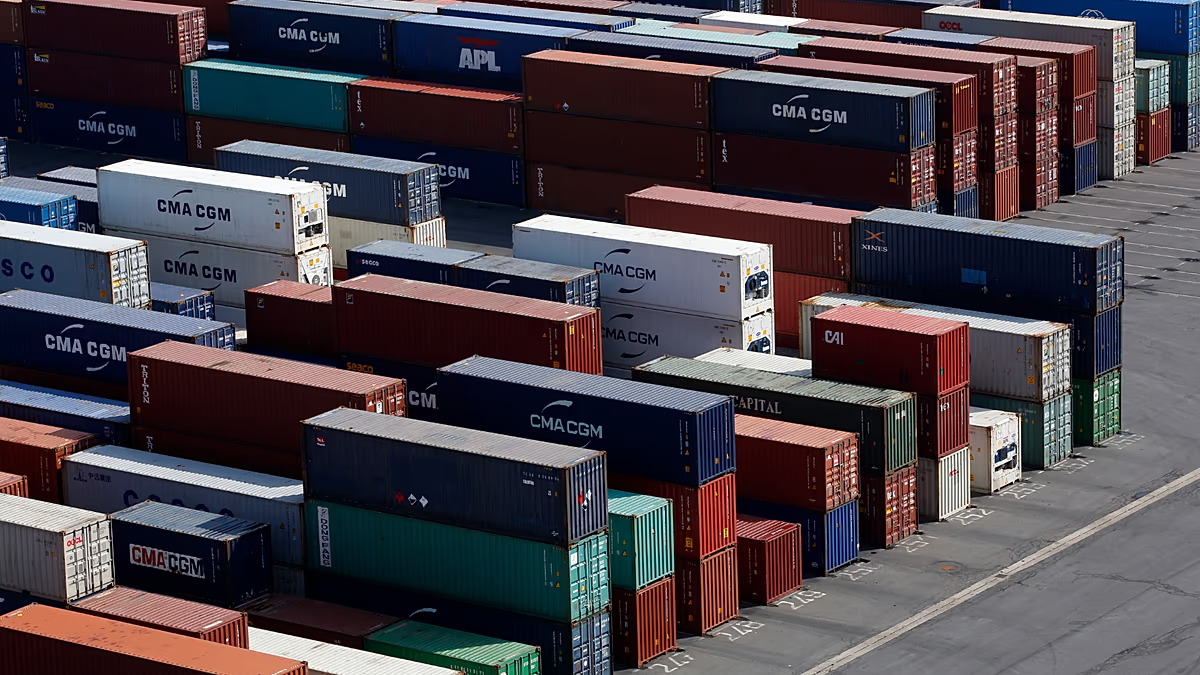
The case of these trainers is but a single, dramatic example of a pervasive global problem. As customs officer Anthony explains, counterfeiting is a relentless scourge touching virtually every product category. While luxury goods from prestigious French brands are prime targets, the threat extends far beyond. Everyday consumer items like soaps and shampoos are replicated, and toys—due to their high popularity and rapid market cycles—are copied almost instantly upon release. Le Havre, as France’s primary container port, is a frontline in this fight. Seizures are daily occurrences, encompassing shoes, clothing, electronics, car parts, and more. In the previous year alone, over 20 million counterfeit items were seized across France, with nearly 1.2 million intercepted in Le Havre. This trade is not a minor nuisance; it is a highly lucrative enterprise increasingly dominated by sophisticated organized crime networks, making enforcement a critical matter of economic security and public safety.
The Inevitable End: Destruction as the Only Legal Path
Upon seizure, these goods enter a strict legal pathway with no exit. French law explicitly forbids the resale or redistribution of counterfeit products. The rationale is twofold: to prevent them from re-entering the market and undermining legitimate businesses, and to address the significant safety risks they often pose. Counterfeit goods routinely bypass health and safety standards, potentially containing toxic dyes, flammable materials, or hazardous components that pose real dangers to consumers, particularly in items like children’s toys or electrical goods. Therefore, customs policy is unequivocal: destruction is mandatory. This stance, however, regularly fuels public debate. To many, watching thousands of usable items—like shoes—be destroyed seems an act of profound waste, especially amid global economic hardship. Yet, customs officials stand firm, arguing that the potential harm and the illegality of the goods outweigh any perceived benefit from their reuse.
The Final Transformation: From Shoes to Shredded Fuel
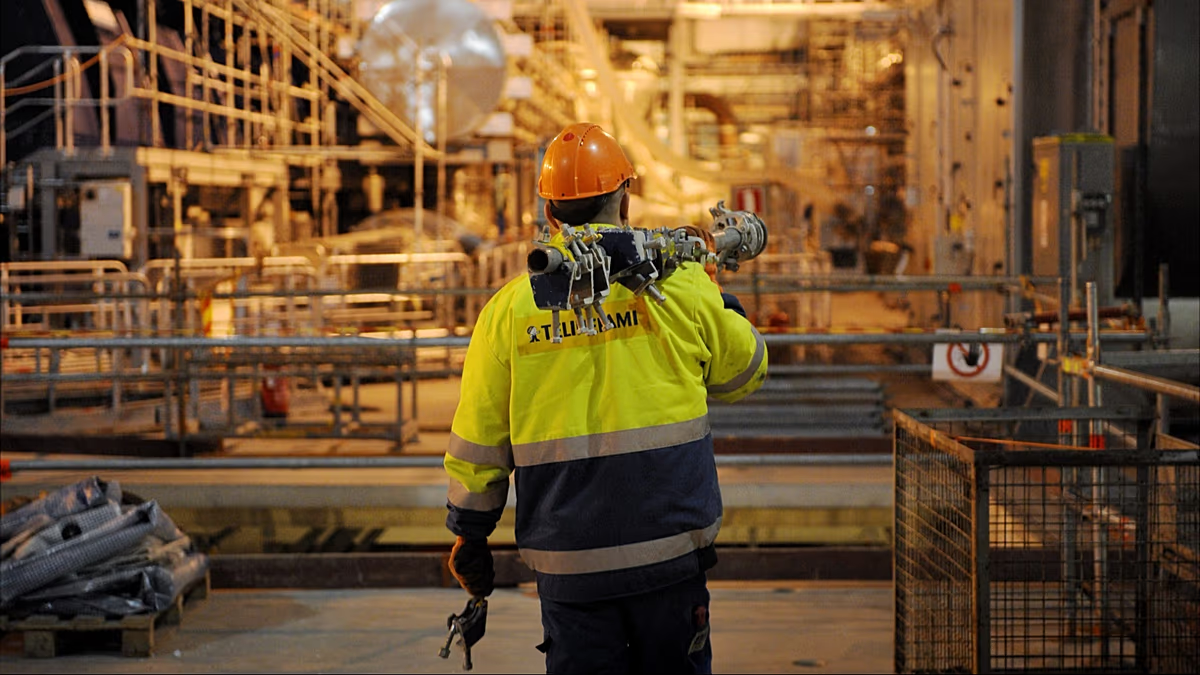
The practical end for the 38,000 pairs of trainers came on June 3rd, in a specialized facility under contract to customs in Le Havre. The operation was swift and industrial. Two mobile cranes, using their massive grapples, scooped and crushed the shoes before feeding them into a powerful shredder. What emerged was not footwear, but a fragmented mass of material. As Stéphane Peterson, regional director at UNIFER Environnement, explained, this shredded residue has several potential destinies. In this instance, it was destined for incineration via a local partner. In other cases, such material can be processed into a solid, high-calorific fuel used to feed boilers in cement plants. Thus, the final stop for these Chinese-made shoes, after their fifteen-year limbo, was neither a retail shelf nor a consumer’s closet, but an industrial transformation into energy or ash.
A Symbolic Resolution and an Ongoing Battle
The destruction of this specific shipment symbolizes a hard-won victory in a never-ending war. The resolution of the fifteen-year case delivers a clear message about the consequences of trafficking counterfeit goods: significant financial penalties, prison time, and the ultimate loss of the illicit merchandise. It reinforces the deterrent power of persistent enforcement. Yet, the sheer scale of seizures—millions of items annually—underscores that the problem is systemic and growing. Each destroyed container of fakes represents a success for law enforcement, but also a reminder of the vast illicit industry continuing to operate. The warehouse in Le Havre may now be clearer, but the port’s inspection bays will daily confront new shipments, new imitations, and new challenges from adaptable criminal networks.
Balancing Enforcement with Ecological and Ethical Considerations
The journey of these counterfeit trainers highlights the intricate balance authorities must maintain. On one side is the uncompromising need to protect consumers, uphold intellectual property rights, and dismantle criminal enterprises. On the other is the growing public consciousness about waste and ecological impact. The shift toward recycling seized materials into industrial fuel, as mentioned, reflects an effort to mitigate environmental concerns within the strict confines of the law. This evolution in disposal methods suggests a responsiveness to the debate, seeking ways to align necessary destruction with broader sustainability goals. Ultimately, the story of the 38,000 shoes is a microcosm of a global dilemma: how societies combat the dangerous, deceptive trade in counterfeits while responsibly managing the tangible remnants of that fight.