



In late 2026, Hong Kong’s Chief Executive, John Lee, embarked on a landmark visit to Kazakhstan, leading the largest delegation of his tenure. Comprising 75 officials and entrepreneurs from key sectors like logistics, green energy, mining, technology, and education, the mission was a clear signal of deepening ties. This journey was set against a backdrop of rapidly growing economic exchange, with China’s trade with Central Asia expanding by 12% year-on-year. The scale of the delegation underscored a strategic pivot, positioning Hong Kong not merely as a global city of China, but as a vital conduit for mainland enterprises looking toward the vast and promising markets of Central Asia.
The high-level reception in Kazakhstan highlighted the mutual ambitions at play. President Kassym-Jomart Tokayev expressed strong confidence that the visit would unlock new opportunities for strengthening what he termed “mutually beneficial cooperation.” He pointed to specific areas for collaboration: investment, finance, digitalisation, artificial intelligence, and transport and logistics. Importantly, President Tokayev framed the engagement as one that would boost relations not only with Hong Kong but also with China as a whole, noting the “long-standing comprehensive strategic partnership” between Astana and Beijing. This diplomatic language affirmed that Hong Kong’s role is viewed as an integral part of China’s broader foreign economic policy, facilitating a higher level of political and economic dialogue across the region.
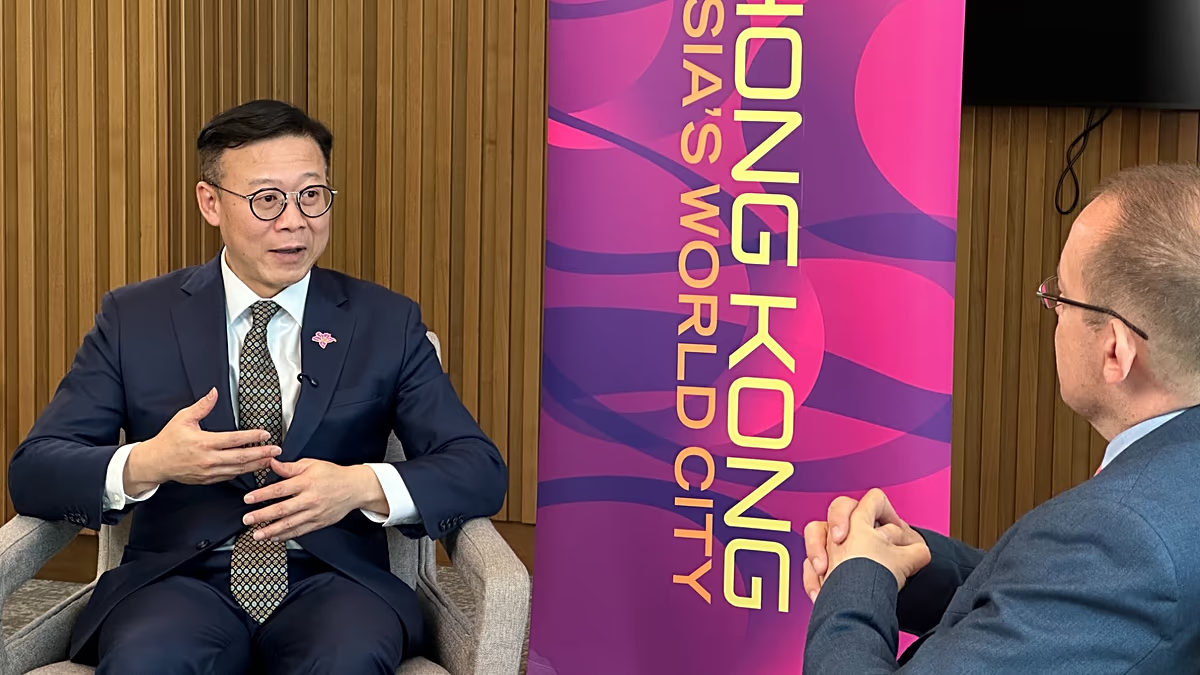
A key figure in the delegation, Hong Kong’s Deputy Secretary for Justice, Dr. Cheung Kwok-kwan, articulated the practical vision behind this diplomatic push. He explained to Euronews that the delegation was carefully crafted to showcase Hong Kong’s unique value as a bridge. Hong Kong’s strengths in world-class financial, legal, and professional services could guide mainland Chinese companies—often unfamiliar with overseas commercial cultures and regulatory regimes—through the complexities of international expansion. Dr. Cheung pointed to tangible examples, such as facilitating aircraft leasing deals between Central Asian and Chinese airlines. His remarks shifted the narrative from abstract cooperation to on-the-ground problem-solving, emphasizing Hong Kong’s repository of “success stories” and its seasoned professionals who see Central Asia not as a new frontier, but as a familiar market.
A particularly strategic aspect of the visit was the focus on shared legal foundations. The delegation’s stop at the Astanta International Financial Centre (AIFC) was highly significant, as the AIFC operates under English common law—the same legal system that underpins Hong Kong’s jurisdiction. Dr. Cheung highlighted this commonality as a powerful enabler, creating immediate opportunities for Hong Kong’s lawyers and financial experts to act as trusted intermediaries. This shared legal language reduces risk and builds confidence, allowing mainland businesses to operate in Kazakhstan with the guidance of Hong Kong practitioners. Furthermore, it positions Hong Kong as a hub not just for China-Central Asia deals, but for international business flowing from the Middle East and beyond through this common legal gateway.
This high-profile mission is not an isolated event, but part of a powerful and measurable trend. The visit coincided with a reported surge in Chinese economic engagement across the region. Official data from China’s Ministry of Commerce indicated that trade between China and the five Central Asian nations reached a staggering $106.3 billion in just the first ten months of 2025. This figure not only represents massive volume but also a growth rate that outpaced the previous year by six percentage points. This context transforms Hong Kong’s delegation from a simple trade mission into a strategic move to capture a share of and facilitate an already booming economic relationship, ensuring Hong Kong’s service economy remains central to the flow of capital and commerce.
Ultimately, the visit encapsulates a nuanced evolution in Hong Kong’s global function. Beyond its traditional role as a financial gateway to China, it is actively reinventing itself as a sophisticated service platform for China’s global outward investment. By leveraging its unique blend of Eastern and Western professional expertise, its common law system, and its deep understanding of both mainland Chinese and international business practices, Hong Kong is carving out a critical niche. In the vast economic landscape connecting China to the resource-rich and developing markets of Central Asia, Hong Kong aims to be the essential architect of trust, the translator of regulations, and the facilitator of the complex deals that will define the next chapter of Eurasian trade.